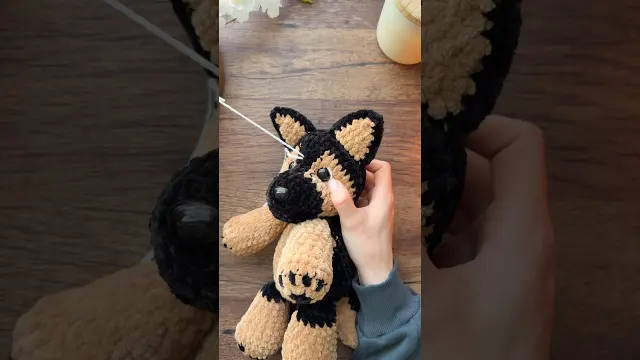
 Sewing Together a Crocheted German Shepherd Amigurumi
#German Shepherd
1 ideas
Sewing Together a Crocheted German Shepherd Amigurumi
Get new #German Shepherd ideas by email
Every Thursday: the week's best ideas, with the newest from #German Shepherd.
Related tags
German Shepherd: A Guide to the Loyal Working Breed
Few dogs are as instantly recognisable as the German Shepherd. Tall, upright and alert, with a long muzzle, erect ears and a thick double coat, the breed has a look that reads as capable before the dog has done anything at all. That impression is not far off: this is a herding dog turned all-round working partner, and it tends to be happiest when it has something to do.
Where the breed comes from
The German Shepherd was developed in Germany from local sheepdogs used for tending and guarding flocks, then shaped into a standardised working breed built for stamina, obedience and steady nerves. Its original job was herding and protecting livestock; its usefulness on the move soon made it attractive to police forces and armies, which is how it spread around the world. In some countries it was long known as the Alsatian. Almost everything the breed is valued for today still traces back to that herding background.
Character and temperament
Read more
German Shepherds are intelligent, confident and deeply attached to their people. They are usually reserved rather than friendly with strangers, watchful of their surroundings, and quick to alert the household to anything unusual. They learn fast and remember well, which cuts both ways: good habits stick, and so do bad ones. Many are quite vocal, and a bored one will find its own work to do, often in the form of chewed furniture or excavated garden beds. They generally do best with a clear routine, a job to perform and plenty of time with their family rather than long hours alone.
Body and coat types
The breed is athletic and powerfully built, with a strong neck, a long body and a bushy tail carried low. Most have a medium-length double coat with a dense undercoat; a long-haired variety exists and needs more grooming. Colours range from the classic black and tan through sable to solid black. All of them shed, heavily, and blow their undercoat once or twice a year, so a good brush and a tolerant vacuum cleaner are part of the deal.
What the breed is used for
Beyond herding, German Shepherds work as police and security dogs, search and rescue partners, detection dogs, guide and assistance dogs, and competitive sport dogs. They are equally at home as active family companions, provided the family genuinely wants a dog that needs daily exercise and mental challenge, not just a guard for the yard.
Training and first steps
Start early and keep it kind. Short, frequent sessions with food, play and praise work far better than long drills or harsh corrections, which tend to produce a worried or defensive dog. Socialisation matters just as much: calm, positive exposure to different people, dogs, surfaces, traffic and noise in the first year builds the confidence the breed is famous for. A well-run local training class is worth the money for a first-time owner. Remember that a mentally tired German Shepherd is a well-behaved one — scent games, obedience practice and long sniffing walks do as much as running.
Health and everyday care
As a large, deep-chested breed, the German Shepherd is prone to joint problems such as hip and elbow issues, and to bloat, a sudden and serious stomach condition. Feed smaller meals rather than one large one, avoid strenuous exercise straight after eating, keep weight in check and arrange regular veterinary check-ups. If you buy a puppy, ask to meet the mother and to see health screening results for both parents.
Before you commit
This is a big, strong, long-lived commitment that needs daily exercise, training, grooming and company. If that suits your life, an adult German Shepherd from a rescue can make just as devoted a companion as a puppy — and you will already know what you are getting.
#German Shepherd: frequently asked questions
What should I know before bringing a German Shepherd home?
This is a big, strong, alert working breed that needs daily exercise, training, grooming and company — not a dog that can be left in a yard on its own. If that fits your life, an adult from a rescue can be just as devoted a companion as a puppy, and you already know what you are getting. Be honest about how many hours the dog would spend alone before you commit.
How do I start training a German Shepherd?
Begin early and keep it kind: short, frequent sessions with food, play and praise teach far faster than long drills or harsh corrections, which tend to make the dog worried or defensive. Pair that with calm, positive exposure to different people, dogs, surfaces, traffic and noise in the first year. A well-run local class is a good investment for a first-time owner, and scent games or long sniffing walks tire the mind as much as running tires the body.
Which coat type or colour should I choose?
Most German Shepherds have a medium-length double coat with a dense undercoat, while the long-haired variety is showier but needs noticeably more grooming. Colours run from classic black and tan through sable to solid black, and none of them are low-shedding. Choose on the grooming time you can genuinely give rather than on looks, because the undercoat blows once or twice a year either way.
How much exercise and mental work does the breed need?
Enough that the dog is calmly tired rather than restless — a good walk plus a job to do, whether that is obedience practice, a scent game or a training class. A bored German Shepherd invents its own work, usually chewed furniture or excavated garden beds. Mental effort counts as much as distance, so sniffing walks and short training bursts belong in the daily routine.
What are the most common mistakes new owners make?
The usual ones are choosing the breed as a yard guard rather than a family companion, skipping socialisation in the first year, and using harsh corrections instead of reward-based training. Another is leaving the dog alone for long stretches and hoping exercise alone will settle it. Good habits stick with this breed — and so do bad ones, so start as you mean to go on.
Any ideas for a German Shepherd-themed occasion or gift?
The breed's upright ears, long muzzle and bushy tail make it a natural subject for craft projects, and a crocheted amigurumi version is a charming handmade gift for a shepherd owner or a nursery shelf. Keep the silhouette recognisable — erect ears, deep chest, low-carried tail — and pick black and tan or sable yarn to read instantly as the breed. It also works well as a small project for someone who loves the look of the dog but is not ready for the real thing.
Videos come from YouTube and posts from Instagram; titles and summaries are our own. All rights belong to their creators.