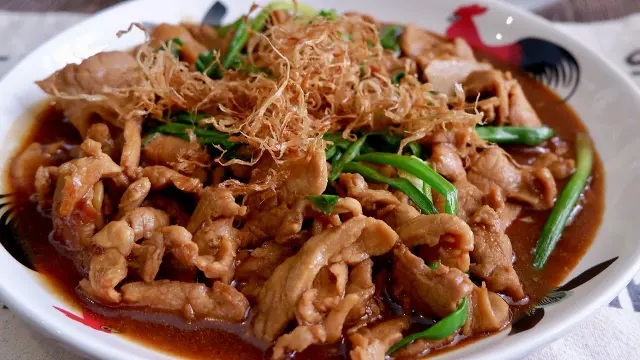
 Stir-Fried Ginger and Spring Onion Pork, Remade
#Ginger
1 ideas
Stir-Fried Ginger and Spring Onion Pork, Remade
Get new #Ginger ideas by email
Every Thursday: the week's best ideas, with the newest from #Ginger.
Related tags
Ginger: A Guide to the Versatile Root
Ginger is the knobbly underground stem, or rhizome, of a flowering plant native to tropical Southeast Asia. It has travelled so widely through trade and cooking that it now sits in kitchens on every continent, yet it still tastes unmistakably of itself: warm, sharp, faintly citrusy, with a lingering heat that sits somewhere between pepper and chilli without being quite either.
What ginger actually is
The part you buy is not a root in the strict sense but a rhizome, a swollen stem that grows horizontally just below the soil and sends up leafy shoots. Cut a fresh piece open and you find pale, fibrous flesh under a thin papery skin. Older rhizomes are drier and more pungent; young ones, often sold as "spring" or "young" ginger, are tender, juicier and milder, with a thin skin that barely needs peeling.
The many forms of ginger
Read more
Ginger reaches the kitchen in several guises, and they are not interchangeable.
- Fresh ginger: the most aromatic and least harsh. Grated, sliced, julienned or pounded into a paste, it forms the aromatic base of countless stir-fries, curries, soups and marinades.
- Ground dried ginger: warmer and more earthy, with a sweetness fresh ginger lacks. It belongs in baking, spice blends and slow-cooked dishes rather than quick frying.
- Pickled ginger: thin slices preserved in vinegar, served alongside sushi to refresh the palate between bites.
- Candied and crystallised ginger: simmered in sugar syrup and dried, eaten as a sweet or folded into cakes and chocolate.
- Preserved and fermented ginger: used in some regional cuisines as a condiment in its own right.
Where it turns up
Ginger is a backbone ingredient across South and East Asian cooking, from the ginger-and-garlic paste that starts a curry to the spring onion and ginger pairing that finishes a steamed fish. In the Caribbean it flavours drinks and marinades; in Northern Europe it is a warming note in biscuits, preserves and mulled drinks. It also works quietly in places you might not expect: a little grated into a salad dressing, a fruit crumble, or a carrot soup.
Buying and keeping it
Look for rhizomes that feel heavy and firm, with tight, smooth skin and no soft or mouldy patches. Fresh ginger keeps for weeks in a cool, dark cupboard, and longer still in the fridge wrapped in paper. It freezes well: grate it first, then freeze in small portions, or freeze whole and grate from frozen. Ground ginger should be bought in small quantities, since its aroma fades faster than you expect.
Cooking with it
Peel only what you need, using a spoon to scrape away the skin where the knobs make a peeler awkward. Ginger's heat varies enormously from piece to piece, so taste as you go. Frying it briefly in oil softens its bite and releases its aroma; adding it late keeps the flavour brighter and sharper. A squeeze of lemon or a pinch of salt will calm excessive heat, and a little sugar will round out its edge.
Ginger is one of those ingredients that rewards a bit of attention — buy it fresh when you can, and let its warmth do the work.
#Ginger: frequently asked questions
How do I start cooking with fresh ginger if I've never used it before?
Begin with a single firm rhizome and treat it as an aromatic base rather than a main ingredient. Grate or finely chop a small piece into hot oil at the start of a stir-fry, curry or soup so the heat softens its bite and carries the flavour through the dish. Once you know how strong your piece tastes, you can add more, or stir some in near the end for a sharper, brighter note.
Which form of ginger should I choose for what I'm making?
Fresh ginger is the most aromatic and least harsh, so it suits stir-fries, marinades, dressings and anything cooked quickly. Ground dried ginger is earthier and sweeter, which is why it works better in baking, spice blends and slow-cooked dishes. Pickled, candied and fermented ginger are finished condiments and sweets in their own right, not substitutes for the fresh rhizome.
How should I store ginger so it keeps well?
Choose rhizomes that feel heavy and firm, with tight skin and no soft or mouldy patches, since good keeping starts at the shop. At home it holds for a long time in a cool, dark cupboard, and longer still in the fridge wrapped in paper. Freezing works well too: grate it first and freeze in small portions, or freeze it whole and grate from frozen.
What are the most common mistakes people make with ginger?
The usual one is peeling the whole piece when only a little is needed, which dries out the rest and wastes the awkward knobbly parts. Another is assuming every rhizome tastes the same, when heat varies a lot from piece to piece and from young to older ginger, so tasting as you go matters. Adding it only at the very end, or only at the very start, also limits what it can do in a dish.
What can I make with ginger for a special occasion or a relaxed weekend meal?
Ginger pairs naturally with spring onion and pork in a quick stir-fry, and it also lifts steamed fish finished with the same combination. For something slower, try it in a carrot soup, a fruit crumble or a mulled drink, where its warmth reads as cosy rather than sharp. A little grated into a salad dressing is an easy way to make an ordinary meal feel considered.
Can I use ground ginger when a recipe calls for fresh?
They are not interchangeable: ground ginger is warmer and sweeter but lacks the bright, citrusy lift of the fresh rhizome. In baking, spice blends and long-simmered dishes the ground version is often the better choice anyway, so match the form to the cooking rather than swapping blindly. If fresh is what the dish needs, ground will bring warmth but not the same freshness.
Videos come from YouTube and posts from Instagram; titles and summaries are our own. All rights belong to their creators.