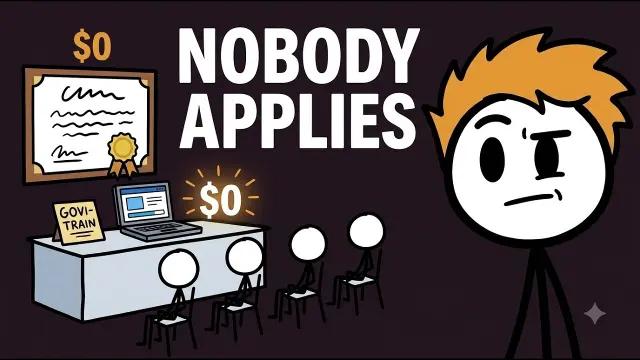
 Free US Government Certificates Worth Knowing About
#Government Credentials
1 ideas
Free US Government Certificates Worth Knowing About
Get new #Government Credentials ideas by email
Every Thursday: the week's best ideas, with the newest from #Government Credentials.
Related tags
Government Credentials: What They Are and How to Use Them
A government credential is a document, certificate, licence or registration issued by a public authority. It confirms something specific about you: that you completed a course, passed an examination, are authorised to practise a trade, or that a public body recognises a qualification or an achievement. What separates it from a private certificate is who stands behind it. The issuer is a public institution rather than a company, an association or an online school, and that is usually the reason people trust it.
Where they come from
Public bodies issue credentials for three broad purposes. The first is regulation: protecting the public by making sure only trained people do certain work. The second is recording skills and training for the labour market, so employers can see what a candidate has actually completed. The third is recognising civic, educational or administrative facts, from a course completion to a qualification recognised across borders.
Because of this, credentials are issued at every level of government — national, regional and local — and the same word can mean different things depending on who signed the paper.
Read more
The main kinds
- Licences and permits: formal permission to do something, usually after training and an exam, and usually revocable if conditions are not met.
- Certificates of competence: proof of a specific skill, often tied to a trade, a safety requirement or a technical field.
- Educational certificates and equivalences: recognition that a course of study or a foreign qualification corresponds to a given level.
- Registration and records: entry on an official list or register, which can be checked by third parties.
- Introductory or awareness certificates: short, often free programmes that certify attendance or basic knowledge rather than professional authorisation.
What to check before you invest time
Start with the issuer. Confirm that the body really is the one responsible for that field in your country or region, and that the certificate is issued in its own name. Then ask yourself a few plain questions:
- Does the credential need to be renewed, and what does renewal require?
- Will an employer, a school or another country actually recognise it?
- Is there an official register where someone can verify it?
- Is the official version free, and are you being asked to pay a third party for something the public body provides directly?
That last point matters. Look-alike websites and intermediaries sometimes sell "processing" of documents that a government office issues at no charge.
Practical tips
Keep a digital copy of every credential along with its reference number and the date it was issued, and note when it expires. Always start the process from the official website of the issuing body rather than from an advertisement. If you plan to use a document abroad, ask early whether it needs an official translation, an authenticity stamp or a formal recognition procedure — these steps take time and are best begun before you need the paper.
Finally, be honest with yourself about what a credential is. A short free certificate shows interest and effort, and that has value, but it is not a licence and does not authorise you to practise a regulated profession. Knowing the difference keeps your CV accurate and your expectations realistic, and it helps you choose the next step with a clear head.
#Government Credentials: frequently asked questions
How do I get started with a government credential?
Begin at the official website of the public body responsible for that field in your region, not at an advertisement or a look-alike site. Read what the body itself says about eligibility, training and examinations, then follow its own application route from start to finish. Starting from the source keeps you clear of intermediaries selling processing that the office handles directly.
What do I need before applying?
You usually need proof of identity, evidence that you completed the required training or examination, and any documents the issuing body lists as mandatory. Check early whether the credential has to be renewed and what renewal asks of you, since that shapes how much time the whole thing takes. If you plan to use it abroad, ask about translation, authenticity stamps or recognition procedures before you need the paper.
Which kind of credential do I actually need?
Licences and permits authorise you to do regulated work and can be revoked, while certificates of competence prove a specific skill and registrations place you on an official list others can check. Educational certificates and equivalences confirm that a course of study or a foreign qualification matches a given level. A short awareness certificate shows effort and interest but does not authorise you to practise a regulated profession, so match the document to what you intend to do with it.
How do I keep track of a credential once I have it?
Store a digital copy together with its reference number and the date it was issued, and note when it expires so renewal does not catch you out. Confirm whether an official register exists where an employer or a school can verify it, and keep your details on that register current. Good records make it much easier to answer questions from anyone who needs to check you.
What mistakes do people commonly make?
The most frequent one is paying a third party for something the public body issues at no charge, often through a look-alike website reached from an advertisement. Another is assuming a short free certificate carries the same weight as a licence, which can make a CV inaccurate and lead to false expectations. It also pays to confirm in advance that an employer, a school or another country will recognise the credential at all.
How do I tell whether a credential is genuine?
Look at who stands behind it: a public institution issuing in its own name rather than a company, association or online school. Confirm that the body is genuinely the one responsible for that field where you live, and check whether there is an official register where the entry can be verified. If the only evidence is a certificate handed over by an intermediary, treat it with caution.
Videos come from YouTube and posts from Instagram; titles and summaries are our own. All rights belong to their creators.