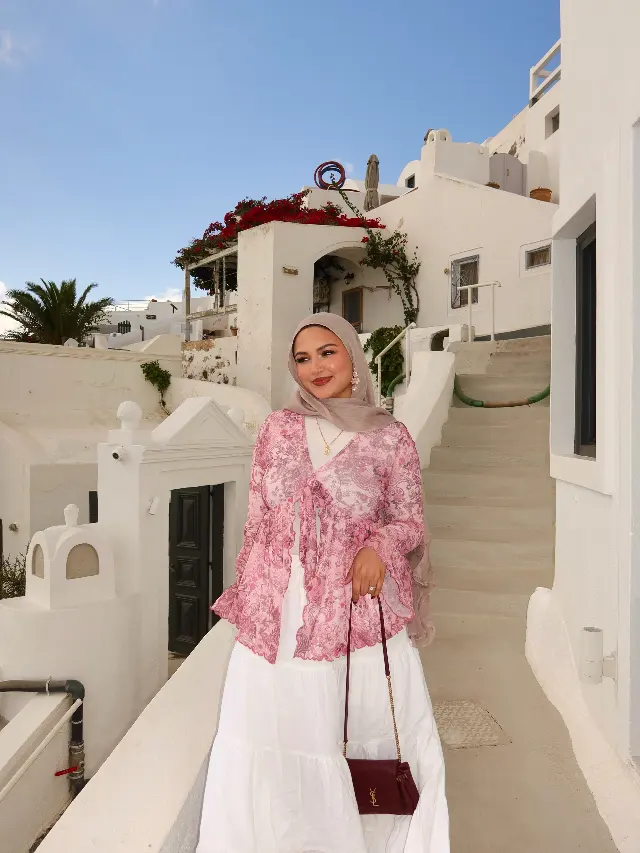
 Discovering the breathtaking beauty of Santorini
#Greece
1 ideas
Discovering the breathtaking beauty of Santorini
Get new #Greece ideas by email
Every Thursday: the week's best ideas, with the newest from #Greece.
Related tags
Greece: A Guide to Culture, Islands and Traditions
Greece at a glance
Greece is a country in southeastern Europe with a long history, a strong cultural identity, and a landscape shaped by mountains, islands, and the sea. It is often associated with ancient civilization, but modern Greece is just as rich in everyday traditions, regional food, local crafts, and village life. If you are drawn to Greece, you may be interested in its history, architecture, coastal scenery, or the calm rhythm of its islands and countryside.
Heritage and everyday life
Greek culture has roots in the ancient Mediterranean world, but it has also been shaped by Byzantine, Ottoman, and modern European influences. You can see this mix in churches, old towns, family customs, music, and hospitality. In many places, daily life still revolves around shared meals, religious festivals, seasonal celebrations, and gatherings in squares or along the waterfront.
Read more
Greek is the official language, and the alphabet is one of the oldest still in use. Even if you do not speak it, learning a few simple words can make travel feel more personal. A friendly greeting and a thank-you go a long way.
Islands, mainland, and regional character
Greece is known for its islands, but the mainland offers just as much variety. The islands can be small and quiet or lively and well connected, each with its own look and pace. Some are known for whitewashed houses and blue water, while others are greener, rockier, or more traditional in style.
The mainland includes mountain regions, fertile valleys, historic cities, and coastal towns. This variety means Greece is not one single experience. Food, architecture, dialects, and customs can change from one region to another, which is part of what makes the country so interesting.
Food and shared meals
Greek food is built around simple ingredients and strong flavors: olive oil, herbs, vegetables, legumes, cheese, bread, seafood, and grilled meats. Meals are often meant to be shared, and many dishes are served in a relaxed way so everyone can taste a little of everything.
If you are exploring Greek food at home, start with fresh ingredients and keep the cooking straightforward. The cuisine is often about balance rather than complexity. Lemon, oregano, yogurt, and olive oil are common building blocks that add brightness and depth.
Crafts, style, and design
Traditional Greek crafts include pottery, weaving, embroidery, woodwork, and icon painting. In many areas, handmade items reflect local patterns and practical everyday life as much as decoration. Greek design often feels clear, functional, and tied to natural materials, especially stone, wood, and ceramics.
For interiors or creative projects inspired by Greece, think of natural light, simple shapes, and a restrained palette with touches of blue, terracotta, or white. The feeling is usually airy and relaxed rather than formal.
A few things to keep in mind
- Greece is best appreciated at an unhurried pace, with time for wandering and observation.
- Respect local customs in churches and quiet village settings.
- If you visit in warmer months, plan for sun, strong light, and slower afternoons.
- The most memorable experiences are often small: a village café, a family meal, a coastal walk, or a local market.
Greece invites you to look beyond a postcard image and notice the layers beneath it: history, landscape, tradition, and everyday life.
Videos come from YouTube and posts from Instagram; titles and summaries are our own. All rights belong to their creators.