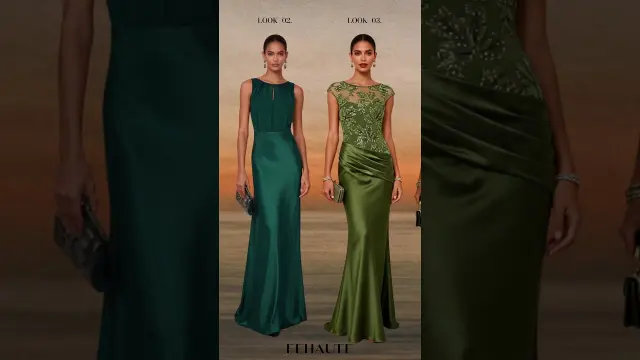
 Fall Green Edit Featuring Elegant Wedding Guest Dresses
#Green Gown
1 ideas
Fall Green Edit Featuring Elegant Wedding Guest Dresses
Get new #Green Gown ideas by email
Every Thursday: the week's best ideas, with the newest from #Green Gown.
Related tags
Green Gown Guide: Shades, Styles and Styling Tips
Green has a long and complicated history in clothing. For centuries in Europe, a truly stable green dye was hard to produce, so deep, saturated greens were expensive and associated with wealth and status. Earlier still, natural greens came from plant sources such as woad overdyed with yellow, or from mineral pigments used in painting rather than cloth. That scarcity shaped the colour's reputation: luxurious in some eras, unlucky or theatrical in others, and eventually familiar as the green of uniforms, sport and school. Today a green gown can read as anything from quietly classic to boldly dramatic, depending entirely on the shade and the cut.
The main shades
Green is unusually wide as a colour family, which is why it suits so many complexions.
- Emerald and forest green are deep, cool and rich. They look formal and photograph well in low light, which makes them a popular choice for evening and winter occasions.
- Sage and olive are muted and earthy. Sage is soft and slightly grey, olive is warmer and more yellow; both feel relaxed and work well in linen, crepe and matte fabrics.
- Mint and seafoam are pale and fresh, best in lightweight fabrics and daytime settings.
- Chartreuse and lime are yellow-green and very high impact. Wear them if you enjoy being noticed, and keep the rest of the outfit calm.
- Teal and blue-green sit between green and blue, and tend to flatter almost everyone.
Read more
Silhouettes and occasions
For a wedding guest, a green gown works across the whole formality range: a flowing sage maxi for a garden or countryside celebration, a structured emerald column dress for a black-tie evening, a soft midi for a daytime ceremony. Dresses with a defined waist and a full skirt, wrap styles and bias-cut slips are all dependable shapes. For formal events, floor-length hems in deeper shades are the safest choice; for anything less formal, midi and tea lengths are easy to wear again.
What beginners should know
Start with the shade rather than the style. Hold fabrics near your face in daylight: cool skin tones usually suit emerald, teal and blue-greens, while warmer tones often carry olive, moss and yellow-greens well. If you are unsure, a muted mid-tone green is more forgiving than a bright acid shade.
Practical tips
- Match your accessories to the undertone: gold with warm olive and moss, silver with cool emerald and teal, nude or metallic with sage.
- Green and pink, green and cream, and green with black are reliable combinations; avoid clashing with a wedding's own palette if you are a guest.
- Choose a fabric with some weight in deep shades so the colour stays even and does not turn sheer in photographs.
- Ask about the dress code before shopping, and check whether the couple has requested guests avoid certain colours.
- If you plan to rewear the gown, pick a shape you can style down with flat shoes and a knit.
Green rewards a little thought about shade and occasion. Once you find the green that suits you, it becomes one of the easiest colours to wear well.
#Green Gown: frequently asked questions
How do I pick the right shade of green for my skin tone?
Start with the shade rather than the style, and hold fabrics up near your face in daylight before committing. Cool skin tones generally carry emerald, teal and blue-greens well, while warmer tones tend to suit olive, moss and yellow-greens. If you are undecided, a muted mid-tone green is far more forgiving than a bright acid shade.
What kind of green gown should I wear as a wedding guest?
It depends entirely on the dress code and setting: a flowing sage maxi suits a garden or countryside celebration, a structured emerald column reads well at a formal evening event, and a soft midi works for a daytime ceremony. Ask about the dress code before you shop, and check whether the couple has asked guests to avoid particular colours so you don't clash with the wedding palette.
Which silhouettes are easiest to wear in green?
Shapes with a defined waist and full skirt, wrap styles and bias-cut slips are all dependable because they hold their line whatever the shade. Floor-length hems in deeper greens are the safest bet for formal occasions, while midi and tea lengths are easier to wear again for less formal events.
How should I care for a green gown so the colour stays true?
Follow the care label first, and treat deep greens gently — a cool, short wash turned inside out, or professional cleaning for structured fabrics, keeps the dye from fading unevenly. Dry and store the gown away from strong direct light, since prolonged sun exposure is what dulls saturated colour over time.
What accessories work with a green dress?
Match the metal to the undertone: gold sits well with warm olive and moss, silver with cool emerald and teal, and nude or metallic finishes with soft sage. Green with pink, green with cream and green with black are reliable pairings, and it helps to keep everything else calm if you've chosen a high-impact yellow-green.
What mistakes should I avoid when buying a green gown?
The common ones are choosing a bright acid shade without testing it near your face in daylight, and picking a thin fabric in a deep green that turns sheer under flash photography. It's also worth deciding early whether you want to rewear the dress, because a shape you can style down with flat shoes and a knit gets far more use.
Videos come from YouTube and posts from Instagram; titles and summaries are our own. All rights belong to their creators.