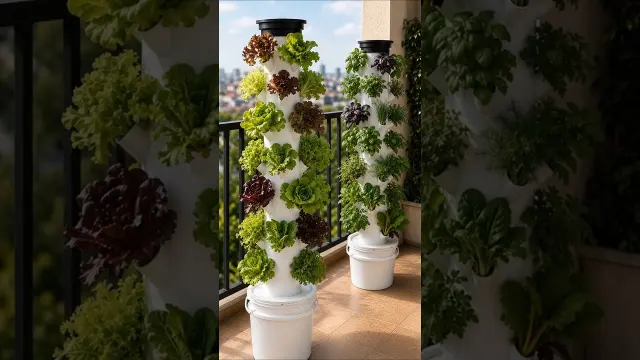
 Crafting a Hydroponic Growing Tower from PVC Pipes
#Growing System
1 ideas
Crafting a Hydroponic Growing Tower from PVC Pipes
Get new #Growing System ideas by email
Every Thursday: the week's best ideas, with the newest from #Growing System.
Related tags
Growing Systems at Home: A Beginner's Guide
A growing system is the arrangement you build around plants so that they get what they need — light, water, air around the roots and nutrients — in a controlled and repeatable way. Rather than relying on the soil and rainfall of a garden bed, you take charge of those inputs yourself. That is the whole idea behind the word "system": a set of parts that work together, so that watering, feeding and light follow a routine instead of guesswork.
Growing systems appear wherever people want to garden in less space, in a difficult climate, or with more predictability — on a balcony, in a kitchen, on a rooftop, in a small courtyard. They range from a few pots on a shelf to a purpose-built structure with pumps and channels.
The main kinds
- Soil-based container systems: the simplest entry point. Pots, fabric bags or raised beds hold a growing medium, and you water by hand. Nothing to power, nothing to break.
- Hydroponics: plants grow in an inert medium or in none at all, with roots sitting in a nutrient solution. Water is circulated or periodically flooded, and because the plant is not searching through soil for food, growth can be quick and space-efficient.
- Aquaponics: hydroponics joined to a fish tank. Fish waste breaks down into nutrients the plants can use, and the plants in turn help keep the water clean. It is a balanced but slower system to get right.
- Aeroponics: roots hang in air and are misted with nutrient solution. Efficient with water, but less forgiving of a pump failure.
- Vertical and tower systems: the same principles stacked upward, using gravity to move water down through planted pockets. Useful where floor space is short.
Read more
What beginners should know
Start with the smallest system that still interests you. A single container with a reservoir, or one upright tower, teaches you more in a month than a large build teaches in a season. Learn to read the plants: pale leaves, slow growth and wilting each point to a different problem, and the answer is usually water, light or nutrients rather than anything exotic.
Water quality matters more than most newcomers expect. Tap water varies a great deal from place to place, and what is in it affects how nutrients behave. Let water come to room temperature before using it, and change reservoir water regularly rather than endlessly topping it up.
Practical tips
- Keep a routine: a fixed day for checking water, feeding and cleaning saves plants from neglect.
- Give roots air. Constant saturation suffocates them, so most systems alternate wet and drained periods.
- Clean between crops. Algae and residue build up quietly and cause trouble later.
- Begin with forgiving plants — leafy greens and herbs — before trying anything demanding.
- Site the system for light first and convenience second; you will maintain it more often if it is easy to reach.
A good growing system is not the most elaborate one. It is the one you understand well enough to keep running, season after season.
#Growing System: frequently asked questions
What exactly is a growing system, and how is it different from ordinary gardening?
It is the setup you build around your plants so that light, water, air around the roots and nutrients are supplied deliberately rather than left to soil and rainfall. In a garden bed you work with whatever the ground and weather give you; in a growing system you decide those inputs yourself and repeat the same routine. The word "system" simply means the parts are chosen to work together.
How do I start a growing system if I have never done it before?
Pick the smallest setup that still interests you, such as a single container with a reservoir or one upright tower, and learn from that. Small systems show you problems quickly and cheaply, so you learn to read your plants before committing to a bigger build. Start with forgiving crops like leafy greens and herbs.
Which kind of growing system should I choose?
Choose based on your space, your tolerance for maintenance and how much you want to depend on equipment. Soil-based containers need no power and nothing to break, while hydroponics and aeroponics are more space-efficient but rely on pumps and routine checks, and aquaponics adds a fish tank to keep balanced. Vertical and tower versions suit anyone short on floor space.
What do I need to keep a growing system healthy day to day?
A fixed day for checking water, feeding and cleaning keeps the routine from slipping, and roots need alternating wet and drained periods rather than constant saturation. Change reservoir water on a regular basis instead of only topping it up, and let tap water reach room temperature before using it. Clean between crops, because algae and residue build up quietly and cause trouble later.
What mistakes do beginners most often make?
The common ones are starting too large, drowning the roots by keeping them constantly wet, and topping up a reservoir forever instead of replacing the water. Placing the system for convenience rather than light is another, since plants that are easy to reach still need enough brightness to grow well. When something looks wrong, check water, light and nutrients before assuming an unusual cause.
Can a growing system be built small enough for a balcony or kitchen?
Yes, these setups exist precisely for places where a garden bed is not an option, such as balconies, rooftops, courtyards or kitchen corners. A few pots on a shelf counts, and stacked or tower designs use height when floor space is limited. The same principles of watering, feeding and airflow apply whatever the size.
Videos come from YouTube and posts from Instagram; titles and summaries are our own. All rights belong to their creators.