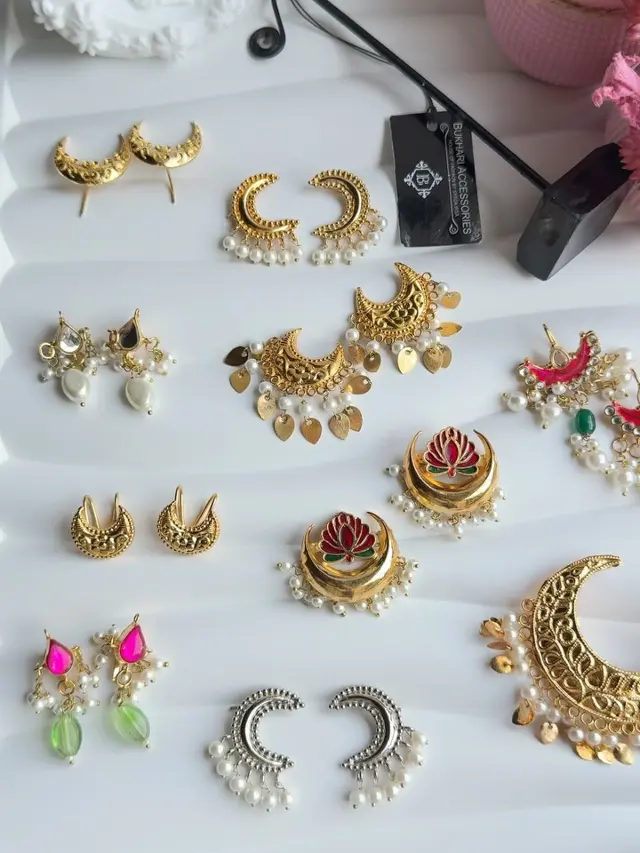
 Trend Watch: Hair Accessories Like Clips and Pins
#Hair Clips
1 ideas
Trend Watch: Hair Accessories Like Clips and Pins
Get new #Hair Clips ideas by email
Every Thursday: the week's best ideas, with the newest from #Hair Clips.
Related tags
Hair Clips: A Guide to Types, Uses and Styling
Hair clips are small tools that hold strands of hair in place, and they sit somewhere between a practical instrument and a piece of jewellery. A sectioning clip keeps a fringe out of your eyes while you work; a pretty barrette does the same job but is meant to be seen. That double life is part of why they have never gone out of fashion.
A very old idea
People have fastened their hair with pins, combs and bands for as long as there has been hair to fasten. Across many cultures, decorative hairpins served as markers of age, status or occasion, and were often carved from wood, bone, horn, shell or metal. The modern plastic clip is a much later invention, and the rise of moulded materials made hair accessories cheap enough to be everyday objects rather than heirlooms. What has stayed constant is the basic principle: spring, hinge or prong, holding a small amount of hair against the shape of the head.
The main kinds
Read more
- Claw clips, also called jaw or butterfly clips, open like a beak and gather a large section of hair. They are the workhorses for twisting long hair up off the neck.
- Snap clips are the flat metal clips with a bent end. Simple, cheap and endless in finish, they hold a fringe or a small side section.
- Alligator clips have a long jaw with teeth and a strong spring. They are excellent for pinning hair back while you style, cut or colour it.
- Barrettes are the decorative relative, often with a clasp or a sliding mechanism, and are usually chosen for how they look.
- Bobby pins are not really clips but flat pins with wavy arms; they are the ones that disappear into an updo and hold it.
- Sectioning clips, including the long duckbill shape, are the plain, grippy clips used to divide hair while you work.
- Banana clips and combs gather a ponytail or a half-up style in one motion.
Choosing and using them
Match the clip to the weight of hair it has to hold. A small snap clip will slide out of thick, heavy hair, while an oversized claw on fine hair will simply hang loose. Look at the finish on metal clips: sharp edges or flaking coating snag strands, so smooth, well-rounded teeth are worth the extra care. For delicate or thinning hair, softer-covered clips and gentle positioning cause less strain than tight springs.
Place clips so they grip the hair rather than pull at the scalp, and take them out slowly, without yanking. Avoid leaving a tight clip in the same spot all day, as constant tension in one area can make the scalp tender and weaken strands over time. Slide bobby pins in with the wavy side down so they catch the hair, and cross two pins for a firmer hold.
A little care
Wipe metal clips occasionally, and remove hair from the hinge of claw clips so the spring keeps its tension. Store them loose or in a small box rather than tangled in a drawer, and they will last for years.
Hair clips are forgiving: they ask nothing of your skill, they work on any length, and a single well-chosen one can change a whole look in seconds.
#Hair Clips: frequently asked questions
How do I choose the right hair clip for my hair type?
Start by matching the clip to the weight of hair it has to hold, since a small flat clip slides straight out of thick hair while an oversized claw on fine hair just hangs there loosely. Check the finish too, because sharp edges or flaking coating catch and snag strands, so smooth rounded teeth are worth seeking out. If your hair is delicate or thinning, a soft-covered clip placed gently puts far less strain on the scalp than a tight spring.
What do I need to start using clips for simple updos?
A single sturdy claw clip and a few flat pins will get you through most everyday styles, so there is no need to buy a whole set before you begin. Claw clips gather a large section and hold a twist off the neck, while bobby pins do the quiet work of tucking stray pieces into place. Slide the pins in with the wavy side down so they grip, and cross them for a firmer hold.
What are the most common mistakes people make with hair clips?
The usual one is clamping a clip so tightly that it pulls at the scalp instead of gripping the hair itself, which quickly becomes uncomfortable. Leaving a tight clip in the same spot all day is also unkind to the scalp, and pulling clips out in a hurry snaps strands rather than releasing them. Taking them out slowly, and repositioning rather than tightening, makes a real difference.
How should I care for hair clips so they last?
Wipe metal clips now and then, and clear shed hair out of the hinge of a claw clip so the spring keeps its tension. Store them loose or in a small box rather than jumbled in a drawer, where they tangle and get bent. Handled that way, a decent clip will keep working for years.
Which clips work best for a dressed-up occasion?
For anything you want noticed, barrettes and decorative clips do the job, since they hold a section while being meant to be seen. A half-up style gathered at the back with a comb or clip reads as considered without looking fussy, and a plain clip tucked underneath can do the structural work invisibly. The trick is using a pretty clip where it shows and a grippy one where it does not.
Are hair clips suitable for beginners?
Very much so, because the principle is simple: a spring, hinge or prong holds a small amount of hair against the shape of the head. They work on any length and ask nothing of your skill, which is why a single well-chosen clip can change a whole look in seconds. Begin with a claw clip for gathering and a flat clip for fringes, and add the fancier pieces once you know what suits you.
Videos come from YouTube and posts from Instagram; titles and summaries are our own. All rights belong to their creators.