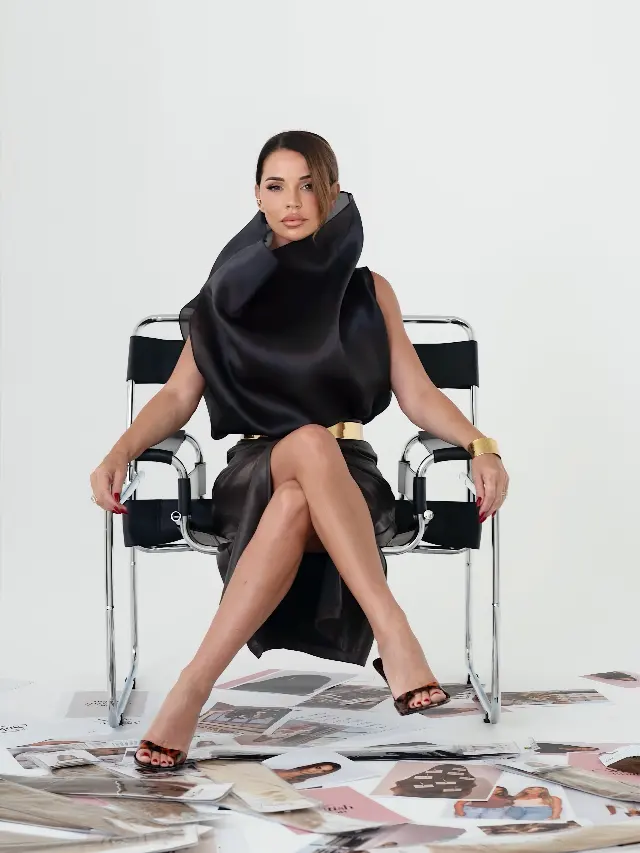
 Hair Extension Styling Shoot from a Dubai Salon
#Hair Extensions
1 ideas
Hair Extension Styling Shoot from a Dubai Salon
Get new #Hair Extensions ideas by email
Every Thursday: the week's best ideas, with the newest from #Hair Extensions.
Related tags
Hair Extensions: A Complete Guide for Beginners
Hair extensions are strands of natural or synthetic hair attached to your own hair to add length, volume or colour without waiting for it to grow. People use them for everyday thickness, for a special event, or simply to try a different look without committing to a cut or dye. Understanding how they work makes the choice far less intimidating than it first appears.
What extensions are made of
Human hair extensions are usually the most natural-looking and can be washed, heat-styled and coloured much like your own hair. They are often sold as "Remy" or "cuticle-aligned", meaning the strands run in the same direction so they stay smooth and resist tangling. Synthetic options are more affordable and hold a style well, but they are sensitive to heat and generally cannot be dyed. Blends combine both. Whatever you choose, the quality of the hair — and how well it is matched to your own texture and colour — matters more than anything else.
The main methods
Read more
- Clip-in: temporary pieces on small clips that you add and remove yourself. Ideal for beginners and occasional wear.
- Tape-in: thin wefts glued to sections of hair with a gentle adhesive. Flat and discreet, reapplied every few weeks.
- Bonded or pre-bonded: small sections attached strand by strand with a keratin-based bond, melted into place by a professional.
- Micro-ring or micro-link: strands threaded through tiny rings and clamped, with no glue involved.
- Wefts sewn or braided into a row of your own hair, often used for fuller, longer-lasting sets.
- Halo and ponytail pieces: single bands that sit on the head or wrap around a ponytail for quick volume.
What beginners should know
Start with the smallest commitment that meets your goal. Clip-ins let you test a length, colour and volume before investing in a longer-term method. Match the shade to the mid-lengths of your hair rather than the roots, and consider a slightly lighter tone if you plan to blend with highlights. Texture matters too: fine hair and coarse hair behave differently, and the extension should follow your natural pattern.
Have a professional assess your hair density and scalp before any semi-permanent method, especially if your hair is fragile, thinning or chemically treated. Extensions should never feel tight enough to pull at the scalp, and any soreness or irritation is a sign to have them loosened or removed. Give your hair regular breaks between installations.
Caring for them
Brush gently from the ends upward with a soft loop brush, holding the roots so you do not tug at the attachment points. Wash with a sulphate-free shampoo, keep conditioner away from bonds and rings, and dry the attachment area thoroughly. Loosen and separate the strands as they dry to prevent matting. Sleep with hair loosely braided or in a low tie, and avoid heavy oil near the roots. With patient care, extensions blend seamlessly — and your own hair stays the priority.
#Hair Extensions: frequently asked questions
How do I start with hair extensions if I've never worn them?
Begin with the least permanent option that still gets you the look you want — clip-in pieces are the usual starting point because you can put them in and take them out yourself. They let you experiment with length, colour and volume before you commit to anything longer-term. Once you know what suits you, you can decide whether a semi-permanent method is worth it.
Which extension method is right for me?
It depends on how often you want to wear them and how much upkeep you're willing to manage. Clip-ins and halo or ponytail pieces suit occasional wear and are easy to handle alone, while tape-in, bonded, micro-ring and sewn wefts are applied by a professional and stay in for weeks at a time. If your hair is fragile, thinning or chemically treated, have someone assess it before choosing a semi-permanent option.
How do I match extensions to my own hair colour and texture?
Match the shade to the middle lengths of your hair rather than the roots, since that's the area the extensions sit against and blend into. If you have highlights, a slightly lighter tone usually merges more naturally than an exact root match. Texture matters just as much — the extension should follow your natural pattern, because fine and coarse hair behave very differently.
How should I care for hair extensions day to day?
Brush from the ends upward with a soft loop brush and hold the roots as you go, so you don't pull on the attachment points. Wash with a gentle sulphate-free shampoo, keep conditioner away from bonds and rings, and dry the attachment area properly, separating strands as they dry to prevent matting. Loosely braid or tie your hair low at night and keep heavy oils away from the roots.
What are the most common mistakes people make with extensions?
The biggest one is going too long or too heavy too soon instead of starting small and building up. Another is fitting them so tightly that they pull at the scalp — extensions should never feel uncomfortable, and your own hair should stay the priority. People also forget to give their hair a rest between installations, which is worth building into your routine.
Any ideas for wearing extensions to a special occasion?
Clip-in and halo pieces are ideal for a one-off event, because you can add volume or length for the day and then take them straight out. A ponytail piece wraps around your own tie for a fuller, more polished look, which photographs beautifully in a styled shoot. Choose the style first and the extension second, so the piece supports the look rather than dictating it.
Videos come from YouTube and posts from Instagram; titles and summaries are our own. All rights belong to their creators.