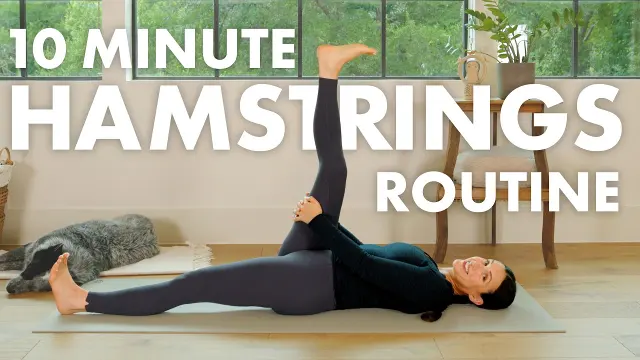
 Yoga Practice for Tight Hamstrings and Lower Back
#Hamstrings
1 ideas
Yoga Practice for Tight Hamstrings and Lower Back
Get new #Hamstrings ideas by email
Every Thursday: the week's best ideas, with the newest from #Hamstrings.
Related tags
Hamstrings: A Practical Guide to Flexibility and Strength
The hamstrings are the group of muscles running down the back of the thigh, between the hip and the knee. There are three of them: one on the outer side and two on the inner side, all attaching near the sitting bone at the top and crossing the knee joint at the bottom. Together they do two main jobs — they bend the knee and they help extend the hip, which means they are involved in almost everything you do on your feet, from walking and climbing stairs to standing up from a chair.
Why they feel tight
Most people meet their hamstrings through tightness rather than through strength. A great deal of modern life is spent sitting, which keeps the muscles in a shortened position for hours, and the back of the thigh is one of the first places where that shows up. The sensation of tightness is not always a sign that the muscle is physically short; it can also come from a nervous system that feels protective in that range, or simply from never asking the muscle to lengthen. This is why forcing a stretch rarely helps and often backfires.
Stretching well
Read more
The safest way to lengthen the hamstrings is gradually, with the breath, and without bouncing.
- Warm up first. A few minutes of walking or easy movement makes stretching more comfortable and more effective.
- Keep the knee slightly soft. Locking it out shifts the pull onto the joint and the lower back.
- Hinge from the hips rather than rounding the spine. Think of tilting the pelvis forward over straight-ish legs.
- Aim for a mild, clear stretch, not pain. If you feel a sharp sensation or tingling, ease off.
- Breathe out as you settle in, and hold for a while rather than pushing deeper.
Yoga offers many accessible shapes for this: a standing forward fold with bent knees, a seated fold over one extended leg, downward-facing dog, or a reclining stretch with a strap around the foot. Props and bent knees are not cheating — they let you find the stretch honestly.
Strength matters as much as length
A hamstring that is long but weak is not a healthy one. The muscles respond well to controlled strengthening: bridges, hip hinges with a light weight, single-leg work, and slow, deliberate movements through a full range. Strength training in a lengthened position is one of the most reliable ways to make the back of the thigh feel comfortable in daily life.
What beginners should know
Progress is slow and undramatic, which is exactly what you want. A few minutes most days beats an ambitious session once a week. Pay attention to the difference between effort and strain, and never bounce or force a range your body is guarding. If you feel sudden sharp pain, numbness, or pain that lingers after you stop, step back and get advice from a qualified professional rather than stretching through it.
Treat your hamstrings as a long-term project: move often, stretch gently, strengthen gradually, and let the range come to you.
#Hamstrings: frequently asked questions
How do I start stretching my hamstrings if I've never really worked on them?
Begin with a gentle warm-up such as a few minutes of walking or easy movement, then move into slow, unforced shapes like a forward fold with soft knees or a reclining stretch with a strap. The aim is a mild, clear sensation rather than the deepest position you can reach, and settling in with the breath matters more than pushing further. Short, frequent sessions feel better and stick more easily than one long ambitious one.
What do I actually need to work on hamstring flexibility at home?
Nothing beyond floor space and your own body weight — a strap, a towel or a cushion can help you reach without straining, and a wall or chair is useful for support. Props are there to let you find the stretch honestly instead of compensating with a rounded back. If you add strengthening later, a light weight or a sturdy household object is enough.
Why do my hamstrings feel tight even though I stretch them?
The feeling of tightness doesn't always mean the muscle is physically short — long hours of sitting keep it in a shortened position, and the nervous system can also guard a range it isn't used to. Forcing a stretch in response often backfires, so gradual, breathing-led lengthening plus controlled strengthening tends to work better. Paying attention to whether the sensation is effort or strain tells you when to ease off.
Should I focus on stretching or on strengthening?
Both, and they support each other — a hamstring that is long but weak isn't a comfortable one. Controlled movements like bridges, hip hinges and single-leg work through a full range help the back of the thigh feel reliable in everyday life, while gentle stretching keeps the range available. Alternating the two across the week is usually more productive than choosing one.
What are the most common mistakes people make with hamstring work?
Bouncing, locking the knee out, and rounding the spine instead of hinging from the hips are the usual culprits, because each shifts the load away from the muscle onto the joint or lower back. Chasing a deeper shape before the body is ready, or stretching only once in a while, also slows progress. If you feel sharp pain, tingling or discomfort that lingers after you stop, stop and seek advice from a qualified professional rather than pushing through.
How can I work hamstring flexibility into a yoga practice?
Yoga offers plenty of accessible shapes — a standing forward fold with bent knees, a seated fold over one extended leg, downward-facing dog, or a reclining strap stretch. Keeping the knee slightly soft and hinging from the hips lets you find the position honestly rather than relying on momentum. A slow practice that links the movement to the breath is a good fit for tight hamstrings and a stiff lower back.
Videos come from YouTube and posts from Instagram; titles and summaries are our own. All rights belong to their creators.