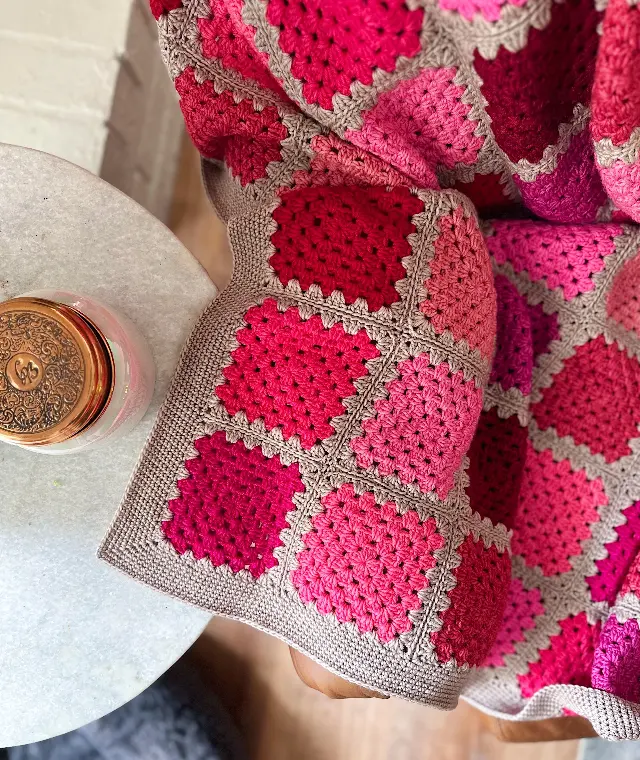
 Cashmere DK Granny Square Blanket Project
#Handmade Decor
4 ideas
Cashmere DK Granny Square Blanket Project
Get new #Handmade Decor ideas by email
Every Thursday: the week's best ideas, with the newest from #Handmade Decor.
Related tags
Handmade Decor: A Guide to Making a Home by Hand
Handmade decor means furnishing and adorning a home with objects made by hand rather than bought finished. That can mean something you make yourself, something a craftsperson in your area made, or something older that was repaired and given a second life. What ties these together is not a single style but a way of choosing: a preference for pieces that show the mark of their making, that can be mended, and that carry a story of who made them and why.
Where the idea comes from
Making things for the home is older than shopping for them. Across cultures, households wove, carved, stitched and shaped the objects they lived with, and those skills passed down within families and villages, each region developing its own patterns and materials. When manufactured goods became cheap and widely available, handwork stopped being a necessity and became a choice — sometimes a frugal one, sometimes an artistic one, often both. Today it sits alongside mass-produced furnishing rather than in opposition to it: most homes mix the two.
The main kinds of handmade decor
Read more
Textiles are the most familiar entry point: knitted and crocheted blankets and cushions, quilted throws, woven wall hangings, embroidered linens, macramé. Woodwork covers practical pieces such as benches, shelves, frames and small furniture, plus carved and turned objects. Clay and ceramics give plates, planters, tiles and vases. Paper and print bring cards, lampshades, block-printed fabric and hand-bound books. Natural materials — basketry, dried flowers and grasses, twine, rope — are inexpensive and forgiving. Upcycling is its own broad category: painting a tired cabinet, re-covering a chair, turning a jar into a lantern.
What beginners should know
Choose one craft rather than five, and give it enough time to become comfortable before judging the results. Start with small projects that finish in a sitting or two, since a completed object teaches more than an abandoned ambitious one. Learn how your material behaves before you try to control it: wool stretches, clay shrinks, wood moves with the seasons.
Tools matter less than people expect. A few good ones, kept sharp and clean, will carry you a long way. Measure twice, cut once, and keep a notebook of what worked and what did not. Where safety is concerned, be straightforward with yourself: ventilate when using glues, paints and finishes, keep sharp tools stored properly, choose food-safe finishes for anything that will hold or serve food, and follow the maker's instructions on every product you use.
Living with what you make
Handmade pieces rarely match perfectly, and that is part of their charm — but a little restraint helps. Repetition, as in a row of similar pots or a set of identical cushions, makes irregular objects feel deliberate. Placing one or two handmade things in a room lets them be noticed; filling every surface can make them read as clutter. Rotate items seasonally, repair rather than replace, and let a piece be imperfect. The value of handmade decor is not that it looks expensive, but that it looks lived with.
#Handmade Decor: frequently asked questions
How do I start making handmade decor if I’m a beginner?
Start with one craft you enjoy instead of trying several at once. Pick a small project you can finish quickly, because completing something simple teaches you more than leaving a big project half done.
What materials and tools do I need for handmade home decor?
That depends on the style you choose, but many beginners can begin with basic supplies for textiles, wood, clay, paper, or upcycled objects. A few good tools, kept clean and sharp, are usually more useful than buying a lot of specialty equipment.
Which type of handmade decor is easiest to choose for my home?
The best choice is usually the one that fits your space and the materials you already like working with. Soft items like cushions and blankets, natural pieces like baskets and dried flowers, or simple upcycled decor are often the easiest ways to begin.
How do I care for handmade decor so it lasts longer?
Treat handmade pieces gently and keep them clean according to the material they are made from. Repair small wear when you can, store fragile items safely, and avoid placing delicate pieces where they will be exposed to too much moisture, heat, or rough handling.
What are some good handmade decor ideas for a special occasion or cozy room refresh?
For a warm, welcoming look, handmade textiles, woven wall pieces, candles, table accents, or repurposed jars can make a space feel personal. For an occasion, choose a few coordinated handmade items rather than filling every surface so the details stand out.
What mistakes should I avoid when making handmade decor?
A common mistake is choosing a project that is too ambitious before learning how the material behaves. It also helps to avoid overcrowding a room with too many handmade pieces, skipping safety steps with finishes or tools, and expecting every item to look perfectly uniform.
Videos come from YouTube and posts from Instagram; titles and summaries are our own. All rights belong to their creators.