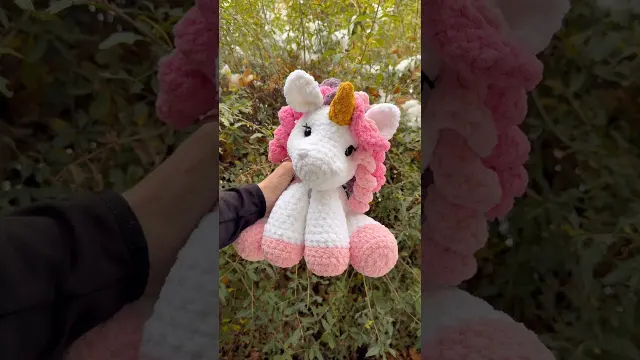
 Crocheting a Sitting Unicorn Amigurumi Toy
#Handmade Toy
1 ideas
Crocheting a Sitting Unicorn Amigurumi Toy
Get new #Handmade Toy ideas by email
Every Thursday: the week's best ideas, with the newest from #Handmade Toy.
Related tags
The Handmade Toy: A Guide to Making and Choosing Playthings
A handmade toy is any plaything made by hand rather than in a factory: stitched, carved, knitted, crocheted, moulded, folded, or assembled by one person, often in small numbers. The idea is old — older than manufacturing itself. For most of human history, every toy was handmade, shaped from wood, cloth, clay, straw or scraps left over from household work. What we now call a craft was simply how children came to have things to play with.
Why handmade toys still matter
A handmade toy carries the visible trace of its maker. A seam that is slightly uneven, a painted eye a little off-centre, a wood grain running through a tiny animal — these are marks of an individual hand rather than a mould. That is part of their appeal, and it is also why they tend to be kept rather than discarded. Making toys by hand is also a way to use up fabric and yarn, to repair instead of replace, and to give a child something that was thought about rather than bought quickly.
The main kinds
The range is wider than it first appears.
- Soft toys: sewn from cotton, linen, felt or wool, stuffed with fibre or kapok. Amigurumi — small crocheted or knitted figures — belongs here, as do simple rag dolls and cloth animals.
- Wooden toys: carved or cut animals, blocks, stacking rings, simple vehicles and pull-along figures. Hardwoods hold detail well; softer woods are easier for beginners to shape.
- Dolls and figures: rag dolls, peg dolls, felt figures and modelled characters, often dressed in tiny sewn or knitted clothes.
- Textile playthings: felt play mats, fabric books, quiet books with buttons and laces, and small sensory pieces for very young children.
- Paper and natural materials: folded paper toys, pinecone and twig creatures, shell and stone playthings, salt-dough ornaments.
- Traditional folk toys: spinning tops, cup-and-ball games, whistles, rattles and simple mechanical toys with moving parts.
Read more
If you are starting out
Beginners usually do best with a small project in one material rather than a large one in several. A simple felt animal, a knitted square turned into a cushion, or a basic crocheted ball will teach you the stitches and the shaping without demanding precision you have not built up yet.
Choose materials you can handle comfortably: smooth cotton yarn rather than slippery or fluffy fibres, firm felt rather than loosely woven fabric, and wood that is already planed if you are not used to carving. Keep your first pieces simple in shape — the charm of a handmade toy rarely depends on anatomical accuracy.
Patterns matter less than you expect. A toy made from a slightly wrong pattern, sewn with care, usually looks better than a technically perfect one made without attention.
Practical things worth knowing
Make fastenings secure. Embroidered eyes and features are safer than small buttons or beads on anything a baby or toddler will handle, and any attached part should be stitched so firmly that it cannot be worked loose. Use clean, washable materials where you can, and check that stuffing is fully enclosed.
If you are choosing a handmade toy as a gift, ask about the materials and whether it can be washed, and consider the age of the child: soft, seamless pieces for babies, more detailed and mechanical toys for older children.
Finally, leave room for imperfection. A handmade toy is meant to be played with, dragged about, and worn at the corners — that is what it was made for.
#Handmade Toy: frequently asked questions
How do I get started making handmade toys if I have never crafted before?
Pick one material and one small project rather than a big toy that combines several techniques — a simple felt animal or a basic crocheted ball teaches the stitches and shaping without demanding precision you haven't built up yet. Choose supplies you can handle comfortably, such as smooth cotton yarn, firm felt and pre-planed wood, and keep the shape simple. Attention and care matter far more than a perfect pattern.
Which kind of handmade toy should I choose for a particular child?
Match the toy to the age and to how the child plays: soft, seamless pieces with embroidered features suit babies and toddlers, while older children can enjoy more detailed figures, wooden mechanisms or toys with moving parts. If you are giving it as a gift, find out what materials were used and whether the piece can be washed. Think about whether it will be cuddled, dragged around or displayed, and choose accordingly.
What materials and tools do I actually need to begin?
You need very little beyond the basics of whichever craft you pick: a needle and thread or yarn and hook for soft toys, a knife and a piece of planed wood for carving, paper and a folding surface for paper toys. Leftover fabric, wool and scraps from household work are perfectly good starting materials. Add proper stuffing that stays fully enclosed, and avoid small beads or buttons on anything a young child will handle.
How should I care for a handmade toy so it lasts?
Use clean, washable materials from the start and ask or note whether the finished piece can be washed, since fibre stuffing and glued parts may not survive a machine cycle. Surface-wash or spot-clean where you can, and let the toy dry fully before it goes back into use. Check seams, fastenings and stuffing regularly and mend small splits early rather than replacing the toy.
What are the most common mistakes beginners make?
The usual ones are starting with a large multi-material project, choosing slippery or fluffy yarns and loosely woven fabrics that are hard to control, and fussing over anatomical accuracy instead of enjoying the shape. Another is fixing features on with small buttons or beads, which can work loose on a toy a baby handles. Leaving room for imperfection is part of the craft — a slightly uneven seam is a mark of the maker, not a failure.
Can I make a handmade toy from things I already have at home?
Yes — much of the tradition comes from shaping toys out of cloth, yarn, wood, clay, straw and scraps left over from household work. Felt offcuts, old but clean fabric, leftover wool, pinecones, twigs, shells and stones all turn into simple playthings, and a knitted square can become a cushion or a small doll. Just check that anything attached is stitched firmly and that materials are clean and suitable for the child's age.
Videos come from YouTube and posts from Instagram; titles and summaries are our own. All rights belong to their creators.