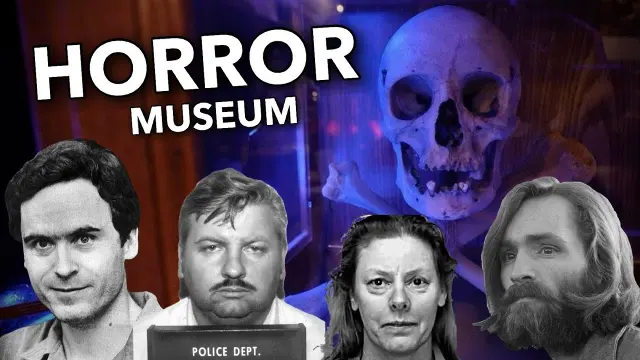
 Exploring the Michigan Museum of Horror and Oddities
#Haunted Objects
1 ideas
Exploring the Michigan Museum of Horror and Oddities
Get new #Haunted Objects ideas by email
Every Thursday: the week's best ideas, with the newest from #Haunted Objects.
Related tags
Haunted Objects: Stories Behind the Things That Stay
A haunted object is simply a thing that a story has attached itself to. A mirror, a doll, a ring, a chair, a portrait — nothing about the item itself has to change for the story to grow around it. What makes it "haunted" is the tale: that it moves, that it brings bad luck, that someone never really left it, that whoever owned it last came to a strange end. These accounts travel between neighbours, families and museums, and they outlive the objects themselves.
Where the idea comes from
Almost every culture has held some version of the belief that places and things carry presence. Objects connected to the dead were treated as still belonging to them, and in many traditions they were kept, fed, or quietly retired rather than thrown away. Folk tales about cursed inheritances and unlucky gifts run through European storytelling, and mourning customs — locks of hair, photographs of the deceased, jewellery made to hold a memory — gave ordinary belongings a genuinely heavy charge. Add the natural human habit of seeing faces in patterned surfaces and hearing meaning in an unexplained creak, and you have all the ingredients. Nothing supernatural has to be agreed on for the stories to matter: they are a record of how people grieve, fear and remember.
Kinds you will come across
Read more
- Mirrors and reflective surfaces, long associated with the soul and with seeing beyond the everyday.
- Dolls and figures, whose fixed expressions make them easy to imagine as watching.
- Portraits and photographs, especially where the subject seems to follow you with their eyes.
- Jewellery and small personal items, often tied to a family story about a former owner.
- Furniture and household things — cradles, rocking chairs, clocks — where movement or sound does the work.
- Memorial and mourning objects, whose real power is sentimental rather than eerie.
- Museum curiosities, strange or unsettling objects kept for their oddness as much as their history.
What to keep in mind if you are new to this
Treat the story as the artefact. A good account tells you who owned the object, how it was used, and how the rumour started, and that is where the interest lies. Be sceptical of anything that arrives with an elaborate backstory but no paperwork; provenance is usually far more mundane and far more revealing than legend.
If you collect, care for the object physically as well as symbolically: check for mould, pests and unstable materials, keep delicate things out of direct sunlight, and handle them with clean hands. If something is genuinely unsettling to live with, the sensible response is usually to move it, store it, or give it away — not to test your nerve.
Finally, be respectful. Many objects are tied to real deaths, real grief and living cultures, and treating them as a cheap thrill is unkind as well as uninformative. Curiosity served with care is what makes these stories worth keeping.
#Haunted Objects: frequently asked questions
How do I get started with haunted objects if I'm completely new to them?
Start with the story rather than the object: find out who owned it, how it was used, and how the rumour about it began. Read accounts the way you would read local history, and visit small oddity collections and museum displays to see how unsettling items are presented and explained. Going in with curiosity about people and customs, rather than a wish to be frightened, makes the whole subject far richer.
What do I actually need to begin collecting or researching haunted objects?
You mainly need patience and a habit of asking questions, since documentation matters more than the item itself. Where an object comes from, who it belonged to and how it changed hands tell you more than any dramatic legend attached to it. A clean, dry, stable place to keep delicate things is the practical side of the same preparation.
Which kind of haunted object should I choose to focus on?
Pick whichever category genuinely catches your attention, because the appeal differs a lot between them. Mirrors and portraits work through the unease of being watched, dolls and figures through fixed expressions, and furniture through unexplained movement or sound. Memorial and mourning pieces are a quieter choice, carrying sentimental weight rather than an eerie one.
How should I care for a haunted object in my home?
Look after it physically first: check for mould, pests and materials that are deteriorating, keep fragile pieces out of direct sunlight, and handle everything with clean hands. If something leaves you genuinely uncomfortable living with it, the reasonable move is to relocate it, store it properly, or pass it on rather than testing your nerve. Many pieces also deserve respect as records of real grief, so treat them as you would any other sensitive keepsake.
Any ideas for using haunted objects as a theme for an occasion or display?
A storytelling evening works well, where each object is introduced through the tale attached to it rather than as a jump-scare prop. You could group pieces by type, such as reflective surfaces, portraits, or mourning keepsakes, and let the history carry the mood. Keep the tone curious and considerate, since some of these stories involve real loss.
What mistakes do newcomers usually make with haunted objects?
The most common one is believing a colourful backstory that arrives without any supporting paperwork, when the documented history is usually plainer and more interesting. Another is chasing a thrill and treating items tied to real deaths or living traditions as entertainment, which is both unkind and uninformative. Careless handling and storage damage more objects than any supposed curse ever has.
Videos come from YouTube and posts from Instagram; titles and summaries are our own. All rights belong to their creators.