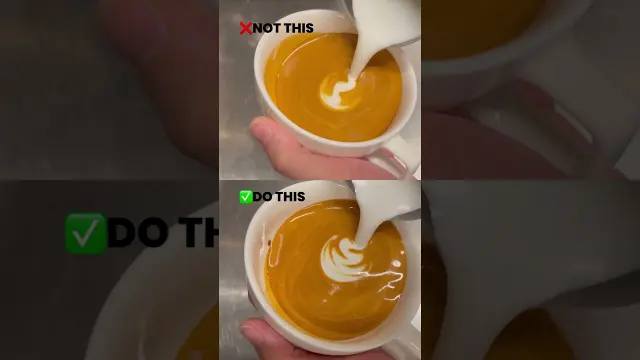
 Layered Heart Latte Art and Wiggle Spacing
#Heart Pattern
1 ideas
Layered Heart Latte Art and Wiggle Spacing
Get new #Heart Pattern ideas by email
Every Thursday: the week's best ideas, with the newest from #Heart Pattern.
Related tags
Heart Patterns: Motifs, Methods and Beginner Tips
The heart is one of the most recognisable shapes in decoration, and one of the easiest to work with. Two rounded lobes meeting at a point, drawn in a single unbroken line: that simplicity is why the motif turns up almost everywhere — on fabric, paper, cake, ceramic, glass and skin. A heart pattern is simply that shape repeated, isolated, layered or distorted until it becomes a surface of its own.
Where the motif comes from
The symbol has been used across many cultures for centuries, and its journey into everyday decoration runs through folk art, embroidery, tilework and printing rather than through any single point of origin. What matters for anyone using it today is that the heart reads instantly at almost any size, which is why it survives being shrunk to a stitch or enlarged to a wall mural without losing its meaning.
The main kinds of heart pattern
Read more
- Repeating rows: evenly spaced hearts in a grid or offset half-drop, the most common approach for fabric, wallpaper and wrapping paper.
- Scattered hearts: varied sizes and angles, useful when you want something loose and hand-drawn rather than formal.
- Continuous line: hearts joined tip to tip or looped together, a favourite for borders and trims.
- Interlocking and tessellated: hearts fitted into each other so the negative space between them forms new shapes.
- Single statement heart: one large motif used as a focal point rather than a repeating field.
Getting the shape right
Most people draw a heart by adding two circles to a triangle, and that is a good place to start. Sketch two equal circles side by side, then bring lines down from the outer edges to a point centred below. Keep the point directly under the meeting point of the circles, or the heart will lean. If you are repeating the motif, cut one template from card and trace it rather than redrawing freehand — consistency matters far more than perfect curves.
Symmetry is the usual stumbling block. Fold the paper and cut on the crease to check your shape, or hold the drawing up to a window and compare the two halves.
Working with the pattern
Scale changes everything. A heart motif that is charming on a small card can look clumsy blown up, and one that fills a wall can vanish when shrunk. Test your pattern at the size it will actually be seen.
For fabric and paper, plan the spacing before you commit: mark light guide lines, keep the gaps generous, and leave a margin at the edges so the pattern can breathe. For needlework, count your stitches and work the outline first, then fill. For anything applied to food or drink, keep the shapes simple and the contrast strong.
A note on restraint
A heart carries feeling with it, so a little goes a long way. One clear repetition, evenly spaced and neatly executed, nearly always looks better than several competing versions of the same idea.
#Heart Pattern: frequently asked questions
How do I get started making a heart pattern?
Start by getting a single heart shape right, since the whole pattern is that motif repeated. Sketch equal rounded lobes and bring the sides down to a centred point, then cut the shape out as a template so every repeat matches instead of being drawn freehand. A quick fold-and-cut test tells you whether the shape is symmetrical before you commit it to fabric or paper.
What do I need to make a heart pattern?
Very little beyond paper, a pencil and a piece of card for the template. Add the surface you are decorating — fabric, paper, icing, clay — plus a marking tool and something to draw light guide lines with. Checking symmetry is easier with a window or a folded sheet than with any special equipment.
Which kind of heart pattern should I choose?
It depends on the surface and the mood you want. Even rows suit fabric, wallpaper and wrapping paper where a tidy, predictable field reads well, while scattered hearts at varied sizes and angles feel looser and more hand-drawn. Continuous-line and interlocking versions work best along borders and trims, and a single large heart is the right choice when you want a focal point rather than an all-over field.
How do I keep a repeated heart pattern looking neat?
Trace a template rather than redrawing, because consistency matters far more than perfect curves. Mark light guide lines first and keep the gaps generous, with a margin at the edges so the motif can breathe. Always test the pattern at the size it will finally be seen, since a heart that charms on a small card can turn clumsy when enlarged.
How should I care for something decorated with a heart pattern?
It follows the material more than the motif. Wash embroidered or printed fabric gently and inside out so the stitched or printed shapes don't fuzz or fade, and store paper goods flat and dry so the shapes don't warp. Dust ceramic and glass rather than scrubbing at the decoration.
What mistakes do people commonly make with heart patterns?
The usual ones are drawing each heart freehand so the repeats drift out of alignment, and letting the point sit off-centre so the shape leans. Another is cramming in several competing versions of the idea, when a single clear repetition, evenly spaced, almost always looks better.
Videos come from YouTube and posts from Instagram; titles and summaries are our own. All rights belong to their creators.