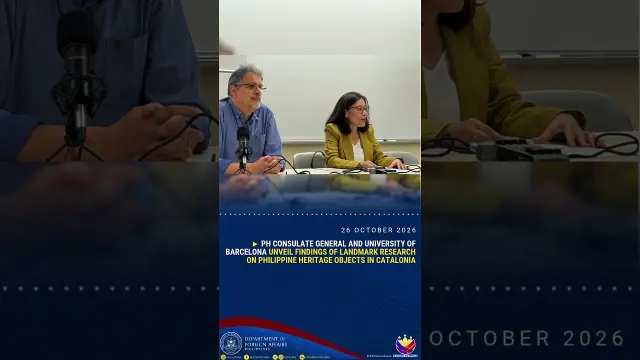
 796 Philippine Objects Documented in Catalonia's Museums
#Heritage Documentation
1 ideas
796 Philippine Objects Documented in Catalonia's Museums
Get new #Heritage Documentation ideas by email
Every Thursday: the week's best ideas, with the newest from #Heritage Documentation.
Related tags
Heritage Documentation: Recording What Matters
Heritage documentation is the work of describing things worth keeping — objects, buildings, landscapes, songs, recipes, techniques, languages — so that what is known about them does not stay locked inside one person's memory or one institution's storeroom. It is quieter than restoration and less visible than exhibition, yet almost everything else depends on it. A photograph cannot be interpreted, a piece of furniture cannot be conserved, and a community cannot argue for the return of something it once made, without a record saying what it is, where it came from, and who says so.
Where it comes from
Documentation grew alongside collecting itself. Whenever people gathered objects, they attached labels, and whenever they attached labels they made choices — what to write down, what to leave out, whose account to trust. Those choices are still the heart of the practice. Modern documentation simply makes them systematic, so that two people working years apart can understand the same record the same way.
The main kinds of work
Read more
- Inventory: the basic count. What exists, where it sits, in what condition.
- Cataloguing: the deeper description — materials, construction, use, history, meaning.
- Visual documentation: photography, drawing, measured survey, and increasingly three-dimensional recording.
- Audio and video: interviews, performances, spoken language, the sound of a place at work.
- Metadata: the structured information that lets a record be found, compared and understood later.
- Oral history and community documentation: knowledge held by people rather than by paperwork.
What beginners should learn first
Consistency matters more than sophistication. Agree on a small set of fields and fill them in the same way every time; a simple record kept honestly beats an elaborate one abandoned halfway. Separate what you observe from what you are told, and name the source of each. Record uncertainty openly — "unknown", "reported by the donor", "partially legible" — rather than guessing to make a field look complete. Keep backups in more than one place, in formats that do not depend on a single piece of software, and check that they still open.
Working with people, not just about them
Objects and traditions usually belong to someone. Ask before you photograph, record or publish, and explain where the material will live and who will be able to see it. Some knowledge is meant to stay restricted; a good record can note that something exists without disclosing what should not be shared. Involve the community in describing what you are documenting — their words are often more accurate, and more useful, than an outsider's.
Practical habits
Write notes the same day, while detail is still fresh. Describe condition plainly and without alarm. Label photographs with who, what, where and when. Keep a written trail of who changed a record and why. And remember that documentation is never neutral: every description is also an interpretation, so make your assumptions visible and leave room for the next person to correct you.
#Heritage Documentation: frequently asked questions
How do I start documenting a heritage collection when I have no training?
Begin with the smallest possible record: decide what you are describing, choose a handful of fields you can fill in for every item, and apply them the same way each time. Consistency is worth more than technical polish, so a plain record kept honestly will serve you better than an ambitious scheme you abandon halfway. Write the first entries the same day you handle the objects, while the details are still fresh.
What should I record about an object, and what can I safely leave out?
Cover the essentials that let a stranger understand the thing without you in the room: what it is, what it is made of, how it was used, where it came from, its present condition, and who supplied the information. Beyond that, leave out anything you cannot vouch for rather than padding a field to make it look finished. Marking something as unknown or as reported by a particular source is always more useful than a confident guess.
Which form of documentation should I choose — written records, photographs, or recorded interviews?
They answer different questions, so the choice follows from what you are afraid of losing. Written cataloguing captures facts and provenance, images preserve appearance and condition, and audio or video keeps knowledge that only lives in people's voices. Most projects end up combining a simple written core with one richer layer suited to the material.
How do I keep records safe and usable over the long term?
Store copies in more than one place and in formats that do not depend on a single piece of software, then actually open the files now and again to confirm they still work. Keep a written trail of who altered a record and why, so later readers can tell your observation apart from someone else's correction. Where knowledge is sensitive, a record can note that something exists without disclosing what should stay restricted.
What mistakes do people most often make when documenting heritage?
The common ones are inconsistency across entries, blurring what was observed with what was merely told, and treating a description as if it were neutral fact. Photographs frequently go unlabelled, so nobody later knows who or what is in them, and permission is assumed rather than asked. Since every record is also an interpretation, make your assumptions visible and leave room for the next person to correct you.
Should the community be involved in documenting its own heritage?
Yes, and not only as subjects — ask before you photograph, record or publish, and explain where the material will be kept and who will be able to see it. People describing their own objects and traditions usually give wording that is both more accurate and more useful than an outsider's. Involvement also shapes what is worth recording in the first place, which is a judgement outsiders rarely get right alone.
Videos come from YouTube and posts from Instagram; titles and summaries are our own. All rights belong to their creators.