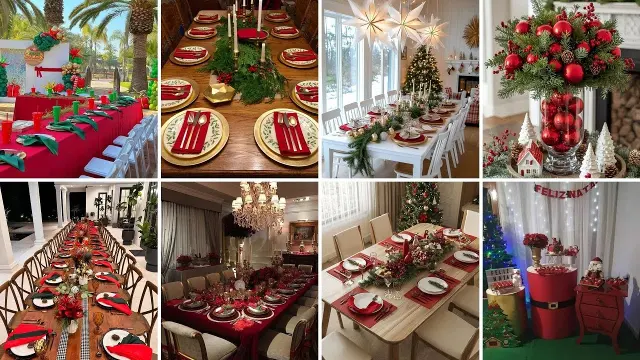
 Christmas Dinner Table Decoration Ideas for Indoor and Outdoor Spaces
#Holiday Tablescape
2 ideas
Christmas Dinner Table Decoration Ideas for Indoor and Outdoor Spaces
 Christmas Decor Store Tour at Nell Hill's for Holiday Ideas
Get new #Holiday Tablescape ideas by email
Every Thursday: the week's best ideas, with the newest from #Holiday Tablescape.
Related tags
Holiday Tablescapes: How to Set a Festive Table
A tablescape is the whole picture a table makes, not just the plates on it. Where a basic table setting covers forks and glasses, a tablescape treats the entire surface as one composition: linens, dishes, glassware, a centrepiece, lighting, chairs and whatever else you bring to it. The word is a fairly recent coinage, but the instinct behind it is old — people have been dressing tables for feasts and celebrations for as long as they have been gathering around them. A holiday tablescape simply applies that instinct to the moments that matter most in the year: a long winter dinner, a spring lunch, a birthday spread, a table set for guests arriving after a journey.
The elements that make it up
Think of a tablescape as layers, built from the bottom up.
- The base: a tablecloth, runner, bare wood or woven placemats, which sets the tone before anything else lands on it.
- The place setting: plates, cutlery, glasses, napkins, and often a small personal touch such as a name card or a sprig laid on the napkin.
- The centrepiece: the focal arrangement in the middle, whether flowers, greenery, fruit, candles or a bowl of something edible.
- Light: candles, lamps, fairy lights, or simply turning the overhead light down.
- The frame: chairs, benches, and the surrounding room, which the table should feel connected to rather than separate from.
Read more
The main styles
Classic and traditional tables lean on symmetry, rich colour and heirloom pieces — think deep reds, gold, pressed glass and a formal, centred arrangement. Rustic and natural tables favour linen, wood, stoneware, dried stems, evergreens and a looser, gathered look. Modern and minimal tables use one strong idea: a limited palette, clean shapes, plenty of empty space, and perhaps a single dramatic centrepiece. Eclectic tables mix eras and colours on purpose, and vintage-inspired tables build around old china, mismatched glass and flea-market finds.
What beginners should know
Start with what you already own. A table set with everyday white plates, a plain cloth and a bowl of greenery can look better than a table covered in new things that fight each other. Choose two or three colours and hold to them. Work in odd numbers when you group objects, and vary the heights so the eye has somewhere to travel. Keep the centrepiece low or open enough that people can see each other across the table — conversation matters more than the arrangement.
Practical tips
Set the table the day before if you can; it takes the pressure off the day itself and lets you notice what is missing. Test the seating with the chairs pulled in, so you know there is room for elbows and glasses. Choose unscented candles near food, and never leave a flame burning unattended or close to greenery, paper or fabric. If children will be at the table, keep delicate pieces above their reach and give them something to do — a small place card or a simple craft at their seat.
Finally, leave a little imperfection. A table that looks lived-in and welcoming invites people to sit down, and that is the whole point.
#Holiday Tablescape: frequently asked questions
How do I start a holiday tablescape without buying everything new?
Begin with what you already own: everyday plates, a plain cloth or runner and a bowl of greenery or fruit will carry a table further than a trolley of new pieces. Settle on a small palette of colours you like together and build only from those, so nothing competes. Once the base feels right, add height and a low centrepiece last.
What do I actually need for a holiday table?
A tablescape works in layers: a base such as a cloth, runner or woven mats; the place setting of plates, cutlery, glasses and napkins; a centrepiece; some form of light; and the chairs and room around it. You do not need every layer to be elaborate — a simple base with one strong centrepiece and lowered lighting reads as considered.
Which tablescape style should I choose?
Let your own belongings and the room decide rather than picking a style in the abstract. Classic and traditional leans on symmetry and rich colour, rustic and natural on linen, wood and evergreens, modern and minimal on a limited palette and empty space, and eclectic or vintage on mismatched china and old glass. A table that echoes the room around it always looks more intentional than one that ignores it.
When should I set the table, and how do I keep it looking good until guests arrive?
Setting it the day before takes the pressure off and lets you spot what is missing while there is still time to fix it. Check the seating with the chairs pulled in, so you know there is room for elbows and glasses. Use unscented candles near food, keep flames clear of greenery, paper and fabric, and move anything delicate out of children's reach.
What are the most common mistakes people make?
The usual ones are trying to use too many colours or too many new pieces at once, and building a centrepiece so tall that people cannot see across the table. Grouping objects in odd numbers and varying their heights fixes most arrangements quickly. Finally, leave a little imperfection — a table that looks lived-in is the one guests relax at.
Can a holiday tablescape work outdoors or in a small space?
Yes — the same layers apply, just adapted: sturdier linens and weighted candle holders outdoors, and fewer, larger elements where space is tight. A limited palette and a single low centrepiece suit both cases well. The test is always whether people can sit down, reach their glasses and talk comfortably.
Videos come from YouTube and posts from Instagram; titles and summaries are our own. All rights belong to their creators.