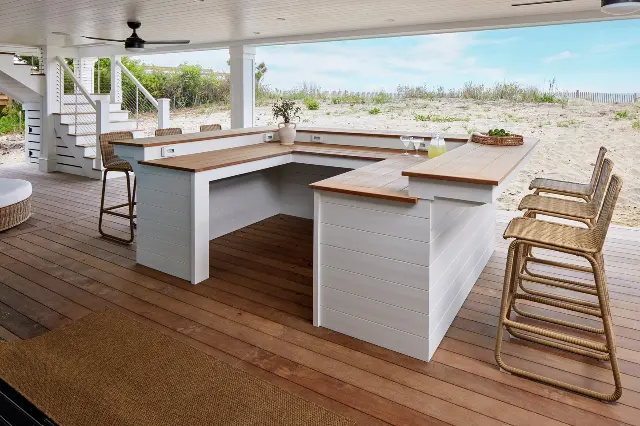
 Why Every Custom Beach Home Wants a Bar, From Morning Coffee to Cocktails
#Home Bar
1 ideas
Why Every Custom Beach Home Wants a Bar, From Morning Coffee to Cocktails
Get new #Home Bar ideas by email
Every Thursday: the week's best ideas, with the newest from #Home Bar.
Related tags
The Home Bar: A Practical Guide to Setting Up at Home
A home bar is simply a place set aside at home for making and serving drinks — a corner, a cupboard, a cart, a counter. It is less about alcohol than about hospitality: having what you need within reach when someone drops by, and a small ritual of care at the end of a day. The idea grew out of older domestic habits of keeping a drinks tray or a locked cabinet for guests, and it has survived every change in taste because the underlying need does not change: a little equipment, a few bottles, and a surface to work on.
The main kinds
The built-in or wet bar is a permanent counter with a sink, storage and often a small fridge; it asks for space and planning, and it suits a basement, a spare room or a corner of a living room. The freestanding cart is the most forgiving option, easy to move and easy to start with. A cabinet bar — a cupboard, a converted bookcase, an armoire — closes up and disappears when not in use, which makes it ideal in small homes. And there is the tray: a single tray on a sideboard, holding a bottle, two glasses and a bottle opener. Any of these counts.
What to keep on hand
Read more
You do not need a hundred bottles. A small, well-chosen set covers most requests: something brown and aged, something clear and neutral, a vermouth or aromatised wine kept in the fridge, a sparkling wine, and a couple of mixers. Bitters, citrus, sugar and good ice do more for a drink than another bottle does.
- Glassware: a sturdy tumbler, a stemmed glass, a tall glass. Four to six of each is plenty.
- Tools: a shaker, a jigger for measuring, a strainer, a long bar spoon, a muddler, a sharp knife and a small board.
- Extras: napkins, a small bowl for garnish, a bottle opener, a cloth.
Setting it up well
Position matters more than decoration. Choose somewhere you can reach without crossing the room, out of direct sunlight, away from heat, and not so high that pouring becomes a balancing act. Keep spirits upright and closed, store vermouth and opened wine in the refrigerator, and note that light and warmth are the enemies of anything you plan to keep.
Group things by how they are used: bottles together, tools together, glasses where they can be lifted out with one hand. Ice is the one element people underestimate — a generous supply of clean ice improves a drink more than an extra ingredient does.
Hosting without overbuying
Offer two or three drinks well made rather than a long list made badly. Always include something without alcohol — a good tonic, a citrus and soda, a bitter aperitif-style soft drink — so that nobody has to explain themselves, and so the bar stays a place of welcome rather than pressure. Drink slowly, eat something, and stop when you have had enough. A home bar is at its best when it makes guests comfortable, not when it impresses them.
#Home Bar: frequently asked questions
How do I start a home bar when I have very little space?
Start with the smallest version of the idea: a single tray on a sideboard holding one bottle, a couple of glasses and a bottle opener is already a home bar. From there you can move up to a cart that rolls out of the way or a cabinet that closes and disappears when it isn't in use. Space should decide the format, not the other way round.
What do I actually need to keep on hand?
A short, well-chosen set covers most requests: something brown and aged, something clear and neutral, an aromatised wine kept cold, a sparkling wine and a few mixers. Add bitters, citrus, sugar and plenty of clean ice, which do more for a drink than another bottle ever will. For equipment, a shaker, a jigger, a strainer, a bar spoon, a muddler, a knife and a small board are enough, along with a few tumblers, stemmed glasses and tall glasses.
Which kind of home bar should I choose?
It depends on how much room you have and whether the bar should be visible. A built-in counter with a sink and storage suits a spare room, basement or living-room corner, while a freestanding cart is the most forgiving and easiest place to begin. A cupboard, bookcase or armoire that closes up works beautifully in small homes.
How should I care for the bottles and equipment once the bar is set up?
Position is the main thing: keep the bar out of direct sunlight and away from heat, and not so high that pouring becomes a balancing act. Store spirits upright and closed, and keep aromatised wines and any opened wine in the refrigerator, since light and warmth are what spoil things you plan to keep. Rinse glasses and tools after use and keep a cloth nearby so the surface stays workable.
What are the common mistakes people make with a home bar?
Buying a long list of bottles before knowing what gets drunk, and treating decoration as more important than a reachable, shaded position, are the usual ones. Underestimating ice is another — a generous supply of clean ice improves a drink more than an extra ingredient does. The bar should make guests comfortable rather than impress them.
How do I host from a home bar without overbuying?
Offer a couple of drinks made well instead of a long menu made badly, and always include something without alcohol so nobody has to explain themselves. Group bottles, tools and glasses by how they are used so you can serve without crossing the room. Drink slowly, eat something and stop when you've had enough — welcome matters more than variety.
Videos come from YouTube and posts from Instagram; titles and summaries are our own. All rights belong to their creators.