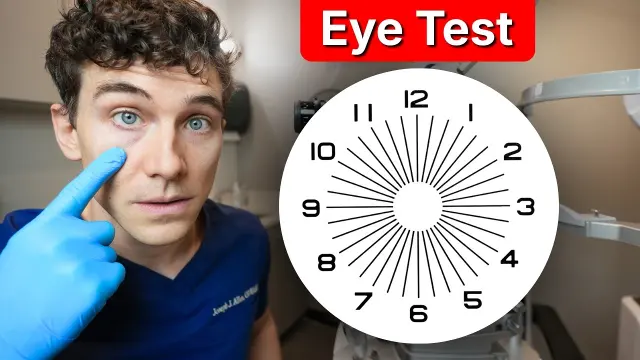
 At-Home Eye Tests You Can Try Between Optometry Appointments
#Home Eye Exam
1 ideas
At-Home Eye Tests You Can Try Between Optometry Appointments
Get new #Home Eye Exam ideas by email
Every Thursday: the week's best ideas, with the newest from #Home Eye Exam.
Related tags
Home Eye Exams: What You Can Check and What You Can't
A home eye exam is exactly what it sounds like: a simple check of your eyesight that you carry out yourself, at your own table, without a clinic, a professional or specialised equipment. It grew out of two practical needs — people wanting a rough sense of how their vision is doing between appointments, and eye care professionals wanting a way for patients to keep an eye on changes from home. It is a screening habit, not a diagnosis, and holding that distinction clearly in your mind is the most useful thing you can bring to it.
What home checks can and cannot do
A home check can tell you whether your vision seems roughly the same as last time, whether one eye is noticeably weaker than the other, or whether straight lines have started to look wavy. What it cannot do is measure eye pressure, examine the retina, detect glaucoma or rule anything out. Those need equipment and training you cannot replicate at the kitchen table. Think of a home check as a note you make for yourself — useful, but not a verdict.
The common kinds
Read more
- A reading chart taped to a wall at a measured distance, testing one eye at a time with and without your glasses.
- The pinhole test, where you look through a tiny hole punched in a card. If your vision sharpens, the cause is more likely a focusing problem than anything else.
- A grid of squares, often supplied by your eye care professional, used to notice distortion or blind spots in the centre of your vision.
- The cover test, covering one eye and then the other to see whether the uncovered eye has to move to fix on a target.
- Simple screen-based checks and phone apps, which vary a great deal in quality and should be treated as rough indicators only.
Getting a result you can trust
Do your checks in the same conditions each time, because a comparison is only as good as the setup. Use good, even light and avoid a window directly behind the chart. Stand at the same distance, mark it on the floor if that helps, and always test one eye at a time, covering the other with a card rather than squinting it shut. Wear your glasses or lenses for one round and take them off for another, and write down what you see, including the date. A single result means little; a pattern over months means something.
Be honest with yourself about what a home check is for. If you notice a change, that is information to bring to a professional, not a reason to adjust your own routine or buy something online. And some things should not wait for a scheduled appointment at all — a sudden loss of vision, a curtain or shadow across your sight, new flashes or a swarm of floaters, eye pain, or redness with reduced vision all call for prompt professional care.
Used sensibly, a home eye exam is a small, calm ritual that keeps you attentive to your eyes between proper checks.
#Home Eye Exam: frequently asked questions
What is a home eye exam actually for?
It is a simple sight check you carry out yourself at your own table, using everyday things rather than clinic equipment. Its purpose is to give you a rough sense of whether your vision seems steady between proper appointments, and to flag changes worth mentioning to a professional. It is a screening habit, not a diagnosis.
Do I need special equipment or training to do one?
No — most versions rely on what you already have, such as a printed chart taped to a wall, a card with a tiny hole punched in it, or a grid of squares your eye care professional supplied. Simple screen-based checks and phone apps exist too, but they vary widely and are best treated as rough indicators. What matters far more than the gear is keeping the setup identical each time.
Which kind of home check should I choose?
Choose based on what you want to notice: a reading chart for overall sharpness, a grid for distortion or blind spots in the centre of your vision, a cover test for how well your eyes work together. If your eye care professional gave you a specific method to use, stick with that one. Doing a single check consistently is more useful than dabbling in several.
How do I get a result I can actually trust?
Repeat the check under the same conditions — even light, no window directly behind the chart, the same marked standing distance — and test one eye at a time, covering the other with a card instead of squinting it shut. Do a round with your glasses or lenses and a round without, and write down what you see along with the date. A single result means little; a pattern over months is what tells you something.
What mistakes do people commonly make?
Squinting the covered eye shut, shifting the distance or lighting between sessions, and skipping the written record are the usual ones. Another is reading a result as a verdict and adjusting your own routine or buying something online because of it. Treat any change as information to bring to a professional instead.
When should I skip the home check and see someone?
Some things should not wait for a scheduled appointment: a sudden loss of vision, a curtain or shadow across your sight, new flashes or a swarm of floaters, eye pain, or redness together with reduced vision all call for prompt professional care. For anything short of that, a home check is simply a calm way to stay attentive to your eyes between proper examinations.
Videos come from YouTube and posts from Instagram; titles and summaries are our own. All rights belong to their creators.