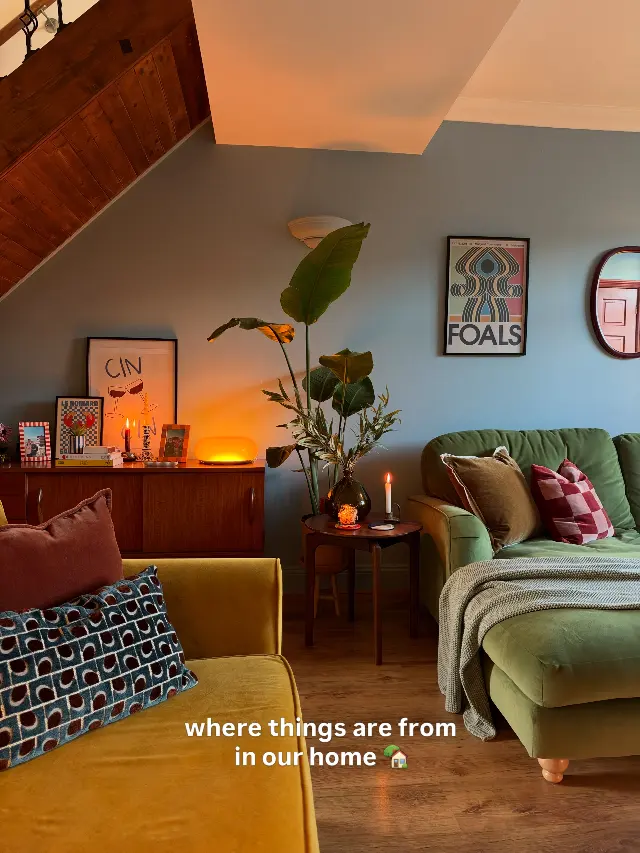
 Colorful Mid Century Modern Living Room Home Tour
#Home Furniture
1 ideas
Colorful Mid Century Modern Living Room Home Tour
Get new #Home Furniture ideas by email
Every Thursday: the week's best ideas, with the newest from #Home Furniture.
Related tags
Home Furniture: A Practical Guide to Choosing and Living With It
Furniture is the movable equipment of a home: the seating, surfaces, storage and sleeping pieces that turn rooms into places where daily life can happen. Its name comes from the French *fournir*, "to furnish" — to supply what is needed. The idea is old, but the purpose has stayed steady across centuries: raise things off the ground, keep them ordered, and make a space comfortable to be in.
The main groups
Most furniture falls into a few practical families. Seating includes chairs, sofas, benches and stools. Surfaces — tables and desks — are where work, meals and conversation take place. Storage covers wardrobes, shelves, sideboards and chests. Beds and their frames handle rest, and smaller pieces such as lamps, mirrors and rugs finish a room without taking up much floor space.
Materials and what they mean
Read more
Wood is the classic choice, either solid or as veneer over a stable core. Solid wood can be sanded and repaired over time; veneered boards are lighter and more affordable but less forgiving of moisture. Metal frames bring strength with slim profiles, which is why they suit small rooms. Upholstered pieces are built around a frame — hardwood and webbing hold their shape much longer than softwood and foam alone. Glass, rattan, leather and engineered boards round out the list, each with its own wear pattern.
Styles worth recognising
There is no single correct look. Traditional furniture favours carved detail, symmetry and heavy proportions. Mid-century design, which emerged in the middle of the twentieth century, prefers clean lines, tapered legs and the honest use of materials. Minimalist and Scandinavian approaches share an interest in light timber, pale colours and restraint. Industrial styles expose metal and brick, while maximalist rooms mix pattern and colour deliberately. Most homes end up combining two or three of these, and that is fine.
What beginners should know
Measure the room and, more importantly, the doorways, stairwells and lifts before buying anything large. A generous sofa loses its charm if it cannot be brought inside. Think about the routes people walk through a room and leave them clear. Scale matters more than style: a very large piece in a small space crowds it, and tiny pieces in a big room look lost.
Check construction where you can. Open drawers, sit down, lift a corner. Look at joints rather than surfaces.
Living with what you choose
Sunlight fades fabric and darkens wood unevenly; a little rotation helps. Wood prefers stable humidity and dislikes long contact with water, so use coasters. Upholstery lasts longer with regular vacuuming and occasional professional cleaning. Tighten screws once or twice a year, and treat small scratches before they spread.
Buying slowly and choosing pieces you genuinely like tends to work better than filling a room at once — furniture is meant to be lived with for years, and it is worth letting a home find its own shape.
#Home Furniture: frequently asked questions
How should a beginner start furnishing a home?
Start with the pieces daily life depends on — somewhere to sit, somewhere to eat or work, and somewhere to store things — and add the rest gradually. Buying slowly and choosing items you genuinely like works better than filling a room in one go, because furniture is meant to be lived with for years. Letting a home find its own shape over time usually looks more personal than a room assembled in a single trip.
What should I check before buying a large piece like a sofa or wardrobe?
Measure the room, but measure the doorways, stairwells and lifts just as carefully, since a generous sofa is useless if it cannot be brought inside. Think about the routes people walk through the room and keep them clear. Scale matters more than style: an oversized piece crowds a small space, while tiny pieces look lost in a large one.
Which material should I choose for furniture?
It depends on how you live and how much upkeep you want. Solid wood can be sanded and repaired over the years, while veneered boards are lighter and more affordable but less forgiving of moisture. Metal frames give strength in slim profiles, which suits small rooms, and upholstered pieces hold their shape far longer when built on a hardwood frame rather than softwood and foam alone.
How do I care for wooden and upholstered furniture?
Wood prefers stable humidity and dislikes standing water, so use coasters and wipe spills promptly; sunlight fades fabric and darkens wood unevenly, so rotating pieces helps. Upholstery lasts longer with regular vacuuming and an occasional deep clean. Check and tighten hardware from time to time, and deal with small scratches before they spread.
How can I mix different furniture styles without it looking chaotic?
Most homes naturally combine two or three styles, and that usually reads as character rather than clutter. Anchor the room with a shared thread — similar timber tones, a consistent palette, or one repeated shape — and let the individual pieces differ. There is no single correct look, so choose what you actually enjoy sitting in and living around.
What is the most common mistake people make when furnishing a room?
Buying for looks before checking construction: open the drawers, sit down, lift a corner, and look at the joints rather than the surface finish. The second is ignoring how the space is actually used, which leaves walkways blocked or a room that photographs well but feels awkward. Getting those two things right matters more than following any particular trend.
Videos come from YouTube and posts from Instagram; titles and summaries are our own. All rights belong to their creators.