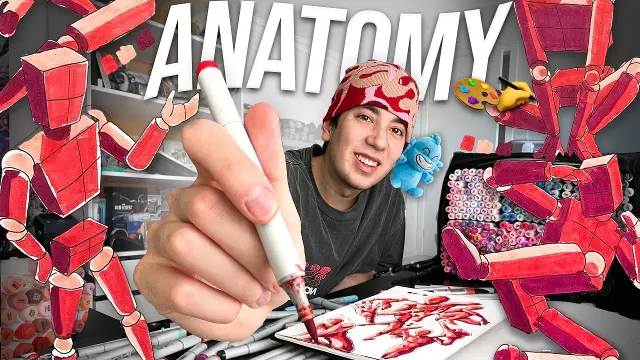
 An Easy-to-Understand Guide to Learning Anatomy
#Human Anatomy
1 ideas
An Easy-to-Understand Guide to Learning Anatomy
Get new #Human Anatomy ideas by email
Every Thursday: the week's best ideas, with the newest from #Human Anatomy.
Related tags
Human Anatomy Guide
Human anatomy is the study of the structure of the human body. It looks at how the body is put together, from the largest organs and bones down to muscles, nerves, blood vessels, and tissues. Anatomy is one of the foundations of medicine, health care, sports science, physiotherapy, and many other fields because it helps explain how the body is organized and how its parts relate to one another.
What human anatomy includes
Anatomy is usually divided into broad areas. Gross anatomy focuses on structures you can see without a microscope, such as the heart, lungs, bones, and muscles. Microscopic anatomy looks at cells and tissues in finer detail. There is also regional anatomy, which studies one part of the body at a time, and systemic anatomy, which studies body systems such as the digestive or nervous system.
The body is commonly understood through major systems, including the skeletal, muscular, nervous, circulatory, respiratory, digestive, urinary, reproductive, and integumentary systems. Each system has its own role, but none works alone. For example, muscles need nerves to move, blood to deliver oxygen, and bones for support.
Read more
Why anatomy matters
Learning anatomy helps you understand how the body works in everyday life. It can make sense of posture, movement, breathing, digestion, and healing. It is also useful for reading health information, following exercise guidance, or understanding a diagnosis or treatment plan. Even if you are not studying medicine, basic anatomy gives you a clearer picture of your own body and how to care for it.
Main ways people learn anatomy
There are several common ways to study anatomy:
- Visual diagrams and atlases, which show the body in layers and labels
- Models and illustrations, which help make complex structures easier to remember
- Dissection and hands-on study, often used in formal training
- Digital tools and animations, which can show movement and relationships between structures
- Repetition and comparison, which help you learn similar structures, such as different bones or muscles
Tips for beginners
If you are new to anatomy, start with the basics. Learn the main body systems first, then move to the important organs, bones, and muscles in each one. It also helps to use anatomical terms for direction, such as front and back, upper and lower, or left and right. These terms make it easier to understand where one structure is in relation to another.
A few practical tips can make learning easier:
- Study one system or region at a time
- Use simple sketches to label parts yourself
- Repeat names out loud to strengthen memory
- Compare similar structures to notice differences
- Review regularly instead of trying to memorize everything at once
A lasting subject of study
Human anatomy is a large subject, but it becomes easier when you break it into parts and keep returning to the same core ideas. The goal is not just to memorize names, but to understand how the body is built and how its structures work together. That understanding can support learning, curiosity, and better awareness of your own body.
#Human Anatomy: frequently asked questions
How do I start learning human anatomy as a complete beginner?
Begin with the big picture: learn the major body systems and what each one is broadly responsible for, then zoom in on the organs, bones, and muscles within a single system. Working one region or system at a time keeps the subject from feeling overwhelming and gives you a structure to hang new details on. Save fine detail for later, once the overall layout makes sense.
What do I need to study anatomy at home?
A labeled atlas or diagram set is the core resource, since anatomy is largely a visual and spatial subject. Add a notebook for your own sketches so you can label structures from memory rather than only reading labels, and consider simple models or animations if you find relationships between parts hard to picture. Nothing elaborate is required to begin.
What is the difference between gross anatomy and microscopic anatomy?
Gross anatomy covers structures large enough to see with the naked eye, such as bones, muscles, and organs, while microscopic anatomy looks at cells and tissues at a much finer scale. Related to this, regional anatomy studies one area of the body at a time and systemic anatomy follows a whole system, such as the nervous or digestive system. Choosing which approach fits your goal is often the first real decision in studying the subject.
What is the best way to remember all the anatomical names?
Repetition spread over time works far better than trying to absorb everything in one sitting, so review regularly in short sessions. Saying names aloud, sketching and labeling parts yourself, and comparing similar structures side by side all help fix them in memory. Learning directional terms such as front and back or upper and lower also gives you a consistent way to describe where each structure sits.
Why do muscles and bones need to be studied together rather than separately?
No body system works in isolation: muscles need bones for support, nerves to trigger movement, and blood to supply oxygen. Studying them together shows how movement actually happens instead of leaving you with disconnected lists of parts. This is why the subject is usually built around systems and their relationships rather than memorized names alone.
What mistakes should a beginner avoid when learning anatomy?
The most common trap is memorizing labels without understanding how structures relate to one another, which makes the knowledge fragile and hard to apply. Another is jumping into fine detail before the major systems are clear, or studying many systems at once and confusing similar structures. Aim for understanding how the body is put together, not just the vocabulary.
Videos come from YouTube and posts from Instagram; titles and summaries are our own. All rights belong to their creators.