 Quantum Computing in 2026: An Annual Review of Progress
#IBM
4 ideas
Quantum Computing in 2026: An Annual Review of Progress
 Inside IBM's Quantum Computing Lab: How These Machines Work
 IBM Engineer Explains Why Quantum Systems Run So Cold
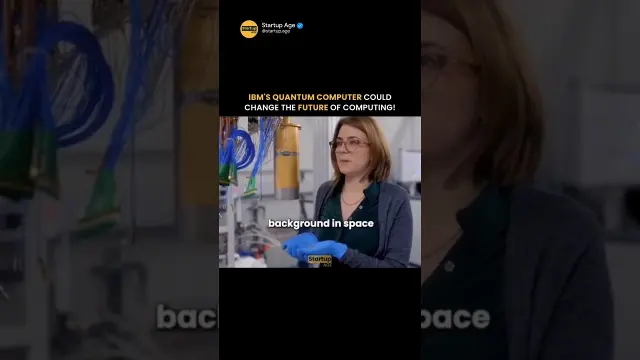 Inside IBM's Modular Quantum System Two Computer
Get new #IBM ideas by email
Every Thursday: the week's best ideas, with the newest from #IBM.
Related tags
IBM: A Guide to Enterprise Computing and Research
IBM is one of the longest-running names in computing, a company whose story begins with the mechanical tabulating machines that first automated counting and record-keeping for businesses and governments. To understand the company is to understand a particular approach to technology: very large systems, standards built to last for decades, and research that often takes a long time to reach everyday use. If you are browsing this tag, you are probably encountering a mix of history, engineering and laboratory science, and a little context helps all three make sense.
From tabulating machines to mainframes
The company grew out of the punched-card era, when data was stored as holes in cardboard and sorted by machines. That heritage shaped everything that followed: a focus on organisations rather than individual consumers, on reliability rather than novelty, and on machines that process enormous volumes of transactions without failing. The mainframe became the emblem of this approach, and mainframes still sit behind banking, insurance, airline and government systems today. Much of the world's critical data continues to move through systems designed decades ago and maintained ever since, which is why so much work in this field involves careful modernisation rather than clean starts.
A research culture
Read more
IBM has always treated research as part of the business rather than a sideline. Its laboratories have contributed to fields as varied as magnetic storage, programming languages, materials science and artificial intelligence, and much of that work was published openly and later became ordinary infrastructure for the whole industry. The company has also been a long-standing participant in open source communities and in the committees that define technical standards, which is part of why its name appears in so many places that have nothing to do with selling computers.
Quantum computing and the cold
A large share of current attention goes to the company's quantum computing programme. Quantum machines store information in ways that are extremely fragile: heat, vibration and stray electromagnetic noise all destroy the delicate states they depend on. That is why quantum processors sit inside dilution refrigerators, cooled to a fraction of a degree above absolute zero, colder than deep space. The engineering challenge is not only the chip but the wiring, shielding and control electronics around it, and much recent work has gone into modular designs that connect several processors together rather than building one ever-larger machine.
If you are just starting out
- Treat vendor material as a starting point, not a neutral source; read independent explainers alongside it.
- For enterprise computing, learn the ideas behind transaction processing and operating systems before chasing specific products.
- For quantum computing, get comfortable with linear algebra and probability first; the physics is easier once the maths is not in the way.
- Keep an eye on open standards and published research, where the durable knowledge tends to live.
Whether you arrive here through history, through mainframes, or through quantum hardware, the same thread runs through it: systems built to be understood and maintained by other people, long after the people who built them have moved on.
#IBM: frequently asked questions
How do I get started learning about IBM and its technology?
Start with the big ideas behind enterprise computing: transaction processing, operating systems, and how large systems stay reliable over time. It also helps to read independent explainers alongside IBM material, since the most useful background often comes from multiple sources.
What background do I need to understand IBM’s quantum computing work?
A basic grasp of linear algebra and probability is very helpful, because quantum computing depends on mathematical ideas more than everyday hardware intuition. Once that foundation is in place, the physics and engineering details become much easier to follow.
Which IBM area should I focus on if I’m interested in stable business systems versus cutting-edge research?
If you want dependable large-scale computing, focus on IBM’s mainframe and enterprise systems, which are built for heavy transaction workloads and long-term maintenance. If you prefer frontier technology, look at its research labs and quantum computing work, where the emphasis is on experimentation and new methods.
How should I care for or maintain an IBM-style enterprise system?
The key is careful modernisation rather than replacing everything at once. These systems are often deeply connected to critical operations, so good documentation, steady updates, and respect for standards matter more than chasing quick changes.
What are common mistakes people make when they first explore IBM topics?
A common mistake is treating company material as the full story instead of comparing it with independent sources and published research. Another is focusing on shiny products before learning the underlying systems, standards, and operational constraints that make IBM’s work make sense.
Videos come from YouTube and posts from Instagram; titles and summaries are our own. All rights belong to their creators.