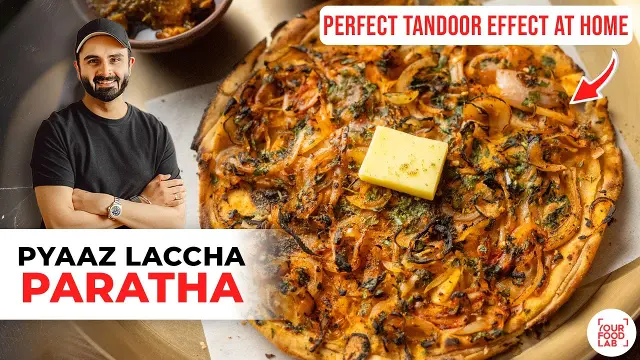
 Pyaaz Laccha Paratha Recipe with Tandoor Effect
#Indian Flatbread
1 ideas
Pyaaz Laccha Paratha Recipe with Tandoor Effect
Get new #Indian Flatbread ideas by email
Every Thursday: the week's best ideas, with the newest from #Indian Flatbread.
Related tags
Indian Flatbread Guide
What Indian flatbread is
Indian flatbread is a broad name for the many unleavened or lightly leavened breads made across India and neighbouring regions. These breads are usually cooked on a hot griddle, skillet, tawa, or in a tandoor-style oven, and they often form the base of everyday meals. They can be soft and thin, flaky and layered, or thicker and richer, depending on the flour, fat, and method used.
At its simplest, Indian flatbread is a practical food: it can be made from wheat flour, water, and salt, then shaped and cooked quickly. But it is also deeply varied. Different regions, households, and occasions all have their own versions, from everyday breads eaten with vegetables and lentils to special breads served with festive dishes.
Common kinds and styles
Read more
Some of the most familiar Indian flatbreads include:
- Roti or chapati: a simple whole-wheat flatbread, usually cooked dry on a hot surface and often finished briefly over an open flame
- Paratha: a richer flatbread, often brushed with oil or ghee, folded, layered, or stuffed
- Naan: a soft bread traditionally associated with tandoor cooking, often made with a dough that is slightly enriched
- Poori: a small bread that is rolled thin and deep-fried until puffed
- Bhakri or roti made from other grains: thicker breads made from millet, sorghum, or other flours, common in many regional cuisines
There are also many stuffed flatbreads filled with ingredients such as spiced potatoes, onions, paneer, or greens. These are often meal-like in themselves and are served with yogurt, pickles, chutney, or curry.
How they are made
Most Indian flatbreads begin with flour, water, and a little salt. The dough is usually kneaded until smooth, then rested so it becomes easier to roll. After shaping, the bread is cooked quickly over heat. Some breads are dry-cooked to stay soft and flexible, while others are enriched with fat for a layered or crisp finish.
A few basic techniques appear again and again:
- Kneading well for a soft, even dough
- Resting the dough so it rolls out more easily
- Using enough heat to cook the bread quickly
- Brushing with oil or ghee when a softer or richer texture is desired
- Rolling evenly so the bread cooks at the same rate
What to know as a beginner
If you are new to Indian flatbreads, start with a simple roti or paratha. These teach the basic rhythm of making dough, rolling, and cooking without too much complexity. Use a moderate amount of flour when rolling, since too much can make the bread dry. Keep the dough covered while you work so it does not form a crust.
Don’t worry if the first few breads are not perfectly round. Shape and size matter less than getting a soft, evenly cooked result. If the bread is too tough, it may have needed more resting or a little more moisture. If it tears while rolling, the dough may be too dry or not rested enough.
Serving and enjoying it
Indian flatbreads are wonderfully versatile. You can serve them with curries, dals, dry vegetable dishes, yogurt, chutneys, or pickles. Some are best eaten fresh and hot, while others can be reheated gently. In many homes, flatbread is part of an everyday rhythm of cooking and sharing, valued for its simplicity as much as for its flavour.
If you learn only one thing, let it be this: Indian flatbread is less about perfection and more about feel. Once you understand the dough and the heat, you can explore many regional styles and make the bread your own.
Videos come from YouTube and posts from Instagram; titles and summaries are our own. All rights belong to their creators.