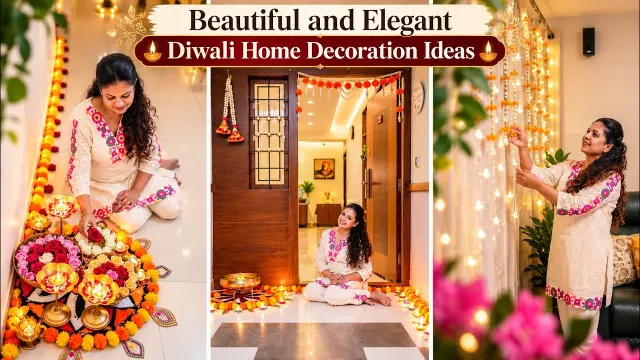
 Elegant Diwali Home Decoration Ideas and Makeover
#Indian Home Decor
1 ideas
Elegant Diwali Home Decoration Ideas and Makeover
Get new #Indian Home Decor ideas by email
Every Thursday: the week's best ideas, with the newest from #Indian Home Decor.
Related tags
Indian Home Decor: Craft, Colour and Everyday Warmth
Indian home decor is less a single style than a way of thinking about a house: as a place that should feel lived in, generous and alive with colour. Its roots run through centuries of village craft, temple art, royal patronage and the ordinary ingenuity of households that made beautiful things from what was at hand — clay, cotton, brass, cane, wood and stone. What holds it together is not a colour palette or a rulebook, but a habit of handwork and hospitality.
The crafts behind the look
Much of what you see in an Indian interior began as a regional craft. Block printing from the desert west, with its carved wooden stamps and repeating floral motifs. Kalamkari and ikat textiles from the south, and kantha stitching from the east, where old saris are layered and quilted into soft, rippled throws. On the walls, madhubani and warli painting bring figures, trees and animals in flat, graphic lines. Metalwork in brass and copper gives lamps, bowls and small vessels their warm gleam, while terracotta and blue pottery keep things earthy and grounded.
Materials and what they do
Read more
Wood, cane and bamboo give furniture an open, breathable quality — low seating, woven stools, string cots. Cotton and silk bring colour and texture through cushions, dhurries and light curtains that move with the air. Stone and terracotta cool a room. Together they create rooms that are layered rather than matched, where a carved chest sits beside a plain white wall and nothing feels too precious to use.
Light, thresholds and small rituals
Two elements carry much of the atmosphere. First, light: oil lamps, lanterns and pendant lights placed low and softly, often in clusters, so evenings feel warm rather than bright. Second, the threshold — a decorated doorway with a hanging toran of marigolds, leaves or fabric, and a rangoli pattern drawn on the floor in rice flour, chalk or flower petals. These are gestures more than decorations, marking the entrance as a place of welcome.
Regional differences
The palette shifts as you travel: vivid pinks, yellows and greens in the west, quieter indigos and whites in Bengal, deep reds and brass in the south, and plenty of warm wood and wool in the Himalayan north. Climate shapes the rest — open, airy rooms where it is hot, enclosed and carpeted ones where it is cold.
Practical starting points
Begin with one handmade object you genuinely love — a textile, a lamp, a piece of pottery — and build the room around it rather than buying a set. Keep floors and walls relatively calm so pattern has room to breathe. Mix one strong print with plain cottons. Choose furniture you can move, since Indian rooms tend to change with the occasion. Use low light in the evening. And let the room age: brass dulls, cotton softens, terracotta chips, and that wear is part of the charm.
#Indian Home Decor: frequently asked questions
How do I start decorating my home in an Indian style without buying everything at once?
Start with a single handmade piece you truly love — a block-printed textile, a brass lamp, a terracotta pot — and let the rest of the room grow around it. Build slowly from there, choosing furniture and fabrics that support that one object instead of shopping for a matching set. This keeps the room feeling collected and personal rather than staged.
Which materials should I bring in for an Indian look, and what does each one do?
Wood, cane and bamboo give furniture an open, breathable feel, while cotton and silk add colour and movement through cushions, dhurries and light curtains. Stone and terracotta cool a room down, and brass or copper in lamps and small vessels bring a warm gleam. Combining a few of these is what creates the layered, lived-in quality rather than a single uniform finish.
How do I keep patterns and colours from overwhelming a room?
Keep the floors and walls relatively calm so the pattern actually has space to breathe. Pair one strong print with plain cottons rather than layering several bold motifs against each other. Placing an ornate piece, like a carved chest, beside a simple white wall lets both read clearly.
How do I care for brass, cotton and terracotta pieces over time?
Treat the changes as part of the charm rather than damage to be corrected — brass dulls, cotton softens and terracotta chips with use. Dust brass lightly and keep it dry, wash cotton gently, and avoid leaving porous terracotta where water can sit in it. Objects that look a little worn are exactly what make a room feel used and welcoming.
What can I do for a festive occasion like Diwali without redoing the whole house?
Focus on light and the threshold, which carry most of the atmosphere: cluster low lamps, lanterns or pendants so the evening feels warm instead of bright. Hang a toran across the doorway and draw a rangoli on the floor to mark the entrance as a place of welcome. Rearranging movable furniture and adding textiles you already own gives the room a fresh feel for the occasion.
What mistakes should I avoid when decorating in an Indian style?
The main one is buying a coordinated set that makes the room look like a showroom rather than a home. Another is treating decorative pieces as too precious to use — Indian interiors work best when things are handled and lived with. Overfilling a room with pattern and objects also flattens the effect; a few strong pieces with quiet space around them read far better.
Videos come from YouTube and posts from Instagram; titles and summaries are our own. All rights belong to their creators.