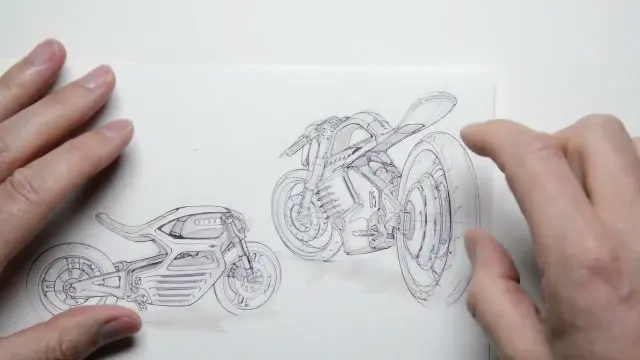
 Motorcycle Design Fundamentals Part Two Workshop
#Industrial Design
2 ideas
Motorcycle Design Fundamentals Part Two Workshop
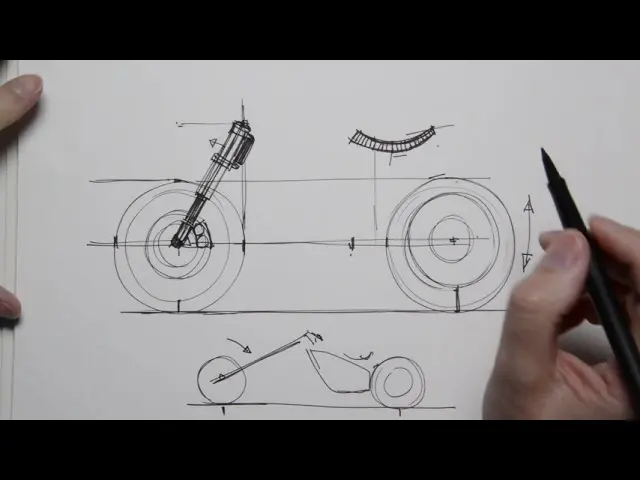 Introduction to Motorcycle Design Fundamentals Workshop
Get new #Industrial Design ideas by email
Every Thursday: the week's best ideas, with the newest from #Industrial Design.
Related tags
Industrial Design: Function, Form, and Everyday Objects
Industrial design is the process of shaping objects that people use every day. It brings together function, appearance, usability, and manufacturing, so a product not only works well but also feels clear, comfortable, and appealing to use. You can find industrial design in furniture, appliances, tools, vehicles, packaging, electronics, and many other common objects.
What industrial design is
At its core, industrial design is about solving practical problems through product form. A designer thinks about how something should look, how it should fit in the hand, how people will understand it, how it will be made, and how long it should last. Good industrial design often feels simple, but that simplicity usually comes from careful thinking and many decisions behind the scenes.
Industrial design sits between art, engineering, and manufacturing. It is not only about decoration, and it is not only about technical function. The best results balance both.
Read more
Where it comes from
Industrial design grew alongside mass production, when objects started to be made in large numbers rather than individually by hand. As production methods changed, there was a greater need to design products that could be repeated efficiently while still being attractive and easy to use. Over time, industrial design became a distinct discipline with its own methods, sketching practices, model making, and collaboration with engineers and manufacturers.
What industrial designers do
Industrial designers work on the shape, structure, usability, and presentation of products. Their work may include:
- early sketches and concept ideas
- 3D models or prototypes
- studies of how people use an object
- material and finish choices
- planning for production and assembly
They often consider how a product feels in the hand, how controls are arranged, how parts fit together, and whether the object communicates its purpose clearly.
Main approaches and styles
Industrial design can look very different depending on the object and its intended use. Some common approaches include:
- minimalist design, where unnecessary details are removed
- ergonomic design, focused on comfort and ease of use
- utilitarian design, which emphasizes practicality and durability
- expressive design, where shape and visual identity play a stronger role
- modular design, where parts can be separated, replaced, or adapted
Even when styles vary, strong industrial design usually aims for clarity, efficiency, and consistency.
Techniques and beginner tips
If you are new to industrial design, start by observing everyday objects closely. Ask yourself why certain shapes feel natural and why others are awkward. Sketch often, even if your drawings are rough, because quick ideas help you explore possibilities. Build simple models when you can, since working in three dimensions reveals problems that drawings may hide.
A few useful habits:
- focus on the user first
- keep the purpose of the object clear
- think about grip, reach, weight, and balance
- remember that materials affect both look and function
- simplify forms without losing usefulness
Industrial design rewards patience. The most successful products are often those that make daily life easier without drawing too much attention to themselves. If you learn to notice how objects are held, opened, carried, cleaned, and stored, you will begin to understand the quiet logic behind good industrial design.
#Industrial Design: frequently asked questions
How do I start learning industrial design if I have no background?
Begin with the objects already around you: pick up a tool, a chair, or a kitchen appliance and ask why it is shaped the way it is, where your hand naturally lands, and what feels awkward. Sketch those observations roughly and often, then try building simple models so you can judge size, weight, and grip in three dimensions instead of only on paper. Curiosity about everyday use matters far more at the start than technical skill.
What do I need to begin designing a product?
A sketchbook, something to draw with, and basic materials for building rough models will carry you a long way before any specialist equipment is needed. What matters more is a clear sense of who will use the object and what problem it solves, plus patience to test a shape repeatedly. As ideas mature, material and manufacturing choices become part of the design rather than an afterthought.
Which approach should I choose: minimalist, ergonomic, utilitarian, or expressive?
Let the object decide. Something held and used repeatedly usually benefits from ergonomic thinking, a tool meant to survive hard wear leans utilitarian, and a product that needs to stand out or carry a visual identity can afford a more expressive shape. Minimalism and modularity work best as ways of organising a design rather than as goals in themselves, since stripping details only helps when clarity improves.
How should I care for industrial design pieces at home?
Treat care as part of understanding the design: notice which material each part is made from, because wood, metal, plastic, and textile each respond to cleaning differently. Gentle, regular upkeep and protection from prolonged moisture or harsh agents usually preserves both finish and function better than occasional heavy cleaning. For anything with moving or replaceable parts, keeping them clean and correctly fitted extends the object's life considerably.
What mistakes do beginners make most often?
The most common is falling in love with an appearance before checking whether the thing actually works in the hand, in storage, and during use. Another is forgetting production entirely, designing shapes that cannot be assembled, cleaned, or repaired sensibly. Beginners also tend to add details instead of removing them, when most strong products are the result of simplifying until only what is needed remains.
Where can I find ideas for industrial design projects or gifts?
Look at the small frictions of daily life: a cable that tangles, a container that is hard to open, a lamp that casts the wrong light for reading. Those ordinary irritations are where the strongest project ideas and the most welcome gifts come from, because a well-resolved object quietly makes a routine easier. Starting from a real use situation almost always produces something more convincing than starting from a style.
Videos come from YouTube and posts from Instagram; titles and summaries are our own. All rights belong to their creators.