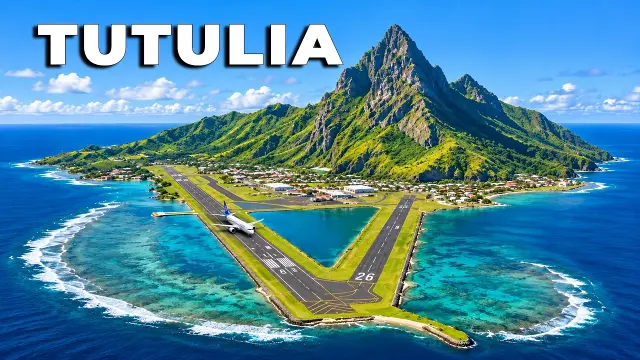
 Life on Tutuila Island in American Samoa, Filmed in 4K
#Island Culture
1 ideas
Life on Tutuila Island in American Samoa, Filmed in 4K
Get new #Island Culture ideas by email
Every Thursday: the week's best ideas, with the newest from #Island Culture.
Related tags
Island Culture: Life Shaped by Land and Sea
Island culture is the way of life that develops in places bounded by water, where the horizon is both a limit and a promise. It is not one single tradition — island communities exist across oceans and climates, from volcanic peaks to low coral atolls — but certain threads run through many of them: a close reading of weather and tide, a deep dependence on the sea for food and travel, and social structures built around cooperation rather than anonymity.
Where it comes from
Living on an island means living with limits. Fresh water, arable soil and building materials may be scarce, while fish, shellfish, fruit and timber are near at hand. Much of island culture grows out of this balance: knowledge of when certain fish run, which plants hold a slope against erosion, how to build so that wind passes through a house, how to store food so it lasts. Because populations were often small and everyone's labour was needed, customs tend to emphasise obligation — to family, to elders, to neighbours — over individual independence.
The main threads
Read more
Storytelling and oral history carry much of this knowledge. Genealogies, migration accounts, fishing lessons and warnings about dangerous places were, and in many communities still are, passed on by voice rather than written down.
Navigation and boatbuilding form a related tradition. Where people crossed open water, they developed ways of reading stars, swells, bird flight and cloud patterns, and built craft suited to their own seas. These skills are often being relearned today by communities keen to keep them alive.
Music and dance frequently serve as collective memory. Songs mark work, welcome, mourning and celebration, and dances are often performed in groups rather than pairs, with the line or the circle more important than the individual.
Craft traditions make use of what the island provides — woven palm, bark cloth, carved wood, shell, fibre, stone. Many of these objects were everyday tools before they became forms of cultural identity.
Food is another anchor: staples grown inland, fish and shellfish from the reef, and methods of cooking with earth ovens, hot stones or fermentation that suit the climate and the ingredients available.
What beginners should know
If you are new to studying or visiting an island culture, start by learning who the people are and what they call themselves, rather than treating "island" as a single category. Ask about local customs before photographing, filming or entering a village or a sacred site; permissions matter, and they vary. Understand that land and sea are often held through family and community relationships rather than simple ownership, and that this shapes how visitors should behave.
Practical tips
Listen more than you speak, and accept that some knowledge is not meant for outsiders. Support local makers by buying craft directly where you can. Be careful with resources that are genuinely scarce — water, waste disposal, reef life. And remember that island communities are not frozen in the past: they combine long traditions with modern life, migration and tourism, and they are the ones who decide what to keep, adapt or set aside.
Whether you are drawn by the food, the weaving, the music or the seafaring, the richest approach is curiosity without assumption.
#Island Culture: frequently asked questions
How do I start learning about island culture?
Begin with the specific community rather than the category: find out who the people are, what they call themselves, and which water their island sits in. From there, follow the threads that interest you most — food, weaving, music, boatbuilding — because each one carries a wider body of knowledge about weather, kinship and work. Listening to people who live there, or to recorded interviews and songs, teaches far more than a general overview.
Which island culture should I choose to explore first?
Pick one tied to a place you can actually learn about in depth — somewhere you have a connection, a language you can study, or a community that shares its knowledge openly. Island life differs enormously between volcanic high islands and low coral atolls, so the setting tells you a lot about what to expect. Choosing depth over breadth avoids the trap of treating all islands as one tradition.
What should a visitor know before going to an island community?
Ask about local expectations before photographing, filming or entering a village or a sacred site, since permission rules differ from place to place and are not optional. Keep in mind that land and sea are often held through family and community relationships rather than simple ownership, which shapes where you may go. Go slowly, introduce yourself, and let people set the pace of the encounter.
How do island communities keep their traditions alive today?
Much of the knowledge lives in practice rather than in books — in storytelling, group dance, cooking methods and craft passed from older hands to younger ones. Many communities are also deliberately relearning skills such as wayfinding and boatbuilding, often alongside modern life, migration and tourism. They are the ones deciding what to keep, adapt or let go, so the traditions you meet are living ones, not relics.
What are the common mistakes people make when approaching island culture?
The most frequent one is treating "island" as a single culture and arriving with assumptions instead of questions. Another is ignoring scarcity — using water carelessly, generating waste the island cannot absorb, or disturbing reef life — when those resources are genuinely limited. A third is assuming communities are stuck in the past rather than actively choosing what their culture looks like now.
How can I support island makers and communities while I'm there?
Buy craft directly from the people who make it where you can, since that keeps value with the maker and honours skills that were everyday tools before they became emblems of identity. Be sparing with water, waste and reef life, and accept that some knowledge is not meant to be shared with outsiders. Respectful curiosity, without assumption, goes further than any purchase.
Videos come from YouTube and posts from Instagram; titles and summaries are our own. All rights belong to their creators.