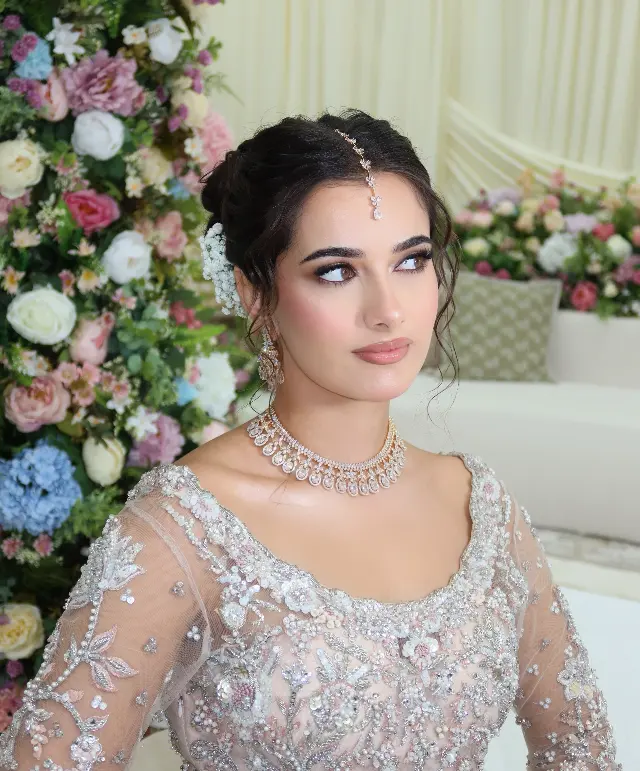
 Reception makeup inspiration with coordinated styling
#Jewellery
1 ideas
Reception makeup inspiration with coordinated styling
Get new #Jewellery ideas by email
Every Thursday: the week's best ideas, with the newest from #Jewellery.
Related tags
A Beginner's Guide to Jewellery: Styles, Materials and Care
Jewellery is one of the oldest ways people have chosen to decorate the body, and it has never stopped meaning more than decoration alone. A ring, a necklace, a pair of earrings: each piece can mark a moment, carry a memory, signal belonging or simply please the eye. Whether you are choosing your first serious piece or sorting through a box of inherited things, a little knowledge makes the whole experience calmer and more enjoyable.
What jewellery is made of
Most fine jewellery falls into a few material families. Gold, silver and platinum are the classic metals, often mixed with other metals to give them strength or a different colour. Gold is described by its purity, which is why you will see terms like solid gold and gold-plated: the first is the metal all the way through, the second is a thin layer over a cheaper core. Neither is "wrong" — they simply suit different budgets and different amounts of wear.
Gemstones are usually divided into precious and semi-precious, though the line is more about tradition than value. Diamonds, rubies, sapphires and emeralds sit in the first group; pearls, opals, turquoise and many others in the second. Pearls and coral are organic and need gentler handling than stone.
Read more
The main styles
Jewellery styles tend to circle back around rather than disappear:
- Classic and minimal: fine chains, small studs, simple bands. Easy to wear daily and to layer.
- Statement: large shapes, bold colour, sculptural forms. One piece is usually enough.
- Vintage and antique-inspired: filigree, engraved settings, old-cut stones.
- Personalised: initials, birthstones, engraved dates. Often given as gifts.
- Contemporary craft: handmade pieces where the maker's hand is visible.
None of these is more "correct" than another. The best choice is the one you reach for without thinking.
What beginners should know
Start with what you will actually wear. A piece that lives in a drawer is not a bargain, however good the price. Think about your daily routine: long pendants and dangling earrings can catch on clothing, scarves or small hands, while studs and short chains cope with almost anything.
When buying, ask what the metal and stones are, and how the piece is finished. Look at clasps and settings closely — these are where wear shows first. If you are buying a gift, check whether the recipient prefers gold or silver tones, and whether they have any sensitivity to certain metals.
Sizing matters more than most people expect. Rings should slide on comfortably and come off over the knuckle; necklaces sit differently depending on length; earrings should feel light enough to forget.
Caring for your pieces
Store jewellery separately, or in small pouches, so harder stones do not scratch softer ones. Put jewellery on last when getting ready and take it off first at night — perfume, hairspray and lotions leave a dulling film. Remove rings and bracelets for swimming, cleaning and gardening; chlorine and household chemicals are unkind to most metals.
Most pieces can be cleaned with lukewarm water, a drop of mild soap and a soft brush, then dried with a lint-free cloth. Pearls prefer just a soft damp cloth. Have clasps and stone settings checked occasionally, especially on pieces you wear every day.
Videos come from YouTube and posts from Instagram; titles and summaries are our own. All rights belong to their creators.