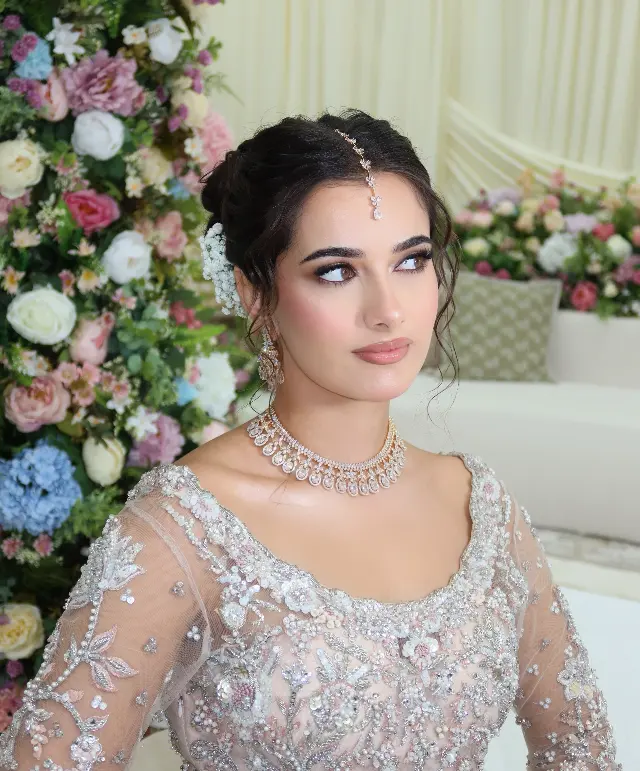
 Reception makeup inspiration with coordinated styling
#Reception Makeup
1 ideas
Reception makeup inspiration with coordinated styling
Get new #Reception Makeup ideas by email
Every Thursday: the week's best ideas, with the newest from #Reception Makeup.
Related tags
Reception Makeup: A Complete Guide to Wedding Day Glow
Reception makeup is the look a bride wears for the celebratory part of the wedding day: the party that follows the ceremony, where greetings, dinner, dancing and photographs take up many hours. It is makeup designed less for a quiet, close-up moment and more for movement, changing light and a long evening — which is why it tends to be built slightly differently from the look worn at the ceremony.
Where it comes from
The idea of a distinct reception look grew out of wedding traditions in which the ceremony and the celebration were separate events. As wedding photography and evening parties became central to the day, brides began changing makeup between the two, and a whole vocabulary of reception looks developed — a natural extension of wedding beauty rather than a separate art form.
How it differs from the ceremony look
Read more
Ceremony makeup is often soft and delicate, made to look well in daylight and in close portrait photographs. Reception makeup usually leans bolder: more definition around the eyes, a stronger lip, and a finish that holds up under artificial light and flash. Where the ceremony look aims for calm and luminous, the reception look can be more expressive — but it should still look like you.
The main styles
The most enduring direction is polished and natural: even skin, softly defined eyes, healthy colour on the cheeks and a lip that is noticeable without dominating. A second common style is glamorous, with deeper eyeshadows, eyeliner or lashes, and a richer lip. A third is romantic and soft, built on warm neutrals and a flushed, fresh complexion. Colour and depth are matters of taste; the structure underneath is what decides how the look survives the evening.
What beginners should know
Start with skin. Reception makeup lives or dies by preparation: clean, well-hydrated skin and a primer suited to your skin type give the rest of the products something to hold on to. Apply foundation in thin layers rather than one heavy one, and set only where you actually need it — shiny areas such as the centre of the face — so the complexion keeps some life.
Longevity comes from technique, not from quantity. Set the areas that move and crease, use a lip liner under lipstick, and carry a small repair kit: blotting papers, powder, lipstick and a cotton bud.
Rehearse the look in advance. Wear it for several hours at home, in daylight and under indoor light, and photograph yourself with and without flash. This reveals how a foundation fades, whether a shadow creases and how a lip colour reads in pictures.
Finally, keep the eyes and lips from competing too hard. If one is the focus, let the other stay quieter. And if you plan to change between ceremony and reception, allow realistic time — a touch-up of base, eyes and lip is often enough, and far easier than a full second application.
#Reception Makeup: frequently asked questions
How is reception makeup different from ceremony makeup?
The ceremony look is usually soft and delicate, built to read well in daylight and in close portraits. Reception makeup is made for a long evening of greeting guests, eating, dancing and being photographed under artificial light and flash, so it tends to carry more definition around the eyes and a stronger lip. The goal is a bolder version of you, not a different person.
What should I do to my skin before applying reception makeup?
Start with clean, well-hydrated skin and a primer matched to your skin type, so everything layered on top has something to grip. Build foundation in thin layers instead of one heavy coat, and set only the areas that actually get shiny, such as the centre of the face. Leaving the rest of the complexion unpowdered keeps it looking alive rather than flat.
Which reception makeup style should I choose?
The three broad directions are polished and natural, glamorous with deeper eyes and a richer lip, and romantic and soft with warm neutrals and a fresh flush. Choose the one that matches the mood of your dress and venue, and that you can still recognise yourself in. Colour and depth come down to taste, but the preparation and layering underneath is what decides whether the look holds.
How do I make reception makeup last the whole evening?
Longevity comes from technique rather than piling on more product: set the areas that crease and move, and use a lip liner under your lipstick to keep the colour from bleeding. Pack a small repair kit with blotting papers, powder, lipstick and a cotton bud for quick fixes between photos and dancing. A quiet touch-up mid-evening does more than a heavy initial application.
What are the most common mistakes with reception makeup?
One frequent mistake is over-powdering the whole face, which flattens the complexion and can look chalky in flash photography. Another is letting the eyes and lips fight each other, so neither reads clearly, or wearing a look you have never tested for a full evening. Always rehearse it at home in daylight and indoor light, and photograph yourself with and without flash to see how it fades and creases.
Can I change my makeup between the ceremony and the reception?
Yes, and a light refresh of base, eyes and lip is usually enough rather than starting over from bare skin. Be realistic about how much time the change takes, since a full second application is far more demanding than a touch-up. Sort out the plan, and where you will do it, before the day itself.
Videos come from YouTube and posts from Instagram; titles and summaries are our own. All rights belong to their creators.