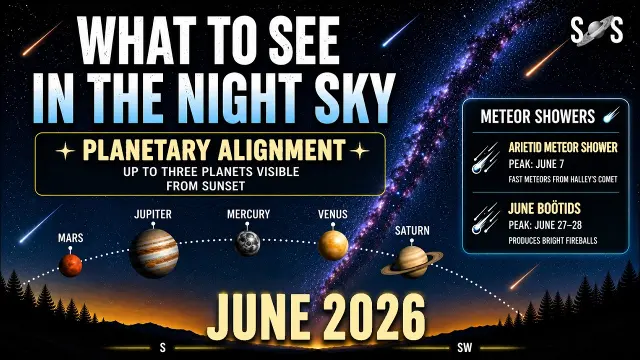
 Night Sky Highlights Featuring Planetary Alignments
#Jupiter
2 ideas
Night Sky Highlights Featuring Planetary Alignments
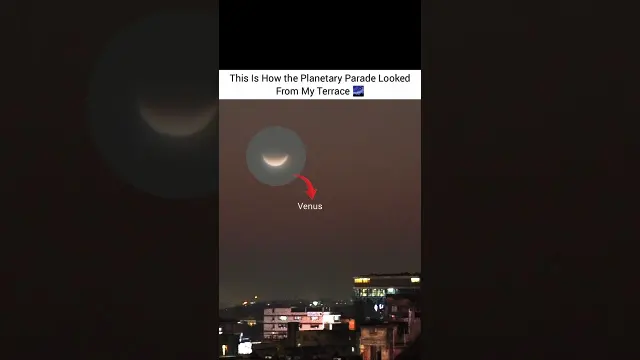 Rare Planetary Parade With Jupiter, Venus, And Saturn
Get new #Jupiter ideas by email
Every Thursday: the week's best ideas, with the newest from #Jupiter.
Related tags
Jupiter: The Giant Planet in the Solar System
Jupiter at a glance
Jupiter is the largest planet in our solar system and one of the easiest to notice in the night sky. It is a gas giant, which means it does not have a solid surface like Earth. Instead, it is made mostly of hydrogen and helium, with deep layers of clouds, storms, and intense winds. Because of its size and brightness, Jupiter has fascinated people for centuries and has long held a special place in astronomy, mythology, and skywatching.
What makes Jupiter special
Jupiter stands out for several reasons. It is enormous, with a strong gravity that shapes the movement of nearby objects. It spins very quickly for such a large planet, which helps give it a flattened shape and broad cloud bands. One of its most famous features is the Great Red Spot, a giant storm that has been observed for a long time. Jupiter also has a faint ring system, though it is much less visible than the rings of Saturn.
Read more
Another remarkable feature is its many moons. Jupiter has a large family of natural satellites, from small irregular moons to four large moons that are often visible with binoculars or a small telescope. These moons helped change our understanding of how planets and smaller bodies move around a central world.
How Jupiter formed
Like the other planets, Jupiter formed early in the history of the solar system from the gas and dust around the young Sun. Its large mass allowed it to gather a huge amount of material. This is why it became a giant planet rather than a rocky one. Its composition gives astronomers clues about the conditions in the early solar system and how planets can grow in very different ways.
How to observe Jupiter
Jupiter is one of the best planets for beginners to observe. It is bright enough to spot with the naked eye when it is visible in the sky, and even a modest telescope can reveal interesting details. With careful viewing, you may notice the planet’s disk, cloud bands, and sometimes the changing positions of its moons.
A few simple tips can help:
- Give your eyes time to adjust to the dark.
- Use steady support for binoculars or a telescope when possible.
- Observe on a clear night, away from bright lights.
- Be patient, because atmospheric conditions affect how sharp the view appears.
What beginners should know
If you are new to planet watching, Jupiter is a rewarding place to start. It moves slowly against the background stars, so its position changes from night to night in a way that is easy to follow over time. It is also useful to learn the difference between a planet and a star: Jupiter usually shines with a steady, bright light, while stars often twinkle more noticeably.
Jupiter can be enjoyed by simple observation, but it also invites deeper curiosity. Learning about its clouds, moons, storms, and place in the solar system can make every glance at the night sky feel richer and more meaningful.
Videos come from YouTube and posts from Instagram; titles and summaries are our own. All rights belong to their creators.