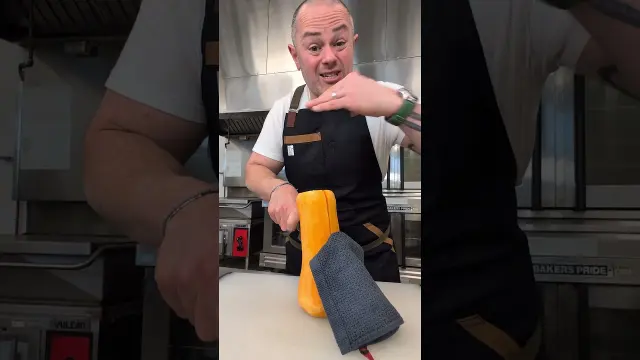
 Knife Safety and Cutting Tips from Culinary Training
#Knife Safety
1 ideas
Knife Safety and Cutting Tips from Culinary Training
Get new #Knife Safety ideas by email
Every Thursday: the week's best ideas, with the newest from #Knife Safety.
Related tags
Knife Safety: Essential Habits for Safe Cutting
Knife safety is the set of habits and techniques that keep your hands away from the blade while you cut. It is not a single rule but a way of working: how you hold the knife, how you hold the food, how you set up your board, and how you treat the tool before and after use. Almost every kitchen injury comes from one of a few predictable moments — a dull edge that slips, a board that slides, a hand placed where the blade will land, or a knife left loose in a drawer. Learn the habits once and they stay with you.
Why a sharp knife is a safe knife
It sounds backwards, but a sharp blade is usually the safer one. A dull edge skids across the surface of a tomato or an onion instead of biting into it, and skidding is what sends a blade toward your fingers. Sharpening and honing are part of safety, not vanity. If you feel yourself pressing and sawing to get through something soft, stop and deal with the edge instead of forcing the cut.
Setting up your workspace
Read more
A stable board is the foundation. Put a damp cloth or a non-slip mat underneath so the board cannot creep while you work. Clear the area around it — clutter is what makes you reach past a blade. Keep the cutting surface dry, because wet hands and wet handles lose grip. Good light matters too: you want to see exactly where the edge meets the food.
The pinch grip and the claw
Hold the knife by pinching the blade between thumb and forefinger just in front of the handle, with the remaining fingers wrapped around it. This gives you control and keeps the blade from twisting. The hand holding the food curls into a claw: fingertips tucked under, knuckles forward, so the flat of the blade can rest against your knuckles as a guide. The knife moves up and down while the guiding hand walks backwards along the food. Your fingertips never come out to play.
Cutting that keeps fingers clear
Let the knife do the work and keep the tip down on the board for many cuts; the rocking motion is more controlled than chopping from a height. Cut on a flat, stable surface — a rounded vegetable should be halved first so it sits still. Never cut toward your body or across your own hand, and never try to catch a falling knife: step back and let it drop.
Carrying, washing and storing
Carry a knife by the handle with the blade pointing down and back, and never gesture with it in your hand. Wash it yourself rather than leaving it in a sink of soapy water where nobody can see the blade, and dry it immediately. Store knives in a block, a sheath or on a magnetic strip — not loose among other tools, where the edge dulls and your hand can find it blindly.
When something goes wrong
For a small cut, rinse it, apply pressure with a clean cloth and cover it. For a deep or heavily bleeding wound, or one that will not stop bleeding, get proper medical help.
#Knife Safety: frequently asked questions
How do I start being safer with a knife if I'm a beginner?
Start with the setup rather than the blade: put a damp cloth or non-slip mat under your board so it cannot slide, clear the space around it, and keep the surface dry. Then learn two habits before anything else — the pinch grip on the blade just ahead of the handle, and the claw with your guiding hand. Once those feel automatic, speed comes on its own.
Do I need an expensive knife to cut safely?
No — a well-maintained edge matters far more than what the knife costs. A dull blade skids across a tomato or onion instead of biting in, and that skid is what sends the edge toward your fingers. Whatever knife you own, honing and sharpening it regularly is part of safety, not vanity.
Which cutting technique keeps my fingers out of the way?
Keep the tip of the knife down on the board and let the blade rock, which is far more controlled than chopping from a height. Let the flat of the blade rest against the knuckles of your curled guiding hand and walk that hand backwards along the food as you go. Never cut toward your body or across your own hand.
How should I wash and store a knife so it stays safe?
Wash it yourself rather than dropping it into a sink of soapy water where the blade hides under the suds, and dry it straight away. Store it in a block, a sheath or on a magnetic strip instead of loose in a drawer. Loose storage dulls the edge and puts your hand on it blindly.
What are the most common knife mistakes people make?
The predictable ones are a dull edge that slips, a board that creeps while you cut, and a guiding hand placed where the blade will land instead of tucked into a claw. Reaching past a knife because the counter is cluttered, and grabbing for a falling knife instead of stepping back, round out the list. Most kitchen cuts come from those few moments rather than from anything unusual.
Videos come from YouTube and posts from Instagram; titles and summaries are our own. All rights belong to their creators.