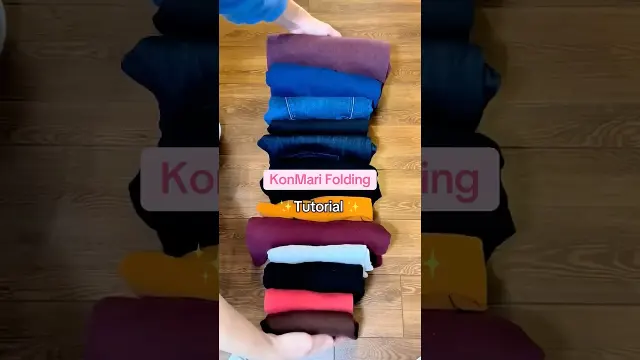
 KonMari Folding Tutorial for Different Clothing Items
#KonMari
1 ideas
KonMari Folding Tutorial for Different Clothing Items
Get new #KonMari ideas by email
Every Thursday: the week's best ideas, with the newest from #KonMari.
Related tags
KonMari Method: A Beginner's Guide to Tidying
The KonMari Method is a way of tidying a home that treats decluttering as a single, thorough project rather than an endless chore. It was developed in Japan by an organizing consultant who noticed that most people tidy a little every day yet never feel finished, because they are sorting belongings without ever deciding what they actually want to keep. The method proposes the opposite: go through everything once, in the right order, and choose deliberately.
Tidy by category, not by room
The first principle is to gather every item of one kind from the whole house into a single place before you begin. Sorting room by room only moves clutter around, because a jumper you cannot decide on in the bedroom looks different next to the twenty others it belongs with. Working by category shows you the true size of what you own, which is often the most useful discovery of the whole process.
Discard first, store later
Read more
Storage comes second. Deciding on containers or shelving before you have reduced what you own simply gives you tidier clutter. The method asks you to hold each item and notice whether it brings a lift of pleasure, often described as sparking joy. If it does, it stays; if it does not, you thank it for its service and let it go. Practical things that are worn but needed are judged on usefulness rather than feeling.
The order of categories
Beginners are advised to start with the easiest decisions and work towards the hardest:
- Clothes, which are simple to assess and emotionally light
- Books, which are harder because they carry intentions
- Papers, which should mostly be reduced to a small, clearly defined file
- Miscellaneous items, the kitchen, bathroom and hobby clutter
- Sentimental objects, photographs and keepsakes, saved for last
By the time you reach sentimental things, your judgement has had practice.
Folding and storing
Clothing is folded into a compact rectangle and stood upright in drawers so that every piece is visible at a glance. This vertical storage is the heart of the method: you should be able to see what you own without lifting anything, and put a single item away without disturbing the rest. Drawers become a filing system for fabric.
Practical advice for getting started
Choose a stretch of time when you can work without interruption, and resist the urge to buy organizers first. Keep only what you would happily use or wear today, and let the rest leave the house quickly so it does not drift back. Expect the process to feel slow in the middle and lighter at the end. What most people remember afterwards is not the tidier shelves but the habit of asking, before anything new comes in, whether it truly belongs.
#KonMari: frequently asked questions
How do I start the KonMari Method without feeling overwhelmed?
Set aside a stretch of time when you can work undisturbed and treat the tidying as one project rather than something to chip away at daily. Begin by gathering every item of a single kind from around the whole home into one spot, starting with clothes because those decisions are the easiest. Expect the middle of the process to feel slow and heavy; it gets lighter as you go.
Do I need to buy organizers or containers before I start?
No — shopping for storage first is one of the most common missteps, because it just gives you tidier clutter. Reduce what you own before you decide on boxes, drawers or shelving, and let the amount you keep tell you what storage you actually need. Many people find they need less than they expected once the discarding is done.
Why tidy by category instead of room by room?
Sorting one room at a time mostly shifts things around, since a single item is hard to judge without seeing everything else of its kind beside it. Gathering all your clothes, or all your papers, in one place shows you the real volume of what you own. That shock of scale is usually what makes deciding easier.
What order should I work through, and why are keepsakes saved for last?
Start with clothes, then move through books and papers to miscellaneous household items, leaving photographs and sentimental objects until the end. Each stage trains your judgement on simpler choices, so by the time you reach emotionally loaded things you can decide with a clearer eye. Tackling keepsakes first tends to stall the whole project.
How should I fold and store clothes so they stay neat?
Fold each piece into a compact rectangle and stand it upright in the drawer rather than stacking it flat. That way you can see everything at a glance and pull one item out without disturbing the rest. Treat drawers like a filing system for fabric and the habit largely maintains itself.
What mistakes do people commonly make when trying KonMari?
Buying storage too early, working room by room, and keeping things out of guilt are the usual traps. Another is letting discarded items linger in bags around the house, where they quietly drift back into use. Keep only what you would happily wear or use today, and let the rest leave quickly.
Videos come from YouTube and posts from Instagram; titles and summaries are our own. All rights belong to their creators.