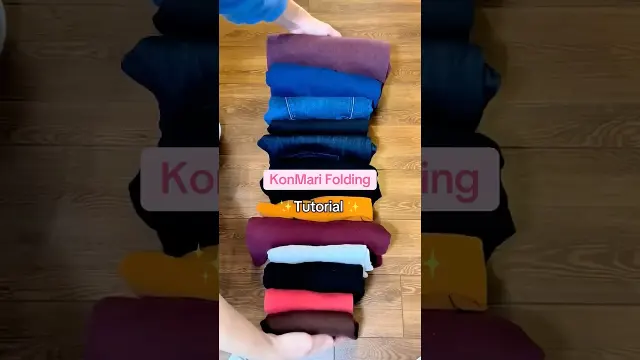
 KonMari Folding Tutorial for Different Clothing Items
#Marie Kondo
1 ideas
KonMari Folding Tutorial for Different Clothing Items
Get new #Marie Kondo ideas by email
Every Thursday: the week's best ideas, with the newest from #Marie Kondo.
Related tags
Marie Kondo and the KonMari Method of Tidying
If you have ever opened a drawer and felt tired rather than pleased, the KonMari Method is worth knowing about. It is a home-organising approach developed by the Japanese organising consultant Marie Kondo and described in her books on tidying. Its central idea is simple: keep what you truly love, let go of the rest, and give everything you keep a place where it can be seen.
The question at the heart of it
The method asks you to hold each belonging in your hands and notice how you feel. If an object sparks joy, it stays. If it leaves you indifferent, weighed down, or vaguely guilty, it goes. This is a deliberately physical, feeling-based test rather than a logical one. You are not asking whether something might be useful one day, but whether you are glad to have it now. The aim is not a bare, empty home but a home filled only with things you are happy to see.
Tidy by category, not by room
Read more
Most people tidy room by room, which means the same kind of object gets sorted in one place and left untouched in another. The KonMari approach works through categories instead, in a set order: clothes, then books, then papers, then small miscellaneous items, and finally sentimental things such as photographs, letters and keepsakes. The sequence matters. You begin with the easiest decisions and build the judgement you need for the harder, more emotional ones at the end.
Let go before you store
Discarding comes first; storage comes after. Buying boxes and dividers before you have decided what stays usually just gives clutter a tidier home. As you sort, the method suggests thanking each item for what it did for you before letting it go, which softens the process and makes it easier to release things without guilt. Hand things on where you can, and try not to push your discards onto family members who never asked for them.
Folding and storing upright
Clothes are folded into neat rectangles and stood on edge inside drawers, the way files stand in a box, rather than stacked flat on top of one another. Storing vertically means you can see everything at a glance and lift out one item without disturbing the rest. Hanging is kept for the pieces that feel better on a hanger, arranged so that the longer, heavier garments sit to one side and rise toward the lighter, shorter ones.
What beginners should know
The method favours one concentrated tidying effort rather than a little at a time, because decisions get easier once you are in the rhythm of them. Start with your own things, in your own space, and let the visible result speak for itself instead of urging others to follow. Keep the routine gentle: a home is a living place, not an exhibit, and it will need tending again. What lasts is the habit of asking, before something comes in or stays, whether you are genuinely glad to have it.
#Marie Kondo: frequently asked questions
How should a complete beginner start with the KonMari Method?
Begin with your own belongings in your own space rather than trying to organise the whole household at once. Work by category instead of by room, starting with clothes, since those decisions are the easiest to make, and save sentimental items for last. Aim for one focused tidying effort rather than an hour here and there, because your judgement sharpens once you are in the rhythm of deciding.
Do I need to buy boxes, dividers and organisers before I begin?
No — sorting comes first and storage comes afterwards. Buying containers before you have decided what stays usually just gives clutter a neater place to live. Once you can see what you are actually keeping, you will know what shapes and sizes you need, and you may find you already own something that works.
How do I decide whether to keep something?
Hold the item in your hands and notice how it makes you feel. If you are glad to have it, keep it; if it leaves you indifferent or vaguely guilty, let it go. The test is about how you feel now, not whether the thing might come in useful someday.
What is the right way to fold and store clothes?
Fold each garment into a neat rectangle and stand it on edge inside the drawer, the way files stand in a box, rather than stacking items flat on top of each other. Storing vertically lets you see everything at a glance and lift out one piece without disturbing the rest. Reserve hangers for pieces that genuinely prefer to hang, with heavier, longer garments to one side rising toward lighter, shorter ones.
What mistakes do people commonly make when tidying this way?
Two of the most common are tidying room by room, which leaves the same category scattered and unsorted, and starting with sentimental things before your decision-making has warmed up. Another is pushing your discards onto family members who never asked for them. It also helps to remember that a home is a living place, not an exhibit — it will need tending again, and the lasting gain is the habit of asking whether you are genuinely glad to have something.
Videos come from YouTube and posts from Instagram; titles and summaries are our own. All rights belong to their creators.