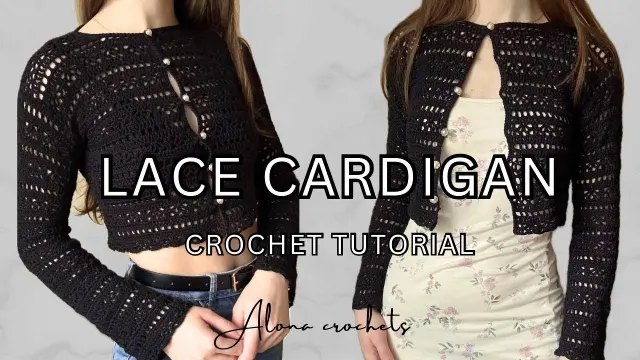
 Full Step-by-Step Lace Crochet Cardigan Tutorial
#Lace Cardigan
1 ideas
Full Step-by-Step Lace Crochet Cardigan Tutorial
Get new #Lace Cardigan ideas by email
Every Thursday: the week's best ideas, with the newest from #Lace Cardigan.
Related tags
Lace Cardigans: Styles, Wear and Care
A lace cardigan is a light layer made with openwork fabric or lace-like stitching, designed to feel airy, feminine, and easy to wear. It can be knit, crocheted, or made from woven lace trims and panels. Because the pattern has visible holes or motifs, a lace cardigan adds texture without much weight, which makes it useful for layering across seasons.
Lace has a long history in fashion and textile work. Traditionally, real lace was made by hand with threads arranged into intricate patterns, often for clothing, veils, and decorative household items. Over time, lace-making spread into knitting and crochet as well, and today the term “lace cardigan” can describe anything from a delicate vintage-style layer to a relaxed handmade piece with open stitches.
There are several common styles. Some lace cardigans are fitted and refined, with narrow sleeves and neat edges that work well over dresses or blouses. Others are loose and drapey, offering a softer, more casual look. You may also see cropped versions, longline cardigans, or kimono-inspired shapes. The stitch pattern can be subtle and floral, geometric and graphic, or very open and airy. In handmade pieces, lace often comes from repeating stitch motifs, such as shells, eyelets, fans, or mesh patterns.
If you are choosing one, think about how you want to wear it. A finer lace cardigan can add polish to occasion wear or simple basics. A chunkier crochet version feels more relaxed and cozy. Neutral colors are easy to style, while deeper or brighter shades let the pattern stand out more clearly. Fit matters too: if the lace is open and delicate, a clean layer underneath helps the garment look intentional rather than messy.
Read more
How to wear a lace cardigan
- Over a simple top and trousers for a soft, everyday outfit
- With a slip dress or camisole for a lighter, more dressed-up look
- As a layering piece over a fitted dress to add texture without bulk
- With jeans and a plain tee when you want one piece to make the outfit feel special
Because the fabric is open, a lace cardigan usually works best when the rest of the outfit is fairly simple. That allows the pattern to be the focus. You can also use it to soften structured clothes or to make a minimal outfit feel more finished.
What beginners should know
If you are buying or making one, check the drape, stretch, and transparency. A lace cardigan should move comfortably and keep its shape without sagging. For handmade versions, swatching is important, because lace patterns can change size once blocked or washed. If you are new to wearing lace, start with one that has a simple shape and a pattern you can clearly see from a short distance.
Caring for lace cardigans
Treat lace gently. Hand washing or using a delicate cycle is often safest, followed by careful reshaping and drying flat if the fabric needs it. Avoid pulling on the open stitches, and store the cardigan folded if hanging might stretch it out. With a little care, a lace cardigan stays beautiful for a long time and remains one of the most versatile layering pieces in your wardrobe.
#Lace Cardigan: frequently asked questions
What exactly is a lace cardigan, and how does it differ from a regular cardigan?
A lace cardigan is a light layer built from openwork fabric or lace-like stitching, so the pattern shows visible holes or motifs instead of a solid surface. It can be knitted, crocheted, or sewn from woven lace trims and panels, which means the term covers anything from a delicate vintage-style piece to a relaxed handmade layer. The main difference from an ordinary cardigan is weight and texture: it adds visual interest without much warmth or bulk.
What do I need on hand before starting a lace cardigan as a beginner?
You need a yarn that suits the pattern, the right hook or needles for it, and a written pattern you can actually follow from start to finish. Before committing, work a small practice swatch, because lace patterns can change size once they are blocked or washed. Reading through the pattern's stitch motifs first helps you spot anything unfamiliar while you still have time to practise it.
How do I pick the right lace cardigan for my wardrobe?
Start with how you intend to wear it: a fine, fitted version reads polished over dresses and blouses, while a chunkier crochet piece feels casual and cozy. Think about colour too, since neutrals are easy to style while deeper or brighter shades make the pattern itself the focal point. Check the drape, stretch, and transparency of the fabric, and remember that a clean layer underneath keeps an open pattern looking deliberate.
What is the best way to wash and store a lace cardigan?
Treat it gently: hand washing or a delicate cycle is usually safest, then reshape it carefully and dry it flat if the fabric needs support. Avoid tugging at open stitches, and store the cardigan folded rather than hanging, since a hanger can stretch the shoulders and distort the lace. Handled this way, the piece holds its shape and stays in rotation for a long time.
What can I wear a lace cardigan with, and where can I take it?
For everyday wear, layer it over a plain top and trousers or a tee with jeans so the openwork becomes the special element of the outfit. For something more dressed up, pair it with a slip dress, a camisole, or a fitted dress where the lace adds texture without bulk. Keep the rest of the look fairly simple, because that is what lets the pattern read clearly.
Which mistakes should I avoid with a lace cardigan?
A common slip is choosing an open, delicate piece and wearing it over a busy or textured layer, which makes the outfit look muddled rather than intentional. Another is skipping the swatch, so the finished garment ends up a different size after blocking or washing. Beginners also tend to start with an elaborate pattern in a shape they have never worn, when a simpler silhouette in a clearly visible stitch is far easier to judge and to finish.
Videos come from YouTube and posts from Instagram; titles and summaries are our own. All rights belong to their creators.