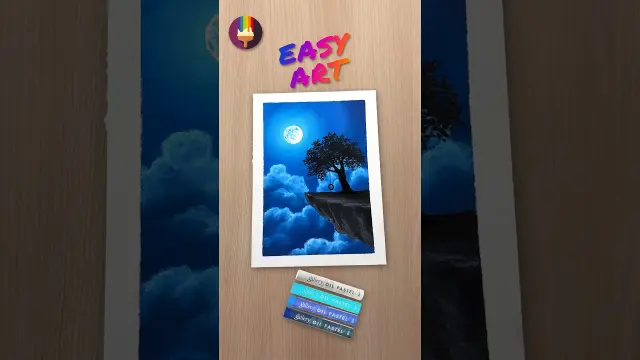
 Oil Pastel Blending Techniques for Moonlight Night Skies
#Landscape Drawing
1 ideas
Oil Pastel Blending Techniques for Moonlight Night Skies
Get new #Landscape Drawing ideas by email
Every Thursday: the week's best ideas, with the newest from #Landscape Drawing.
Related tags
Landscape Drawing Basics and Ideas
Landscape drawing is the art of portraying outdoor scenery on paper, from wide mountain views and quiet fields to gardens, coastlines, trees, roads, and weather-filled skies. It can be realistic, loose, dramatic, or simplified, but at its heart it is about observing how land, light, distance, and atmosphere work together. Artists have drawn landscapes for centuries, first as studies for larger paintings and later as finished works in their own right.
What landscape drawing includes
A landscape can be any natural or built outdoor setting. Some drawings focus on a single tree, a bridge, or a winding path, while others show a broad view with foreground, middle ground, and background. Good landscape drawing is not just about copying what you see. It is also about deciding what to emphasize: the shape of a hill, the rhythm of branches, the softness of clouds, or the feeling of open space.
Common styles and approaches
Read more
Landscape drawing can be done in many ways:
- Realistic drawing aims to describe forms accurately, with careful attention to proportion, texture, and light.
- Loose sketching captures the general feeling of a place with simple lines and broad marks.
- Tonal drawing uses values, from light to dark, to create depth and mood.
- Line drawing focuses on contours, patterns, and structure.
- Expressive drawing uses strong marks or simplified shapes to suggest atmosphere rather than exact detail.
You can also draw landscapes from life, from photographs, or from memory. Drawing outdoors helps you notice changing light and the overall shape of the scene, while working from a reference indoors can give you more time to study detail.
Materials and techniques
Pencil is the most common starting point because it is easy to control and forgiving. Charcoal gives rich darks and soft edges, while pen creates crisp, permanent lines. Pastels, colored pencils, and ink wash can add color and atmosphere. Many artists combine materials to get both structure and tone.
Helpful techniques include:
- Blocking in large shapes before adding detail
- Looking for big value areas instead of drawing every leaf
- Using overlapping forms to show depth
- Varying line weight to suggest distance and emphasis
- Leaving some areas simpler so the drawing feels open and balanced
What beginners should know
If you are just starting, do not try to draw every detail. Begin with simple shapes and basic perspective. A road, fence, river, or row of trees can help lead the eye into the scene and show space. Pay attention to the horizon line, because it affects how high or low the viewer seems to stand.
It also helps to observe nature as a collection of large masses rather than tiny pieces. A tree is not just many leaves; it has a trunk, main branches, and a recognizable silhouette. A cloud is not just white space; it has form, edges, and shadow. Thinking this way makes your drawing clearer and more convincing.
Practical tips
- Start with a small sketch to test composition.
- Keep distant objects lighter and less detailed.
- Use contrast near the main focal point.
- Step back often to check the overall balance.
- Practice different weather, seasons, and times of day to understand how light changes a scene.
Landscape drawing rewards patience and observation. The more you look closely, the more you will notice, and the more natural your drawings will become.
#Landscape Drawing: frequently asked questions
How do I start a landscape drawing if I've never really drawn scenery before?
Begin with a small, quick sketch rather than a full sheet, so you can test the composition without committing to it. Block in the biggest shapes first — the sweep of the ground, the mass of a tree, the band of the sky — and leave detail for later. Getting the horizon line placed early helps you decide how high or low the viewer seems to stand, and everything else can be built around it.
What materials do I actually need to begin?
A pencil and paper are genuinely enough; pencil is forgiving and easy to control while you are learning to see. Once you are comfortable, charcoal gives you deep darks and soft edges, pen gives crisp permanent lines, and pastels or colored pencils let you work with atmosphere and color. Many people end up combining two materials so they get structure from one and tone from the other.
Which style of landscape drawing should I choose?
It depends on what you enjoy looking at: realistic drawing rewards patience with proportion and texture, while loose sketching and expressive drawing let you capture the feeling of a place with fewer, bolder marks. Tonal drawing is a good choice if mood and depth interest you more than fine detail, and line drawing suits anyone drawn to pattern and structure. Try a few short studies in different approaches before settling on one.
Should I draw outdoors or work from a photograph?
Drawing on location teaches you to notice how light shifts and how a scene holds together as a whole, which is hard to learn any other way. Working from a reference indoors gives you time to study detail and redo things without the weather changing on you. Doing both is the usual compromise — sketch outside for the sense of the place, then refine indoors.
What are the most common mistakes beginners make with landscapes?
The usual one is trying to draw every leaf, cloud, and blade of grass, which flattens the picture instead of giving it depth. Distant things should stay lighter and simpler, with contrast saved for the focal point, and a common slip is making the background as dark and busy as the foreground. Stepping back regularly to check the overall balance catches most of these before they go too far.
How do I make a landscape feel like it has depth?
Use overlapping forms so nearer shapes sit in front of farther ones, and let line weight and detail thin out as things recede. Keeping far objects lighter and less defined, while putting your strongest contrast near the part you want people to look at, does most of the work. A road, river, fence, or row of trees can also guide the eye into the scene and make the space read clearly.
Videos come from YouTube and posts from Instagram; titles and summaries are our own. All rights belong to their creators.