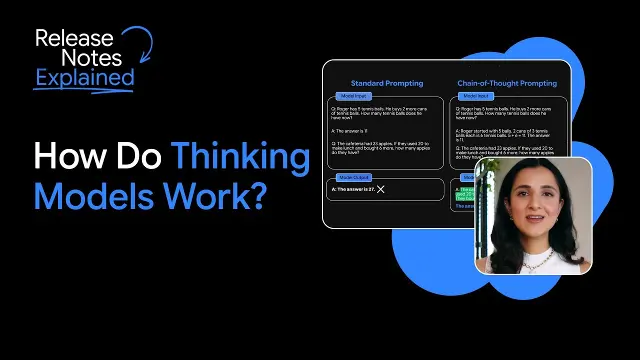
 How Thinking and Reasoning Models Actually Work, Explained
#Language Models
1 ideas
How Thinking and Reasoning Models Actually Work, Explained
Get new #Language Models ideas by email
Every Thursday: the week's best ideas, with the newest from #Language Models.
Related tags
Language Models: A Beginner's Guide
A language model is a system trained to predict what comes next in a sequence of text. That single, humble task — guess the next word — turns out to require so much understanding of grammar, fact and style that a sufficiently large model can draft a letter, translate a paragraph, summarise a report or answer a question. Everything else a language model appears to do grows out of that one ability.
Where the idea comes from
Statisticians have modelled language with probabilities for decades, often by counting how frequently words appear together. Early versions could suggest a plausible next word but little more. The turning point came with neural networks and a training method called self-supervised learning: instead of labelling data by hand, the model hides part of a real text and learns to reconstruct it. Because ordinary writing is available in enormous quantities, this gives a model billions of examples without anyone writing a single exercise.
How a model is built
Read more
Most modern language models are built on the transformer, an architecture that processes words in parallel and uses attention to weigh which parts of the context matter for each position. Training happens in stages. Pretraining exposes the model to a broad body of text so it absorbs patterns and associations. Fine-tuning then shapes its behaviour using curated examples of the responses people actually want. A final stage, often called alignment, uses human feedback to discourage harmful or unhelpful output.
Kinds of model
Models differ by purpose and size. Base models simply continue text. Instruction-tuned models follow directions. Reasoning models are trained to work through intermediate steps before answering, which helps with arithmetic, logic and multi-step problems. Smaller models fit on a laptop and trade depth for speed and privacy; larger ones are accessed remotely. Some models accept images or audio alongside text; others are specialised for code, translation or search.
What beginners should know
Prompting is the main skill. Be specific about the task, the audience and the desired format, and give an example when the output matters. Supply the facts the model needs rather than assuming it knows them, and break complicated requests into steps.
Treat confident-sounding output with care. A model predicts fluent text, not verified truth, so it can state something false with perfect poise. Check anything factual, numerical or consequential against a reliable source. Remember too that training data has a cutoff, so recent events may be missing.
Practical habits
Use models as a first draft, not a final answer. Iterate: ask for a revision, point out what was wrong, narrow the scope. Keep sensitive personal information out of prompts unless you understand how the tool handles it. For creative work, the model is best at generating options; your judgement decides which one is worth keeping.
None of this requires technical knowledge to start. A clear request, a critical eye and a willingness to revise will take you a long way.
#Language Models: frequently asked questions
How do I get started with a language model if I have no technical background?
You only need a clear idea of what you want written and a willingness to rephrase your request until the result looks right. Describe the task, who it is for, and the shape you want the answer to take, then react to the draft instead of accepting it straight away. No coding or setup knowledge is required to begin.
Which kind of language model should I pick for my purpose?
Choose by what you need done: models that simply continue text are good for drafting, instruction-following models suit directed tasks, and reasoning-focused ones help with logic or multi-step problems. If you want speed and privacy on your own machine, a smaller model is often enough, while heavier work is usually done through a remote service. Some models also handle images or audio, which matters if your project involves more than words.
What is the best way to keep a language model's output reliable?
Treat every answer as a draft and verify anything factual, numerical, or consequential against a trustworthy source, since fluent wording is not proof of accuracy. Keep in mind that the model's training stops at some point, so very recent developments may not be reflected. Feeding it the facts it needs inside your request closes a lot of that gap.
What common mistakes do people make when writing prompts?
The usual slip is vagueness: asking for something broad without saying who it is for or what form it should take. Another is hiding important context and expecting the model to know it, or bundling several unrelated requests into one message. Breaking a complicated task into steps and offering an example when quality matters fixes most of this.
Can a language model help with creative projects like crafts, fashion, or wedding planning?
Yes, and its strongest contribution there is generating options: theme ideas, wording for invitations, colour pairings, or variations on a design you already like. Your own judgement still decides which suggestion is worth pursuing, and you can ask for revisions once you see what you dislike. It works best as a source of directions rather than a finished plan.
Should I put personal details into a prompt?
Keep sensitive personal information out unless you understand how the particular tool stores and handles what you send. You can usually describe the situation in general terms and still get a useful answer. For anything private, that habit costs you very little and protects a lot.
Videos come from YouTube and posts from Instagram; titles and summaries are our own. All rights belong to their creators.