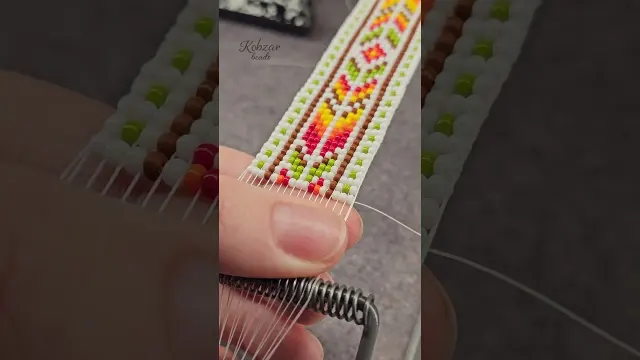
 Beadwork for Beginners: Satisfying Loom Row
#Loom Beading
2 ideas
Beadwork for Beginners: Satisfying Loom Row
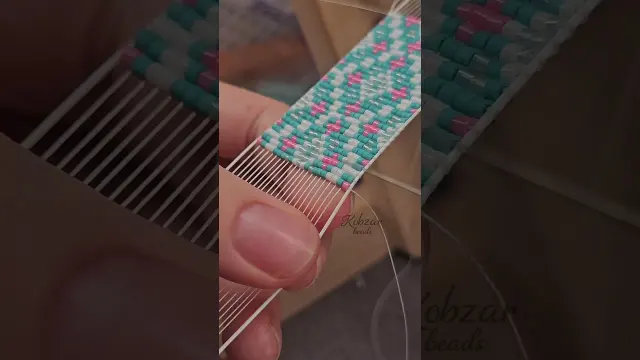 Beadwork for Beginners: Addictive Loom Rows
Get new #Loom Beading ideas by email
Every Thursday: the week's best ideas, with the newest from #Loom Beading.
Related tags
Loom Beading Basics and Patterns
What loom beading is
Loom beading is a method of arranging small beads in straight, even rows on a beading loom. The loom holds the threads under tension while you pass beads through the spaces between the warp threads, creating a flat woven strip. It is one of the most accessible forms of bead weaving because the structure of the loom helps you keep the rows neat and consistent.
This technique has long been used in beadwork traditions around the world, especially for decorative bands, jewelry, trims, and wearable pieces. It can be simple or highly detailed, depending on the size of the beads and the pattern you choose. Some pieces are geometric and repeating, while others use letters, symbols, or pictorial designs.
Common uses and styles
Read more
Loom beading is often used for bracelets, belts, necklace strands, bag trims, bookmarks, and decorative panels. Because the result is flat and structured, it works well for designs that need clean edges and regular spacing.
The main styles include:
- Simple striped or color-block patterns
- Geometric repeating motifs
- Lettered or symbolic designs
- Narrow bands for bracelets and trims
- Wider panels for statement pieces or decorative work
You can make loom beadwork from seed beads, which are small and uniform and help create a smooth surface. More experienced beaders sometimes mix colors for shading or pattern detail, but even a very simple two-color design can look striking.
What beginners should know
If you are new to loom beading, start with a small project. A narrow band is easier to manage than a wide piece, and it lets you learn the rhythm of threading, tension, and pattern reading without too much complexity.
A few basic points help a lot:
- Choose beads that are fairly even in size so the rows sit neatly.
- Keep the thread tension steady, but not so tight that the work puckers.
- Read your pattern carefully before you begin, especially if it repeats.
- Leave enough thread at the start and end for finishing and attaching findings if needed.
Patience matters more than speed. The rows may feel slow at first, but the process becomes very satisfying as the pattern grows. If a bead lands in the wrong place, it is usually easiest to correct it soon rather than much later.
Tips for a better finish
Good finishing makes a loom beadwork project look polished and helps it last longer. When the weaving is complete, the loose warp threads are usually secured into the beadwork or hidden carefully before the piece is trimmed and finished. The exact method depends on the project, but the goal is always the same: keep the edges tidy and the structure stable.
A few practical habits make a difference:
- Use strong, thread-friendly tools and materials suited to small beads.
- Check the edges as you work so the band stays even.
- Avoid pulling too hard, which can distort the rows.
- Store finished beadwork flat or gently rolled to protect it from snagging.
Loom beading is especially rewarding because it combines order and creativity. Once you understand the basic structure, you can build from simple rows to detailed, expressive designs at your own pace.
Videos come from YouTube and posts from Instagram; titles and summaries are our own. All rights belong to their creators.