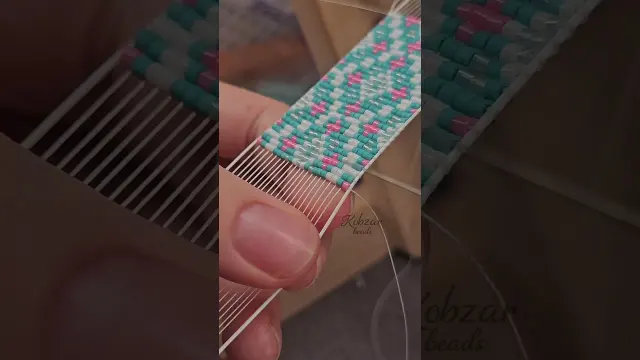
 Beadwork for Beginners: Addictive Loom Rows
#Pattern
2 ideas
Beadwork for Beginners: Addictive Loom Rows
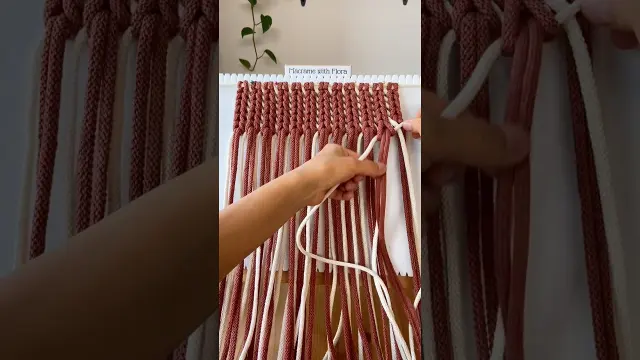 Dimensional Braid Macrame Pattern Overview
Get new #Pattern ideas by email
Every Thursday: the week's best ideas, with the newest from #Pattern.
Related tags
Pattern: A Guide to Repeats and Motifs
Pattern is a repeated arrangement of shapes, lines, colors, or motifs. You can find it in fabric, wallpaper, tiles, wrapping paper, embroidery, beadwork, knitting, quilting, and many other forms of making. At its heart, a pattern creates rhythm and unity. It can feel orderly or lively, subtle or bold, simple or highly detailed.
What pattern means
A pattern may be geometric, floral, striped, dotted, abstract, or figurative. Some patterns repeat a single small element across a surface, while others build a larger scene from many connected parts. In design and craft, pattern is often used to guide the eye, create decoration, and bring balance to a piece.
Patterns have been part of human making for a very long time. They appear in traditional textiles, ceramics, architecture, and ornament from many cultures. Because pattern is such a basic visual idea, it can be practical as well as beautiful. It helps cover surfaces, organize composition, and give handmade work a recognizable character.
Read more
Main kinds of patterns
There are many ways to describe pattern, but a few common types are helpful:
- Repeating pattern: one motif is repeated regularly across a surface.
- Tiled pattern: shapes fit together like a grid or interlocking layout.
- Border pattern: decoration runs along an edge or frame.
- Allover pattern: the same visual idea continues across the whole surface.
- Large-scale pattern: bigger motifs make a stronger statement.
- Small-scale pattern: fine details create a quieter, softer effect.
You may also hear about repeats such as straight repeats, half-drop repeats, or mirror repeats. These describe how motifs are placed in relation to one another.
How pattern is used
Pattern can change the feeling of an object or room. In fabric, it can make clothing look playful, elegant, traditional, or modern. In home decor, it can add warmth and texture. In crafts, pattern can help a maker create consistency while still allowing room for variation. Even a very simple repeated line or stitch can become decorative when it is planned carefully.
What to know as a beginner
If you are just starting, begin with simple motifs and a limited color palette. Small repeats are easier to control than complex ones. Pay attention to scale: a pattern that looks balanced on a small sample may feel very different on a larger surface.
A few practical tips:
- Start with one clear motif before adding extra detail.
- Test your repeat on paper or in a small sample first.
- Keep spacing consistent if you want a calm, even look.
- Mix strong and quiet elements to avoid visual clutter.
- Step back often to see how the pattern reads from a distance.
Working with pattern well
Good pattern design usually depends on rhythm, contrast, and balance. Too much repetition can feel flat, while too much variation can feel messy. The best results often come from a careful middle ground. As you practice, notice how color, spacing, and scale change the mood of your work. With time, you will learn how to use pattern not just as decoration, but as a way to shape the whole feeling of a piece.
Videos come from YouTube and posts from Instagram; titles and summaries are our own. All rights belong to their creators.