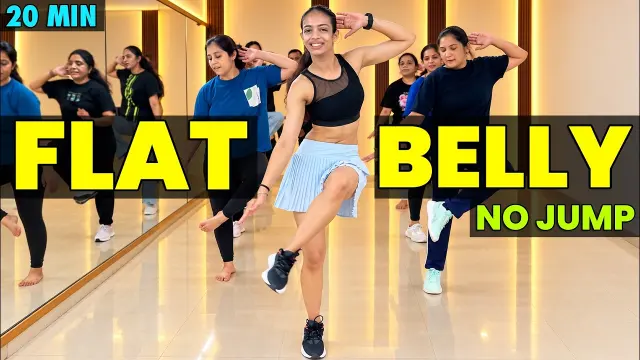
 20 Minute Low Impact Indoor Walking Workout for Fat Burn and Core
#Low Impact Cardio
1 ideas
20 Minute Low Impact Indoor Walking Workout for Fat Burn and Core
Get new #Low Impact Cardio ideas by email
Every Thursday: the week's best ideas, with the newest from #Low Impact Cardio.
Related tags
Low Impact Cardio: A Gentle Guide to Moving Well
Low impact cardio is any sustained movement that raises your heart rate without the jarring, repeated landings that come with running and jumping. The word "impact" here refers to force, not effort: one foot stays on the ground or the movement happens on a machine or in water, so the joints are spared the shock of a body landing from height. Done briskly and for long enough, it still works the heart and lungs, which is the whole point of cardio.
Where it comes from
The idea grew out of rehabilitation and sports medicine, where therapists needed ways to rebuild fitness in people recovering from injury without loading healing tissue. Water exercise, stationary cycling and walking programmes were used long before they became popular in ordinary gyms. Over time the approach moved into mainstream fitness, partly because it suits so many different bodies and fitness levels, and partly because it is easy to sustain over years rather than weeks.
The main kinds
Read more
- Walking, indoors or out, including brisk walking and walking with poles
- Stationary cycling, and cycling on flat ground
- Swimming and water aerobics, where buoyancy takes weight off the joints
- Elliptical trainers, which keep the feet moving in a fixed path
- Rowing machines, which are low impact but quite demanding on the back and arms
- Low impact dance and step routines, where one foot stays grounded
- Stair climbing and incline walking, gentler on impact but harder on effort
What it is good for
Because the strain is spread more evenly, low impact cardio is often a comfortable entry point for beginners, for people returning to exercise after a long break, for older adults, and for anyone who finds high impact work uncomfortable. It builds aerobic fitness, supports everyday stamina and can be done in short blocks that fit around a busy day. It is also easy to scale: you can make a session harder by adding time, incline, resistance or pace rather than by adding jumps.
Getting started
Start with what feels manageable, perhaps fifteen to twenty minutes at a pace where you can still speak in short sentences, and repeat it a few times a week. Increase gradually rather than sharply; the body adapts to consistency better than to bursts of enthusiasm. Wear supportive shoes, keep water nearby, and warm up with a few minutes of easy movement before picking up the pace.
Practical tips
- Choose the activity you actually enjoy, since that is the one you will keep doing.
- Mix two or three kinds across the week so no single set of muscles carries all the work.
- Use talk-test pacing: if you can chat comfortably, you can probably push a little more.
- Pay attention to posture, especially on machines, and keep your grip relaxed.
- Rest is part of the programme; tired legs do better with a lighter day between sessions.
Low impact does not mean low value. Steady, joint-friendly movement, repeated often, is one of the most reliable ways to stay active for the long term.
#Low Impact Cardio: frequently asked questions
How do I start low impact cardio if I'm not used to exercising?
Begin with a kind of movement you can do comfortably and hold a short conversation through, such as brisk walking or easy pedalling on a stationary bike. Keep the first sessions short and repeat them regularly rather than going all out once, then add a little time, pace or resistance as it starts to feel easy. A gentle warm-up before you pick up speed makes the whole thing more comfortable.
What do I actually need to get going with low impact cardio?
For walking, indoor walking or dance-style routines, supportive shoes and a bit of clear floor space are really all it takes. Machines and water sessions need a gym or a pool, so it helps to know which setup you have access to before planning a routine. Try a few options before spending anything on gear, since the activity you enjoy is the one you'll keep up.
Which kind of low impact cardio should I pick?
Choose based on what your body tolerates and what fits your day: walking and indoor walking need nothing, cycling and elliptical trainers suit people who like steady rhythm, and water exercise takes weight off the joints. Mixing a couple of kinds across the week keeps it interesting and stops one set of muscles from doing all the work. Rowing is joint-friendly but asks a lot of the back and arms, so it's worth trying briefly before committing to it.
How can I make a low impact session harder without adding jumps?
Add time, incline, resistance or pace instead of impact, all of which raise the effort while keeping landings soft. Pacing by talk test works well: if you can chat comfortably, you can probably push a little more, and if you're gasping, ease back. Increasing gradually over weeks beats sudden bursts of enthusiasm.
Can I do low impact cardio at home without equipment?
Yes. Indoor walking, low impact dance and step-style routines all keep one foot grounded and need only floor space and supportive shoes. Short blocks fitted around a busy day add up, and you can always make them harder with arm movement, faster pace or gentle inclines rather than jumps.
What are the common mistakes people make when starting out?
Doing too much too soon is the usual one, along with skipping the warm-up and treating rest days as laziness. On machines, people tend to hunch or grip too tightly, which tires them out faster than the work itself. Building in lighter days and paying attention to posture keeps the habit going far longer than pushing through every session.
Videos come from YouTube and posts from Instagram; titles and summaries are our own. All rights belong to their creators.