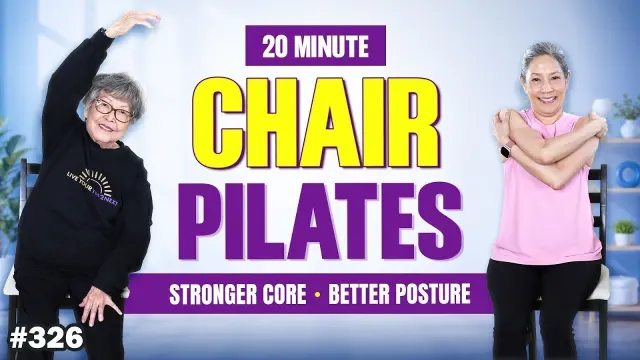
 Gentle 20-Minute Chair Pilates Routine for Seniors and Beginners
#Low Impact Workout
3 ideas
Gentle 20-Minute Chair Pilates Routine for Seniors and Beginners
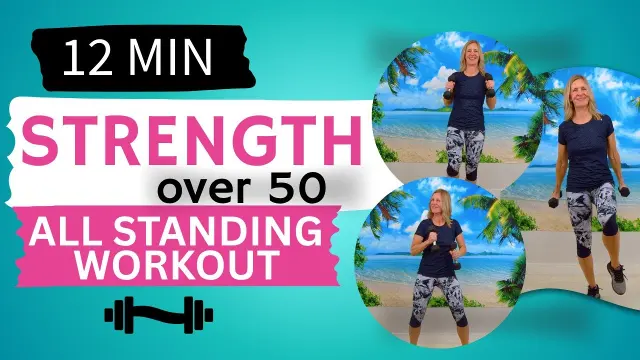 12-Minute Dumbbell Strength Workout for Women Over 50 at Home
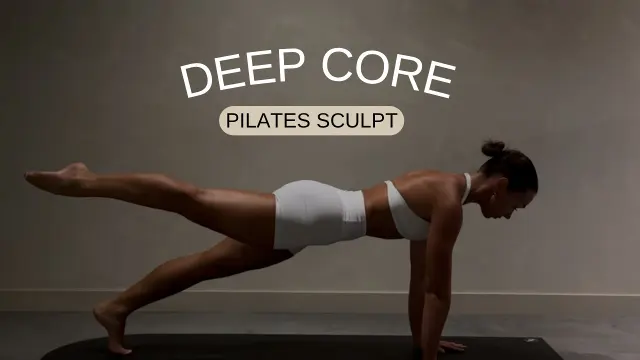 15-Minute Deep Core Pilates Workout With No Equipment
Get new #Low Impact Workout ideas by email
Every Thursday: the week's best ideas, with the newest from #Low Impact Workout.
Related tags
Low Impact Workouts: A Gentle Guide to Moving Well
Low impact exercise is any movement that keeps at least one foot on the ground and avoids jarring landings. Instead of jumps, sprints and sudden direction changes, you get steady, controlled work: walking, stepping, lifting, pressing, stretching. The heart still pumps, the muscles still load, the joints simply take less of a beating. That distinction matters, because "low impact" describes the forces involved, not the effort. A challenging workout can be gentle on the knees and still leave you pleasantly tired.
Where it comes from
Much of the vocabulary of low impact training grew out of rehabilitation and adapted physical education, where therapists needed ways to rebuild strength without re-injuring a healing joint. Over time those methods drifted into mainstream studios and living rooms. Water aerobics, chair-based routines, resistance bands and mat work all share that lineage: they were designed for people who needed movement to be forgiving, and they turned out to be good for almost everyone.
The main kinds
Read more
- Walking, indoors or out, flat or on gentle inclines.
- Swimming and water exercise, where buoyancy carries most of your weight.
- Cycling, on a stationary bike or outdoors on easy terrain.
- Strength training with dumbbells, bands or body weight, performed slowly and with control.
- Pilates, yoga and mobility work, often focused on posture, core control and breathing.
- Step and dance routines with the jumps removed, sometimes called low impact aerobics.
Most of these can be combined. A common pattern is a few minutes of walking or cycling to warm up, a block of strength work, then a stretch.
If you are starting out
Begin with what feels almost too easy and add a little each week. Ten or fifteen minutes of consistent movement teaches your body more than one long session followed by soreness. Learn the shape of a movement before you add load or speed: a slow squat with good alignment is worth more than a fast one that wobbles. Pay attention to breath, and keep breathing through the work rather than holding it.
Choose footwear that feels stable, and clear enough space to move without catching a foot on anything. Warm up for a few minutes so your muscles are not cold, and finish with slower movement.
Some practical signals to respect: sharp pain, joint swelling, dizziness or unusual shortness of breath mean stop and rest. Soreness that fades in a day or two is ordinary; pain that lingers is a reason to ease off and, if it continues, to ask a qualified professional. If you are pregnant, recovering from injury or living with a health condition, get advice tailored to you before starting something new.
The quiet advantage of low impact work is that it is repeatable. It rarely leaves you too wrecked to do it again tomorrow, and over months that consistency is what changes how you feel.
#Low Impact Workout: frequently asked questions
How do I start a low impact workout if I’m a beginner?
Start with movements that feel almost too easy, then build up gradually as your body adapts. Short, consistent sessions with a warm-up and a calm finish are usually better than pushing hard right away.
What equipment do I need for low impact exercise at home?
You can do a lot with very little: a clear space, stable shoes, and comfortable clothing are often enough. Depending on the style you choose, a chair, mat, resistance bands, dumbbells, or a stationary bike can add variety and support.
Which type of low impact workout is best for me?
The best choice is the one that matches your comfort, goals, and current fitness level. Walking, cycling, swimming, Pilates, yoga, chair routines, and controlled strength work are all good options, so you can pick one or mix a few together.
Can a low impact workout still be challenging?
Yes, because low impact describes how the body moves, not how hard the session feels. A slow, controlled strength routine or a steady Pilates workout can be very demanding while still being gentle on the joints.
What are the most common mistakes to avoid with low impact workouts?
Rushing the movement, skipping the warm-up, or using poor alignment can make a simple routine less effective. It also helps to avoid holding your breath, adding speed too soon, or ignoring sharp pain and lingering discomfort.
Videos come from YouTube and posts from Instagram; titles and summaries are our own. All rights belong to their creators.