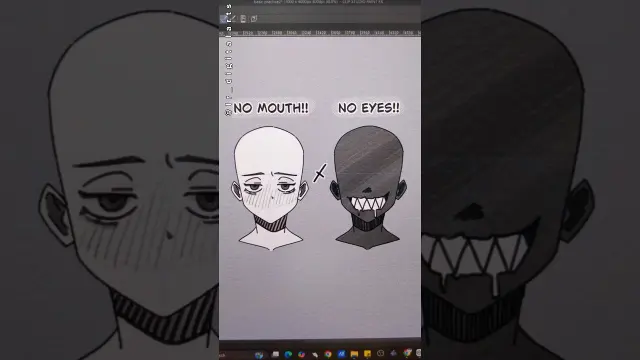
 Manga Expressions Experiment Comparing Eyes and Mouths
#Manga Drawing
1 ideas
Manga Expressions Experiment Comparing Eyes and Mouths
Get new #Manga Drawing ideas by email
Every Thursday: the week's best ideas, with the newest from #Manga Drawing.
Related tags
Manga Drawing: A Beginner's Guide to the Basics
Manga drawing is the practice of making the kind of comic art that developed in Japan and is now read and copied all over the world. What sets it apart is not one style but a set of conventions: expressive black-and-white linework, characters with large eyes and simplified features, and a strong sense of movement on the page. If you have ever doodled a face with big shining eyes, you have already touched the edge of it.
What makes manga look like manga
Manga art grew out of a long tradition of Japanese illustration and storytelling, and it borrows from both. The visual grammar is what people recognise: clean outlines, hair drawn in thick shapes rather than individual strands, minimal shading, and backgrounds that can swing between realistic detail and near-abstraction to carry a mood.
Characters are stylised rather than realistic. Heads are proportioned differently from real ones, eyes are enlarged to hold emotion, noses and mouths are reduced to a few lines. This is not laziness; it is a language. A tiny mouth and a big eye can say "surprised" faster than any amount of detail.
Read more
The main tools and techniques
Most manga is made with pencil, ink, and paper, though many artists now work entirely on a tablet. The traditional path looks like this: rough sketch, clean pencil lines, inking with a pen or brush, then erasing. Screentone, a printed sheet of dots or patterns, adds shading and texture; digital artists apply the same idea with tone brushes and fills.
Inking deserves its own practice. Line weight carries meaning: heavier lines suggest weight or shadow, thin lines suggest light and delicacy. Varying pressure in one stroke, rather than drawing everything at the same thickness, is one of the quickest ways to make a drawing look more confident.
Faces, bodies, and expression
Beginners usually start with the head. Learn a simple construction: a circle for the skull, a cross for the centre line and eye level, then features placed along it. Once that structure feels solid, you can stretch and squash it on purpose instead of by accident.
Expression is where manga rewards experimentation. Eyes, eyebrows, and mouth do most of the work, and small changes to any one of them shift the whole feeling of a face. Try drawing the same face several times, changing only the mouth, then only the eyes.
Bodies follow the same principle: learn simple mannequin shapes and gesture lines before anatomy. A pose that reads clearly matters more than correctly drawn muscles.
Storytelling on the page
Manga is sequential art, so drawing panels is part of drawing manga. Panels control pace: large panels slow the reader down, small ones hurry them along. Reading order, flow between panels, and leaving room for speech all decide whether a page feels smooth or confusing.
Practical advice for getting better
Draw regularly in small amounts rather than rarely in long sessions. Copy art you admire while you learn, then draw from life to build your own vocabulary. Keep your early pages; they are proof of progress later. And finish things, even short ones, because a finished rough page teaches more than a perfect unfinished sketch.
#Manga Drawing: frequently asked questions
How do I start learning manga drawing with no experience?
Begin with the head, since it teaches you proportion and feature placement faster than anything else. Sketch a circle for the skull, add a cross for the centre line and eye level, then build the features along those guides. Repeat that construction until it feels automatic before moving on to bodies or full pages.
What supplies do I actually need to draw manga?
You can start with a pencil, paper, and an eraser, then add a fine pen or brush for inking when your linework feels steady. Screentone sheets or digital tone brushes come later, once you want shading and texture. A tablet is a valid route from day one, but it is not required to learn the fundamentals.
Should I draw manga digitally or on paper?
Both teach the same skills, so pick whichever keeps you drawing most often. Paper makes line weight and inking feel physical and forces you to commit to strokes; digital makes correcting, layering, and applying tone far quicker. Many artists sketch traditionally and finish digitally, which is a reasonable middle path.
How do I make my characters look expressive rather than stiff?
Practise the same face repeatedly and change only one feature at a time, keeping the eyes fixed on one round and the mouth on the next. Eyes, eyebrows, and mouth carry nearly all the emotion, so small adjustments there change the whole read of a face. Drawing from life between sessions gives you real expressions to simplify.
What are the most common beginner mistakes in manga art?
Drawing everything at one line thickness is the big one, because uniform lines flatten a picture; vary pressure so heavy strokes read as weight and thin ones as light. Beginners also chase anatomy before they can build a clear pose, and they abandon pages halfway. Finish short pieces, even rough ones, since a completed page teaches more than a flawless unfinished sketch.
How do I lay out panels so a page reads clearly?
Panel size sets the pace: large panels slow the reader down for a moment that matters, small ones push the action forward. Keep the reading order obvious from panel to panel and leave space for speech before you draw the art in. Sketch the panel boxes first, then fit the drawings inside them.
Videos come from YouTube and posts from Instagram; titles and summaries are our own. All rights belong to their creators.