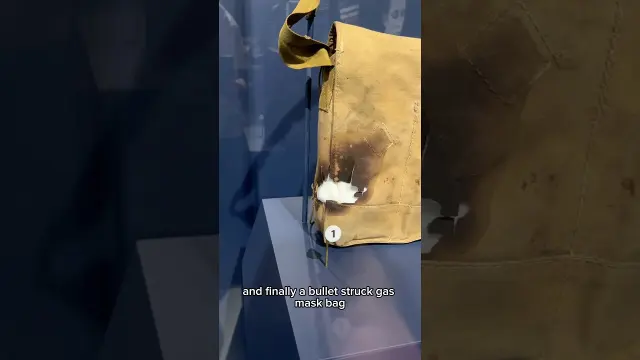
 My Favorite Artifacts from the National Museum of the Marine Corps
#Marine Corps
1 ideas
My Favorite Artifacts from the National Museum of the Marine Corps
Get new #Marine Corps ideas by email
Every Thursday: the week's best ideas, with the newest from #Marine Corps.
Related tags
Marine Corps: Roles, Traditions and Identity
The Marine Corps is the amphibious and expeditionary branch of the United States Armed Forces, organised under the Department of the Navy. Its reputation rests less on size than on speed: marines are trained to be ready to move on short notice, arriving by ship, aircraft or a combination of both, and to operate as a self-contained force once they get there. That combination of mobility and self-sufficiency is the thread that runs through almost everything the Corps does.
Where it comes from
The Corps traces its origins to the Continental Marines raised during the American Revolution, and its modern shape grew out of the centuries-old naval practice of carrying soldiers aboard warships. In the age of sail, these troops protected officers, guarded stores, and fought from the rigging and decks during boarding actions. Over time the role shifted ashore and outward, toward seizing and holding advanced bases, conducting landings from the sea, and acting as the first force into a crisis.
What it does
Read more
Marines describe themselves as an air-ground team: infantry, armour, artillery, aviation, logistics and communications built to work together as one unit. Typical missions include amphibious operations, embassy and installation security, disaster relief and evacuation of civilians, and the rapid reinforcement of forces already deployed. Because the branch is comparatively small, marines often train across several specialities rather than narrowing to one.
Traditions and visual culture
Much of the Corps' identity is carried by symbols. The eagle, globe and anchor emblem, worn on the cover and worked into insignia, is the most recognisable. The motto, Semper Fidelis, means "always faithful." The dress uniforms, with their high collars and elaborate detailing, follow a tradition that reaches back to early naval uniforms. Rank structure, the language marines use for everyday objects, and the emphasis on shared hardship during training all serve the same purpose: making a small force feel like a close-knit one.
What beginners should know
If you are new to the subject, a few things help. Recognise that the Corps is one branch among several, with a distinct purpose rather than a duplicate of the Army. Learn the difference between enlisted ranks and officers, since much of what you read assumes it. Treat photographs and personal accounts with respect: many documents service, loss and injury. Museums, official archives and the memoirs of veterans are a good place to start, and artefacts such as uniforms, field equipment and letters often say more than any summary.
Practical tips
- Follow the story through themes — amphibious landing craft, aviation, field medicine — rather than trying to absorb everything at once.
- When sharing material, give credit to photographers, museums and the people who served.
- Keep discussions of current operations separate from the history of the branch; the traditions endure even as the missions change.
What makes the topic endlessly interesting is the tension between the ceremonial and the practical: polished drill and tough fieldcraft, inherited ritual and constant adaptation.
#Marine Corps: frequently asked questions
What exactly is the Marine Corps, and how is it different from the other armed forces?
It is the amphibious and expeditionary branch of the United States Armed Forces, organised under the Department of the Navy. What sets it apart is the emphasis on being ready to move on short notice and arriving as a self-contained force that can operate once it gets there. It has a distinct purpose rather than being a duplicate of the Army.
What does the eagle, globe and anchor emblem stand for?
It is the most recognisable symbol of the Corps, worn on the cover and worked into insignia. Each part carries meaning tied to the branch's identity and its service ashore and overseas. Alongside the motto Semper Fidelis, meaning "always faithful," it does much of the work of holding a small force together as a close-knit one.
What kinds of missions do marines actually carry out?
Marines describe themselves as an air-ground team, with infantry, armour, artillery, aviation, logistics and communications built to work as one unit. Typical work includes amphibious operations, embassy and installation security, disaster relief, evacuation of civilians, and rapid reinforcement of forces already deployed. Because the branch is relatively small, individuals often train across several specialities instead of narrowing to one.
I'm new to the subject — where should I start learning about it?
Begin with museums, official archives and veterans' memoirs rather than trying to absorb everything at once. Follow a single theme through, such as amphibious landing craft, aviation or field medicine, and let the rest build around it. Learning the difference between enlisted ranks and officers early on helps, since a lot of what you read assumes it.
How should I share photographs, uniforms and letters connected to Marine Corps history?
Treat the material with respect, because many images and personal accounts document service, loss and injury. Always credit photographers, museums and the people who served when you pass something along. Artefacts such as field equipment and letters often say more than any summary, so let them speak rather than paraphrasing them away.
What's a common mistake people make when exploring this topic?
Mixing up current operations with the history and traditions of the branch is the usual one, and it muddies both. The rituals, uniforms and language endure even as missions change, which is exactly what makes the subject interesting. Keep the two threads separate and the tension between polished ceremony and tough fieldcraft becomes much easier to see.
Videos come from YouTube and posts from Instagram; titles and summaries are our own. All rights belong to their creators.