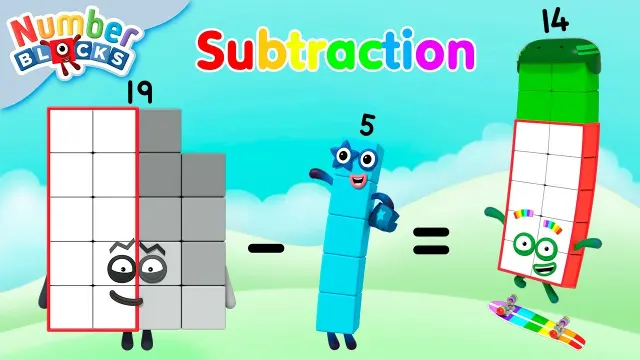
 Learn to Subtract with Numberblocks Number Cartoons
#Math Cartoons
1 ideas
Learn to Subtract with Numberblocks Number Cartoons
Get new #Math Cartoons ideas by email
Every Thursday: the week's best ideas, with the newest from #Math Cartoons.
Related tags
Math Cartoons: Learning with Numbers and Stories
Math cartoons use drawings, characters, and simple stories to explain ideas in mathematics. They can turn numbers, shapes, patterns, and word problems into something more visual and approachable. For many children, and for anyone who learns best through images, cartoons can make abstract ideas feel clearer and less intimidating.
You’ll find math cartoons in books, worksheets, classroom posters, animated videos, comic strips, and educational games. Some focus on counting and number recognition, while others explain addition, subtraction, multiplication, fractions, measurement, or geometry. A cartoon might show a character sharing cookies to explain division, building towers to compare sizes, or solving a puzzle to introduce logic and sequencing.
Why math cartoons work
Cartoons help because they combine words with pictures. This gives the brain more than one way to understand a concept. Instead of only reading a calculation, you can see what the numbers mean in a real situation. Visual storytelling can also make lessons feel more playful, which may help with attention and confidence.
Read more
For younger learners, simple characters and repeated scenes can support memory and recognition. For older learners, cartoons can still be useful when a topic needs to be broken into smaller steps. A clear drawing of a problem often makes it easier to spot what is being asked.
Common styles and uses
Math cartoons come in many forms:
- Character-based comics, where familiar figures solve problems together
- Step-by-step cartoons, which show a process in a simple sequence
- Humorous strips, which use jokes to make a math idea memorable
- Animated explanations, which add movement and voice to visual teaching
- Visual puzzles, where the picture itself invites counting, comparing, or reasoning
They are often used in teaching, homeschooling, tutoring, and revision. They can also be helpful for introducing new topics before moving on to more formal exercises.
What beginners should know
If you are using math cartoons with a child, keep the focus on understanding rather than speed. Ask simple questions like: What do you notice? How many are there? What happens first? This encourages thinking without pressure.
Look for cartoons that match the learner’s level. Very busy drawings can be distracting for beginners, while clean, simple images are usually easier to follow. The best cartoons support the lesson rather than hiding it inside too much decoration.
It also helps to connect the picture back to the math. A cartoon should be a starting point for discussion, not a replacement for practice. After looking at the image, try a related problem on paper, with objects, or by talking it through aloud.
Practical tips
- Choose cartoons that show one main idea at a time
- Use them to introduce a topic, then practise it in another way
- Encourage the learner to explain the picture in their own words
- Look for stories that feel relatable and easy to follow
- Keep the tone light and positive, especially if maths feels difficult
Math cartoons can make learning feel friendlier and more memorable. When used well, they give numbers a story, and stories can make ideas easier to remember, discuss, and understand.
Videos come from YouTube and posts from Instagram; titles and summaries are our own. All rights belong to their creators.