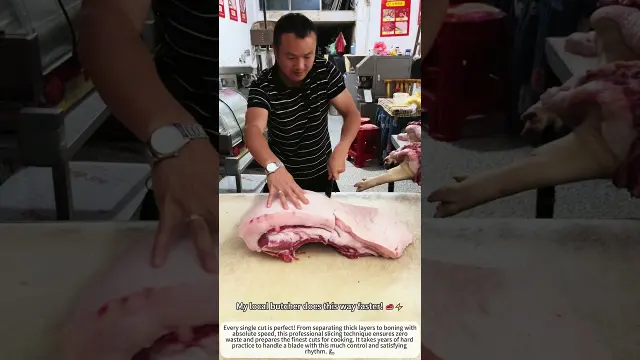
 Professional Meat Cutting and Boning Technique
#Meat Cutting
1 ideas
Professional Meat Cutting and Boning Technique
Get new #Meat Cutting ideas by email
Every Thursday: the week's best ideas, with the newest from #Meat Cutting.
Related tags
Meat Cutting: A Beginner's Guide to Butchery Basics
Meat cutting is the craft of reducing a large piece of meat into the portions you actually cook: steaks, roasts, cutlets, strips, cubes or mince. It sits at the meeting point of cookery and craft, and while professional butchery takes years to master, the principles behind a clean, even cut are simple enough for anyone to learn.
Where it comes from
Before meat reached a shop counter, animals were raised, slaughtered and broken down close to home, and nearly every part was used. That whole-animal approach shaped the classic cuts still sold today: the shoulder, the leg, the loin, the belly, the neck. Butchery traditions differ around the world, from the French method of separating an animal into primal sections to the bone-in, fat-layered cuts prized in many Asian and Mediterranean kitchens. What they share is a respect for the animal and a dislike of waste.
Why the way you cut matters
Read more
Muscle is made of bundles of fibres that run in one direction, called the grain. Cut with the grain and you get long, chewy strands; cut across it and you shorten them, so the meat feels tender in the mouth. Thickness matters too: pieces of uneven size cook unevenly, so one part dries out while another is still raw inside. A tidy cut also gives you more usable meat and less trim thrown away.
The tools
You do not need a full butcher's kit to begin.
- A sharp knife with a blade long enough to make a single, drawing stroke. A boning knife for working around bones and a longer slicing knife cover most home tasks.
- A honing steel to realign the edge before each session.
- A sturdy board that will not slide, kept exclusively for raw meat.
- A clean cloth and a tray for the finished pieces.
Sharp knives are safer than dull ones, because a dull blade skids and needs force.
Techniques to learn first
Start with boning: feel for the bone with your fingertips, then let the blade follow it rather than forcing it through. Learn to butterfly a thick piece by slicing almost through and opening it like a book, which gives you a wide, even surface for quick cooking. Practise trimming silverskin and excess fat — enough fat for flavour, but not so much that the meat steams. Then move on to portioning at a consistent thickness and to cutting strips or cubes across the grain.
Practical habits
Keep the meat cold and work in short stretches, returning it to the fridge if the kitchen is warm. Wash your hands, board and knife after handling raw meat, and never let cooked food touch them. Cut on a board with a little give so the edge does not chip, and let the knife do the work: long, smooth strokes, never sawing.
Expect your first attempts to look uneven. That is part of learning, and the trimmings still make excellent stock, mince or a stew.
#Meat Cutting: frequently asked questions
How do I start learning to cut meat at home?
Begin with the simplest job: taking a boneless piece and portioning it into even pieces. Learn to feel where the bone sits and let the blade follow it instead of pushing through, then practise butterflying a thick piece and trimming silverskin and excess fat. Keep sessions short and the meat cold, and treat the first uneven results as normal practice rather than failure.
What equipment do I actually need for meat cutting?
A sharp knife with a blade long enough to finish a cut in one drawing stroke covers most work, and adding a boning knife plus a longer slicing knife handles nearly everything else at home. You also want a honing steel to straighten the edge before each session, a board that stays put and is used only for raw meat, and a tray or cloth for the finished pieces. A dull knife is the real hazard, since it skids and forces you to press.
What does cutting against the grain mean, and why does it matter?
Muscle fibres run in one direction, and that direction is the grain. Slicing along it leaves long strands that feel chewy, while cutting across it shortens those fibres so the meat eats tender. Once you learn to read the grain before the first cut, the rest of the portioning becomes much easier.
Which cuts should I choose for grilling, braising or mincing?
Thin, even cutlets and steaks from the loin suit quick, high-heat cooking because they cook through fast and evenly. Shoulder, leg and neck respond better to slow, moist cooking, since their working muscles carry more connective tissue that softens with time. Offcuts, trimmings and any pieces too small to portion neatly are ideal for mince, strips or stock.
How should I handle and clean up after raw meat?
Keep the meat cold, work in short bursts, and put it back in the fridge if the kitchen is warm. Wash your hands, knife and board thoroughly after handling raw meat, and never let cooked food or ready-to-eat ingredients touch them. A dedicated board with a little give protects the knife edge and keeps raw juices away from everything else.
What mistakes do beginners make most often?
The common ones are using a dull blade, sawing back and forth instead of drawing long smooth strokes, and producing pieces of uneven thickness that cook at different rates. Another frequent slip is trimming too aggressively, leaving meat with too little fat so it steams rather than browns. Save the trimmings instead of discarding them, because they still make good stock, mince or stew.
Videos come from YouTube and posts from Instagram; titles and summaries are our own. All rights belong to their creators.