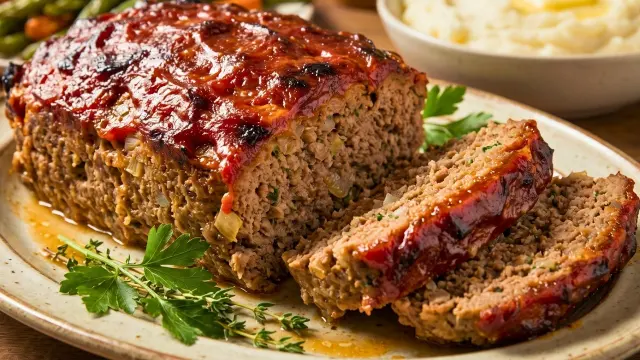
 Vegan Meatloaf Made With Tofu, Chickpeas and Mushrooms
#Meatloaf
1 ideas
Vegan Meatloaf Made With Tofu, Chickpeas and Mushrooms
Get new #Meatloaf ideas by email
Every Thursday: the week's best ideas, with the newest from #Meatloaf.
Related tags
Meatloaf: A Comfort Food Classic, Explained
Meatloaf is exactly what its name suggests: seasoned ground meat shaped into a loaf, then baked. It sits somewhere between a giant meatball and a terrine, and it belongs to the broad family of comfort dishes that turn inexpensive ingredients into something generous enough to feed a table.
Its roots reach back to European kitchens, where mixtures of minced meat, bread and seasoning were baked or steamed long before the dish had a name. Similar ideas appear in many culinary traditions, from German and Scandinavian loaves to the meat rolls and stuffed patties found across Eastern Europe and the Middle East. What travelled to North America was the practical logic of stretching meat with breadcrumbs or soaked bread, binding it with egg, and cooking it in one piece.
The basic structure
Almost every meatloaf follows the same formula. You need ground meat, a binder, a filler, seasoning, and usually some moisture and aromatics. The meat gives flavour and structure; egg and breadcrumbs hold it together and keep it tender; onion, garlic, herbs, salt and pepper do the rest. A little milk, stock, grated vegetable or tomato brings softness.
Read more
Beef alone can be lean and firm, so many cooks mix it with pork, veal or turkey for a juicier result. The fattier the blend, the more tender the loaf, though too much fat leaves the loaf swimming in grease.
Styles and variations
The American version is often glazed with a sweet-tangy mixture of ketchup, brown sugar or vinegar, sometimes topped with bacon. Other kitchens keep it savoury: a mushroom sauce, a tomato passata, or nothing at all. Vegetarian loaves rely on lentils, beans, tofu, mushrooms or nuts, with oats, breadcrumbs or cooked grains as binder. They work best when the mixture is well seasoned and not too wet, since plant ingredients release more moisture than meat does.
What beginners should know
Handle the mixture gently. Overworking ground meat makes the finished loaf dense and springy. Combine everything until it just holds together, then stop.
Shape it in a loaf pan for a neat block, or free-form it on a lined tray so the sides can brown. A free-form loaf cooks faster and collects less fat.
Rest it before slicing. Ten or fifteen minutes out of the oven lets the juices settle, so the slices stay intact instead of crumbling.
Finally, season boldly. A meatloaf is thick, and flavours dull inside a dense loaf, so check the balance before baking by frying a small spoonful of the mixture in a pan and tasting that. Never taste the raw mixture, since ground meat needs to be thoroughly cooked before it is eaten.
At the table
Meatloaf is forgiving and endlessly adaptable, which is why it survives in home kitchens. Slices reheat well, and a cold slice between bread is a pleasure of its own. Serve it with mashed potatoes, rice, roasted vegetables or a sharp green salad, and let the leftovers become tomorrow's sandwiches.
#Meatloaf: frequently asked questions
What do you need to make a meatloaf from scratch?
The core is ground meat plus something to bind it, usually egg and breadcrumbs or soaked bread, along with seasoning and aromatics such as onion, garlic and herbs. A little milk, stock, tomato or grated vegetable adds moisture so the finished loaf stays soft rather than dry.
Which kind of ground meat should I choose for a meatloaf?
Lean beef on its own can bake up firm and dry, so many cooks blend it with pork, veal or turkey for a juicier, more tender result. A fattier blend gives more softness, but past a certain point the loaf simply releases too much grease, so a balance is what you want.
Can meatloaf be made without meat?
Yes — lentils, beans, tofu, mushrooms or nuts all work as the base, with oats, breadcrumbs or cooked grains holding everything together. Plant ingredients give off more moisture than meat, so keep the mixture on the drier side and season it generously, since a meatless loaf can taste flat otherwise.
How do I keep my meatloaf from turning out dense or crumbly?
Handle the mixture as little as possible: combine it just until it holds, because overworking ground meat makes the baked loaf tight and springy. Resting it briefly out of the oven before slicing also lets the juices settle, so the slices stay whole instead of falling apart.
What are the most common mistakes people make with meatloaf?
The usual ones are mixing too aggressively, under-seasoning a thick loaf, and slicing it the moment it leaves the oven. A useful habit is to fry a small spoonful of the raw mixture in a pan and taste it, which tells you whether the seasoning is right before you commit the whole loaf — though never taste the mixture uncooked.
What should I serve with meatloaf, and what about leftovers?
Mashed potatoes, rice, roasted vegetables or a sharp green salad all balance its richness nicely, and it suits a casual gathering because it feeds a table without much fuss. Leftovers are part of the appeal: slices reheat well and a cold slice between bread makes an excellent sandwich the next day.
Videos come from YouTube and posts from Instagram; titles and summaries are our own. All rights belong to their creators.