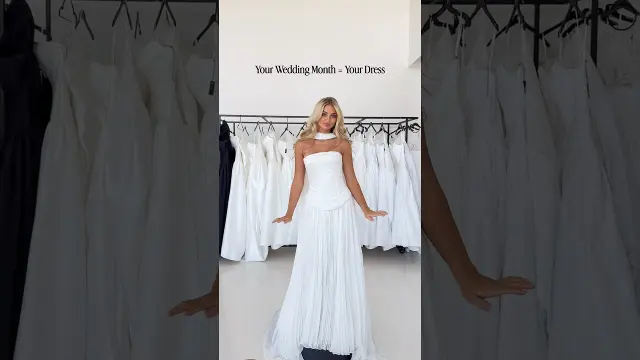
 Wedding Dress Silhouettes Matched to Your Wedding Month
#Mermaid Gown
1 ideas
Wedding Dress Silhouettes Matched to Your Wedding Month
Get new #Mermaid Gown ideas by email
Every Thursday: the week's best ideas, with the newest from #Mermaid Gown.
Related tags
Mermaid Gown Guide: Fit, Fabric and Styling
The mermaid gown is a fitted dress that hugs the body from the bust through the hips and thighs, then flares outward near the knees or just below them. The shape traces a woman's outline closely for most of its length and releases into a skirt or train at the last possible moment, which is what gives it the walk-in-a-straight-line, pool-at-the-hem effect people recognise instantly.
The silhouette borrows its drama from old ideas about glamour: the tailored bodice and trailing hem have roots in evening dress and couture gowns of the mid-twentieth century, and it has stayed in circulation because the contrast between severe and soft is so flattering to photograph. It belongs to the same family as the trumpet gown, and the difference between the two is mostly a matter of proportion — trumpet skirts begin their flare higher, usually around mid-thigh, while mermaid skirts stay narrow longer and open closer to the knee.
How the shape varies
Fabric decides a great deal. A firm, structured cloth holds the line of the skirt cleanly, while a softer fabric drapes and follows the body more gently; stretch helps the gown move with you rather than against you. The flare itself can be built in different ways: as a simple extension of the skirt, as a separate layer gathered at the knee seam, or with godets — triangular inserts that add width and swing. Necklines, sleeves and back details change the mood entirely, so a mermaid gown can read as strict and architectural or as romantic and fluid.
Read more
Choosing one that works
The fit through the hips is the whole game. A mermaid gown has very little room to hide a poor fit, so buy to the widest measurement and plan on alterations rather than squeezing into a smaller size. Sit down in the dress before committing to it; the point where the flare begins will determine how comfortably you can walk, climb steps or dance. Look for a seam placed where your body actually bends, and check whether the skirt has a kick pleat, hidden slit or stretch panel that lets you move.
Practical notes
Underpinnings matter more here than with most dresses, because seams and ridges show through a close fit. Smooth, well-fitted foundation garments and a seamless approach are worth the trouble. Shoes change the hemline: the skirt is usually cut for a specific heel height, so bring the shoes you intend to wear to fittings. When walking, take shorter steps than feels natural and gather the front of the skirt slightly with one hand on stairs. For care, hang the gown by its bodice rather than its hem and store it flat or on a padded hanger so the flare keeps its shape.
The mermaid gown is not the easiest silhouette to wear, but it rewards attention to fit and movement — and when it is cut for your own body rather than a sample size, it is one of the most striking shapes in any wardrobe.
#Mermaid Gown: frequently asked questions
How do I know if a mermaid gown will suit me?
The silhouette flatters most when the fit through the bust and hips is genuinely correct, since there is almost no room to hide a poor fit. Try one on and sit down, walk a few steps and climb a stair before deciding, paying attention to where the flare begins and whether that point matches where your body bends. If the flare cuts across your knee or mid-thigh awkwardly, a trumpet shape that opens higher may feel easier.
What should I look for when choosing between a mermaid and a trumpet gown?
The two are close relatives, and the real difference is proportion rather than style: a trumpet skirt starts flaring higher, while a mermaid stays narrow longer and opens near the knee. Choose based on how much freedom of movement you want and how dramatic you want the pool of fabric at the hem to look. Fabric matters too, since a firm cloth keeps the narrow line crisp while a softer one drapes more gently.
How can I walk, dance or manage stairs in a fitted mermaid gown?
Take shorter steps than feels natural, and gather the front of the skirt lightly with one hand when you go up or down stairs. Check before you commit that the skirt has a kick pleat, hidden slit or stretch panel, and that the seam sits at a point where your leg actually bends. Bringing the shoes you plan to wear to fittings matters, because the hem is cut for a specific heel height.
What should I wear underneath a mermaid gown?
Underpinnings matter more with this shape than with most dresses, because seams and ridges show clearly through such a close fit. Smooth, well-fitted foundation garments and a seamless approach make a noticeable difference to the finished line. Buying to your widest measurement and planning alterations is usually kinder than squeezing into a smaller size.
How do I care for and store a mermaid gown so the flare keeps its shape?
Hang the gown by its bodice rather than its hem, since the weight of a trailing skirt can distort the narrow line over time. Store it flat or on a padded hanger so the flare does not crease or collapse. Handle the hem gently when moving it, as the narrow skirt and train carry most of the dress's weight.
What occasions suit a mermaid gown, and what mistakes should I avoid?
It works best for formal evenings, weddings and any event where a striking, photogenic silhouette is the point, and it can read as strict and architectural or soft and romantic depending on neckline, sleeves and back details. The most common mistakes are choosing a size that is too tight instead of altering a correct one, skipping the sit-down test, and leaving the skirt without any pleat or slit for movement. Skipping proper foundation garments is another easy one to regret.
Videos come from YouTube and posts from Instagram; titles and summaries are our own. All rights belong to their creators.