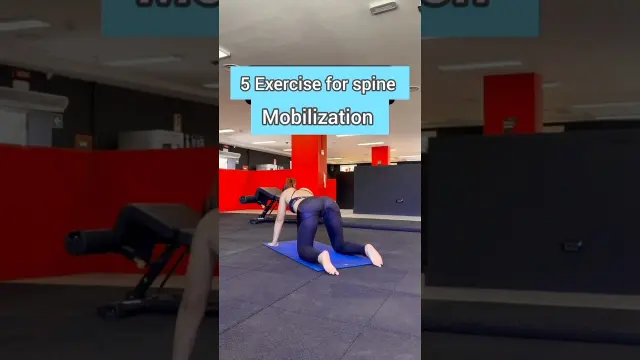
 Five Trending Spine Mobility Exercises for Better Movement
#Mobility Exercises
1 ideas
Five Trending Spine Mobility Exercises for Better Movement
Get new #Mobility Exercises ideas by email
Every Thursday: the week's best ideas, with the newest from #Mobility Exercises.
Related tags
Mobility Exercises for Everyday Movement
Mobility exercises are movements that help your joints move through a comfortable range while your muscles stay coordinated and controlled. They are often used to warm up before exercise, ease stiffness after sitting, and support the kind of everyday movement that makes walking, bending, reaching, and turning feel easier.
Unlike stretching alone, mobility work usually asks you to move actively rather than hold one position for a long time. That means it can help you notice how your body moves, where it feels tight, and which areas need a little more attention. You do not need special equipment to begin, and you do not need to be very flexible. The goal is not to force the body into a shape, but to improve smooth, useful movement over time.
What mobility exercises are for
Mobility exercises are used to prepare the body for activity, reduce the feeling of stiffness, and maintain joint function. They can be helpful if you spend a lot of time sitting, if you want a better warm-up routine, or if you simply want to move with more ease during the day.
Read more
Common areas people focus on include the neck, shoulders, spine, hips, knees, and ankles. These are all important in everyday movement, and they often benefit from regular gentle motion.
Common types of mobility work
There are many ways to approach mobility. Some of the most common include:
- Gentle joint circles, such as moving the shoulders, wrists, hips, or ankles
- Controlled spinal movements, like cat-cow or slow trunk rotations
- Dynamic stretches, where you move in and out of a position with control
- Hip openers and lunging movements
- Shoulder mobility drills, especially for reaching and lifting
- Ankle and foot exercises that support balance and walking
Each type has a slightly different purpose, but they all aim to encourage smooth movement without unnecessary strain.
How to begin
If you are new to mobility exercises, start with small, simple movements. Work slowly and pay attention to how your body feels. A mild stretch or sense of effort is normal, but sharp pain is a sign to stop and adjust.
A useful beginner approach is to choose a few movements for the whole body and repeat them regularly. Consistency matters more than intensity. A short daily practice is often more useful than an occasional long session.
Try to breathe normally and avoid rushing. Controlled breathing can help you stay relaxed and move with better awareness. It can also make the exercises feel less tense.
Practical tips
- Move through a range that feels comfortable and natural
- Focus on smooth control, not speed
- Keep your posture relaxed instead of rigid
- Work both sides of the body when possible
- Use mobility as a warm-up before stronger exercise
- Stop if a movement causes pain, dizziness, or numbness
Mobility exercises work best when they fit into real life. You might do them after waking, before a walk, between work tasks, or as part of a gentle evening routine. Over time, these small movements can become a simple way to support easier, more confident movement in your day.
#Mobility Exercises: frequently asked questions
How do I start mobility exercises if I've never tried them?
Begin with small, slow movements rather than a full routine, and pick a couple of areas that feel stiff, like the shoulders or hips. Move gently and pay attention to how each motion feels, treating a mild sense of effort as normal and easing off if anything feels sharp or wrong. Repeating a short practice regularly tends to be more useful than one long session now and then.
Do I need equipment or a certain level of flexibility to do mobility work?
No equipment is required, and you don't need to be flexible to begin. Most mobility movements use only your own body weight and the space around you, which is why they fit easily into a living room or a break at work. The aim is smoother, more controlled movement rather than reaching a particular shape.
Which kind of mobility exercise should I choose?
It depends on what you want to make easier: gentle joint circles suit a quick general warm-up, spinal movements help after long stretches of sitting, and hip or shoulder drills are useful if reaching, walking or lifting feels restricted. Choosing movements that mirror what you actually do in your day usually makes the practice feel more relevant and easier to keep up.
How is mobility work different from stretching?
Stretching often means holding a position still for a while, while mobility work asks you to move actively through a comfortable range with control. That active element is what helps you notice where you feel tight and how your body coordinates as it moves. The two can complement each other, but they aren't quite the same thing.
What mistakes should I avoid when doing mobility exercises?
The most common ones are rushing, forcing a joint further than it wants to go, and holding the breath through a movement. It also helps to work both sides of the body and to keep posture relaxed rather than rigid. If a movement brings pain, dizziness or numbness, stop and adjust rather than pushing through it.
When is a good time to fit mobility exercises into the day?
Any moment that already exists in your routine works well: just after waking, before a walk, between work tasks, or as a slow wind-down in the evening. Using them as a warm-up before stronger activity is another natural fit. The point is to attach them to something you already do, so they become a habit rather than an extra task.
Videos come from YouTube and posts from Instagram; titles and summaries are our own. All rights belong to their creators.