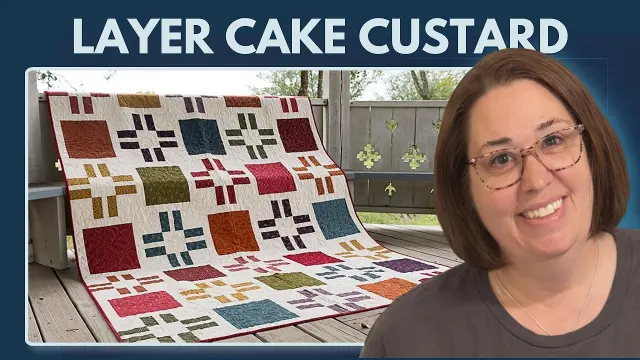
 Starting the Layer Cake Custard Quilt Step by Step
#Moda Fabrics
4 ideas
Starting the Layer Cake Custard Quilt Step by Step
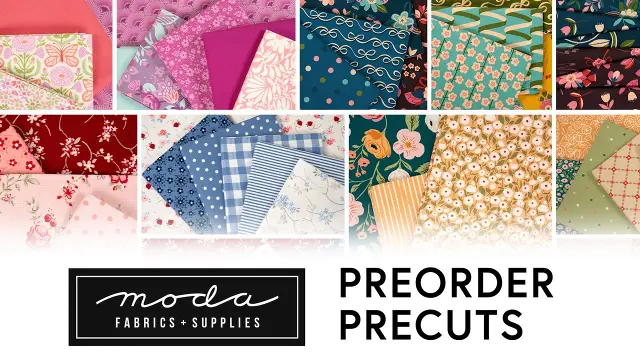 Summer Moda Precuts and Fabric Collections Preview
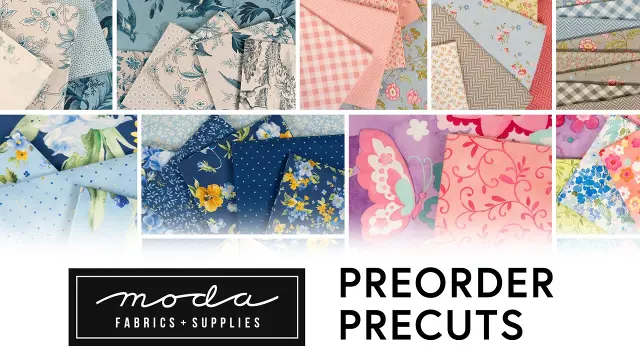 Previewing the Latest Moda Precut Collections
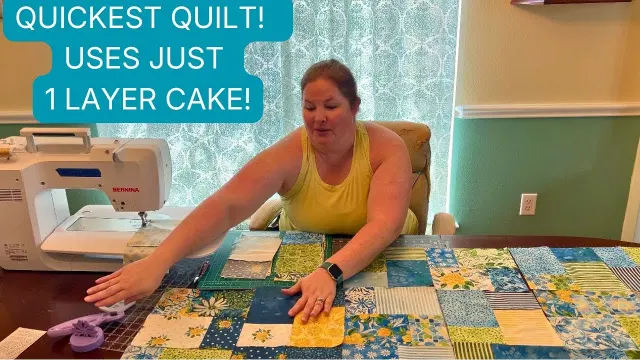 Double Slice Layer Cake Quilt Demonstration
Get new #Moda Fabrics ideas by email
Every Thursday: the week's best ideas, with the newest from #Moda Fabrics.
Related tags
Moda Fabrics: A Guide to Quilting Cottons and Precuts
Moda Fabrics is a name that comes up constantly in the quilting world, and for a simple reason: it built much of its reputation on making fabric easy to buy, easy to match and easy to cut. The company produces quilt-weight cotton, sold mostly through independent quilt shops, and organises that fabric into coordinated collections rather than one-off prints.
What a collection is
The heart of the Moda approach is the collection. A single collection gathers a group of related prints — florals, geometrics, small textures, maybe a panel — around one palette, so that anything you pick from it will sit comfortably with anything else. Designers work within that structure, and shops typically stock the full range alongside blenders: quieter, near-solid prints meant to fill gaps and give the eye somewhere to rest.
Because the collections are designed as families, beginners get a great deal of help for free. You do not have to be confident about colour to make a quilt that looks deliberate; the coordination is largely done for you.
Read more
Precuts explained
Moda is best known for popularising precuts — collections cut to standard sizes and bundled before they reach the shop shelf. The vocabulary is worth learning, because patterns are written around it:
- Layer Cake: a bundle of ten-inch squares, usually forty-two of them.
- Charm Pack: five-inch squares, again around forty-two.
- Mini Charm: two-and-a-half-inch squares, handy for small projects and scrap work.
- Jelly Roll: strips two and a half inches wide by the width of the fabric, typically forty strips.
- Honey Bun: narrower strips, an inch and a half wide.
- Fat quarter and fat eighth bundles: quarter- and eighth-yard cuts, wider and shorter than a standard cut, which suit patchwork better.
Precuts save rotary-cutting time and guarantee that every piece in a project comes from the same dye lot, so colours match exactly. The trade-off is less freedom: you work within the sizes you were given, and some patterns waste more than others. Prewashing is a personal choice, but shrinking and bleeding are real possibilities with any cotton, so test a scrap if you plan to wash finished work.
Practical notes for beginners
Buy the pattern before the fabric, and check what it expects — a pattern written for a layer cake will not work with a jelly roll without recalculating. Read the care label and prewash anything you are unsure about. Buy a little extra for borders, binding and mistakes. And keep your offcuts: precut projects generate plenty of usable scraps, and the small squares and strips are exactly what mini charms and appliqué ask for.
Moda's appeal, in the end, is coherence. The fabric arrives already speaking the same language, which leaves you free to concentrate on the sewing.
#Moda Fabrics: frequently asked questions
How do I start a quilt project with Moda Fabrics if I’m a beginner?
A good place to start is with a coordinated collection and a pattern made for that fabric type. Moda collections are designed to work together, so you do not need advanced color-matching skills to get a polished result.
What materials do I need for a Moda precut quilt project?
You usually need the precut bundle, the matching pattern, basic sewing tools, thread, and batting and backing if you are making a quilt. It also helps to have a rotary cutter, cutting mat, ruler, and a little extra fabric for borders or binding.
Which Moda precut should I choose for my project?
Choose the precut that matches the pattern size and the kind of shapes you want to sew. Large squares are often easier for beginners, while strips and smaller squares work well for more detailed patchwork and scrap-style designs.
Do I need to prewash Moda fabric before sewing?
Prewashing is optional, but it can help if you are worried about shrinkage or color bleeding. If you are unsure, test a small scrap first, especially when the finished piece will be washed later.
What is the best way to care for a finished quilt made with Moda Fabrics?
Use gentle washing and drying methods, and avoid harsh treatment that could stress the stitches or colors. Following the care instructions for the fabric and testing a scrap before washing the finished piece is the safest approach.
What are common mistakes to avoid when using Moda precuts?
A common mistake is buying fabric before checking the pattern requirements, since not every precut works for every design. It also helps to buy a little extra for mistakes and to save leftover pieces, because many small cuts can be useful for future projects.
Videos come from YouTube and posts from Instagram; titles and summaries are our own. All rights belong to their creators.