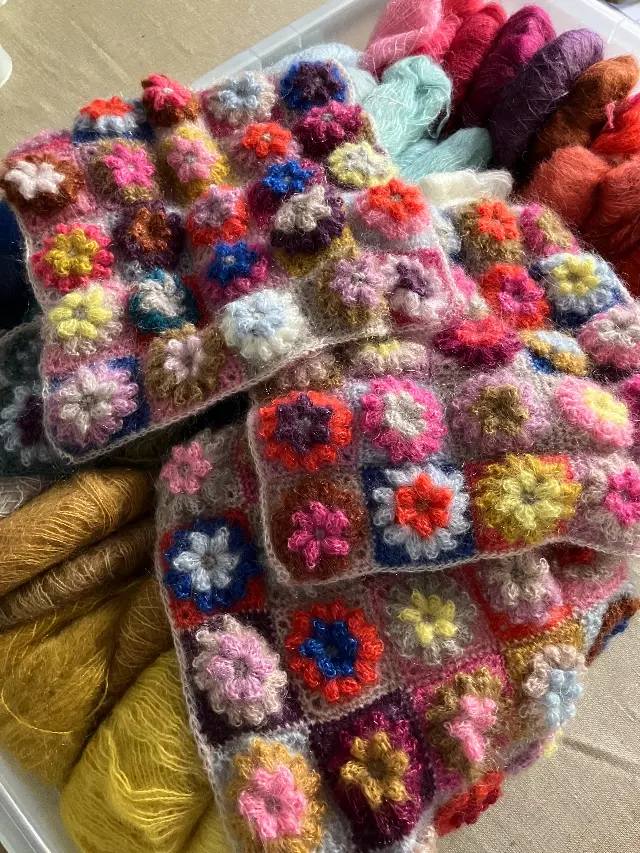
 Tiny mohair crochet flowers with a free pattern
#Mohair Yarn
1 ideas
Tiny mohair crochet flowers with a free pattern
Get new #Mohair Yarn ideas by email
Every Thursday: the week's best ideas, with the newest from #Mohair Yarn.
Related tags
Mohair Yarn: A Guide to the Fluffy, Lustrous Fibre
Mohair is the fleece of the Angora goat, a fibre prized for its softness, its gentle shine and the airy halo that gives finished pieces their characteristic fluff. Despite the name, it has nothing to do with the Angora rabbit, whose wool is a separate fibre. Mohair has been spun and woven for centuries, and it remains a favourite for shawls, light sweaters, scarves and any project where warmth should come without weight.
What makes mohair different
The fibre has a smooth, long staple with few scales, which is why it looks silky rather than matte and why it resists felting better than wool. It has relatively little crimp, so it feels less springy and elastic than sheep's wool; the warmth of a mohair fabric comes instead from the loft and halo of the spun yarn, which trap air between the fibres and the stitches. Mohair takes dye beautifully, giving deep, saturated colours, and it holds a soft lustre even after years of wear.
The main kinds
Read more
- Kid mohair: taken from the first or second shearing of a young goat. It is the finest and softest grade, and the best choice for anything worn close to the skin.
- Adult mohair: stronger and slightly coarser, well suited to outerwear, home textiles and structured pieces.
- Blends: mohair is often spun with wool for body, with silk for drape and sheen, or with synthetic fibres to make it more affordable and easier to care for.
- Brushed and bouclé styles: textures that exaggerate the halo for very fluffy results.
Working with it
Mohair is usually spun as a lace or light fingering weight, sometimes alone and sometimes held together with another yarn. Held double with a smooth wool or alpaca, it adds a soft bloom to a heavier fabric without much extra weight. Because the fluff fills the gaps between stitches, lace patterns read as a soft haze rather than sharp lines, which is part of the appeal.
Beginners should know a few things. Stitch definition is low, so complex cables and crisp colourwork can disappear; simple textures, garter stitch and open lace work best. The halo also makes ripping back difficult, because stitches cling to each other and to themselves. Count carefully, use stitch markers, and choose a smooth, pointy needle or hook so the tip can find its way through the fuzz. Slippery needles help too, as mohair has little grip.
If you want to test how a mohair will behave, knit a small swatch, then wash and dry it as you would the finished item. The fabric blooms and softens noticeably, so the gauge you measure before washing can be misleading.
Care
Mohair needs gentle handling. Hand wash in cool water with a mild soap, avoid wringing or rubbing, and press the water out in a towel. Dry flat, shaped, away from direct heat. Agitation and sudden temperature changes can cause shrinking or felting even in this smooth fibre, so keep the process calm and brief. Store finished pieces folded, protected from moths, and avoid hanging heavy garments, which stretch under their own weight.
#Mohair Yarn: frequently asked questions
Is mohair yarn itchy to wear against the skin?
It depends on the grade: the finest kid mohair feels soft and gentle enough for scarves and tops worn directly on the skin, while coarser adult mohair can prickle a little. If you are sensitive, look for a kid mohair or a blend with silk and try a small swatch against your neck before committing to a whole garment.
Which type of mohair yarn should I pick for my project?
Choose kid mohair for anything worn close to the skin, and adult mohair for outerwear, bags or home pieces where durability matters more than softness. Blends with wool give more body and stitch definition, silk adds drape and shine, and brushed or bouclé styles exaggerate the halo when fluff is the whole point.
What should a beginner know before knitting or crocheting with mohair?
Keep your stitches simple, because the halo blurs cables and crisp colourwork until the pattern disappears, while garter stitch and open lace actually benefit from the fuzz. Use smooth, pointy needles or a hook so the tip can push through the fibres, and place markers generously, since ripping back is slow when stitches cling to one another.
How do I wash and store mohair pieces?
Hand wash in cool water with a mild soap, press the water out inside a towel rather than wringing, and dry flat and shaped away from direct heat. Store finished items folded rather than hung, since the fibre is not very elastic and a heavy garment will stretch under its own weight.
Why does my mohair fabric look different after washing?
The fibre blooms once it meets water, so the fabric softens and the halo opens up noticeably, which changes both the texture and the gauge. Always wash and dry your swatch the way you plan to treat the finished piece, then measure again before you trust your numbers.
What are good projects for mohair yarn?
Light, airy pieces suit it best: shawls, scarves, fine sweaters and delicate accessories where warmth should arrive without weight. It also works held together with a smoother yarn to add bloom to a heavier fabric, and small fluffy extras like tiny crochet flowers make lovely quick projects for using up leftovers.
Videos come from YouTube and posts from Instagram; titles and summaries are our own. All rights belong to their creators.