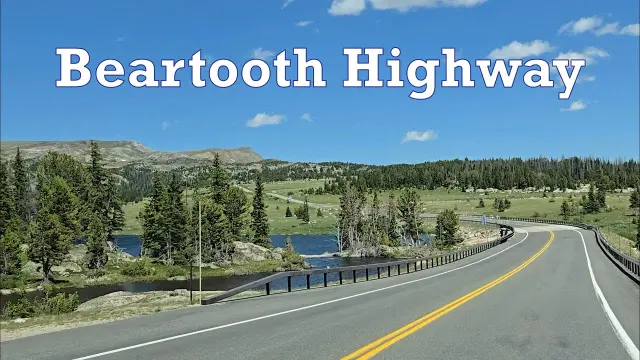
 Driving the High-Elevation Beartooth Highway in Montana
#Montana
1 ideas
Driving the High-Elevation Beartooth Highway in Montana
Get new #Montana ideas by email
Every Thursday: the week's best ideas, with the newest from #Montana.
Related tags
Montana: A Guide to the Big Sky Country
Montana sits in the northern Rocky Mountains of the United States, sharing a long border with Canada to the north and stretching east into the Great Plains. It is a state defined by scale and by contrast: snow-capped ranges in the west, rolling grassland in the east, and a sky that seems to take up more room than anywhere else. Montanans call it Big Sky Country, and once you have driven a few hours across it, the phrase stops sounding like a slogan.
Mountains and prairie
The western third of the state is mountain country. The Continental Divide winds through it, separating rivers that drain toward the Pacific from those that flow east toward the Missouri and eventually the Mississippi. Glacier National Park, in the northwest, is the best known of the protected landscapes, with carved valleys, remnant glaciers and roads that climb high enough to feel like flying. Yellowstone National Park overlaps the south-central corner, and its thermal basins and wildlife draw visitors from everywhere.
East of the mountains the land opens out. This is wheat and cattle country, punctuated by buttes, river breaks and small towns spaced far apart. It is the part of Montana that visitors often skip entirely, and the part that best explains the state's character.
Read more
Towns and how people live
Montana has no large cities by national standards. Helena, the capital, sits in a valley in the western mountains; Billings, in the south-central east, is the largest urban centre; Missoula and Bozeman anchor university communities; Great Falls sits where the Missouri leaves the mountains. Outside these, towns are small, and their rhythms follow ranching, farming, forestry and, increasingly, remote work and tourism.
You will find a strong tradition of self-reliance, a lively craft and music scene in the university towns, and hospitality that tends toward the practical rather than the polished.
What to know before you go
- Distances are enormous. A route that looks short on a map can take hours, and fuel stops can be far apart. Fill up when you can.
- Weather changes fast at altitude. Snow is possible outside summer in the mountains, and afternoon storms are common.
- Cell service is unreliable once you leave the main corridors. Carry a paper map and tell someone your plan.
- Wildlife is real. Bears, elk and deer are common; keep food stored properly, make noise on trails and give animals space.
- Many roads, including high mountain passes, close for part of the year. Check conditions locally before committing to a route.
- Respect private land. Much of Montana is ranch land, and access is a privilege granted by landowners rather than a right.
A word on the seasons
Winter is long and serious in the mountains, with skiing and snowmobiling in the resort areas. Summer is short, bright and busy in the parks. Spring and autumn are quieter, cheaper and often the most beautiful, though snow can arrive at any time of year at elevation.
Montana rewards patience more than itinerary. Give yourself room to stop, and the state will show you why people stay.
#Montana: frequently asked questions
When is the best time to visit Montana?
Summer is the brightest and busiest season, when the mountain parks are fully open and the high passes are clear of snow. Spring and autumn are quieter, less crowded and often the most scenic, though snow can fall at elevation in any month. Winter is long and severe in the mountains and suits travellers who come specifically for snow sports.
How do I plan a road trip across Montana?
Plan around distance rather than around a list of stops: routes that look short on a map can take hours, and fuel stops may be far apart, so fill up whenever you can. Carry a paper map, since cell service drops away outside the main corridors, and leave your itinerary with someone. Build in slack, because weather and seasonal road closures can force a change of route.
What should I pack for a trip to Montana?
Pack in layers and include warm and waterproof clothing even in midsummer, as afternoon storms are common and temperatures fall quickly with altitude. Sturdy footwear, sun protection, water and a way to navigate without a signal are worth carrying on any hike. If you plan to camp or walk in bear country, bring proper food storage and know how to use it.
What are common mistakes visitors make in Montana?
The most frequent one is underestimating scale and trying to cover too much ground in a day. Others include relying on a phone for navigation and fuel stops, approaching wildlife too closely, and treating ranch land as open to the public when access depends on the landowner. Checking local conditions before committing to a mountain route avoids most of the rest.
Which part of Montana should I choose?
The mountainous west suits travellers who want glaciers, high passes, hiking and dramatic drives, while the eastern prairie appeals to those interested in wide open space, small towns and the state's ranching character. University towns offer the liveliest craft, food and music scene, and the capital valley makes a calm base for exploring the surrounding ranges. Many visitors combine a stretch of mountain country with a crossing of the plains.
What is there to do in Montana in winter?
Winter is a serious season in the mountains, and the resort areas draw people for skiing and snowmobiling. Travellers who prefer quiet will find small towns and lower elevations calmer, though some high roads close for part of the year. Wherever you go, check conditions locally and allow extra time for travel.
Videos come from YouTube and posts from Instagram; titles and summaries are our own. All rights belong to their creators.