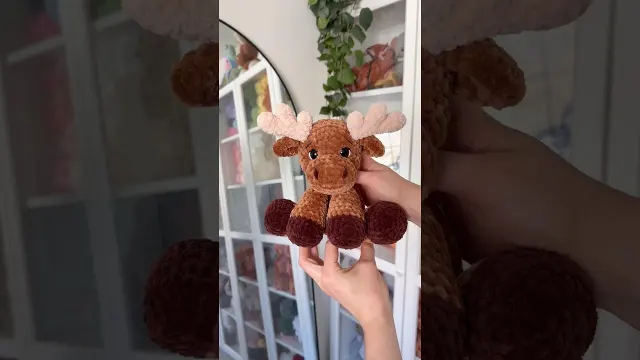
 Crocheting a cute handmade moose amigurumi toy
#Moose
1 ideas
Crocheting a cute handmade moose amigurumi toy
Get new #Moose ideas by email
Every Thursday: the week's best ideas, with the newest from #Moose.
Related tags
Moose: A Guide to the Largest Deer
The moose is the largest member of the deer family, known for its long legs, heavy body, and broad, flat antlers in males. It is a wild animal of the northern forests and wetlands, where it feeds quietly on leaves, twigs, aquatic plants, and bark. Strong and adaptable, the moose has long fascinated people because of its size, calm appearance, and solitary nature.
What a moose is
A moose is a hoofed mammal found in cool regions of North America, Europe, and Asia. It is built for moving through deep snow, marshy ground, and dense woodland. Its long legs help it wade through water and reach food that many other animals cannot. The muzzle is long and flexible, and the neck and shoulders are especially powerful.
Male moose grow antlers, which are shed and regrown each year. These antlers are used in display and competition during the breeding season. Females do not have antlers. Calves are born in spring or early summer and stay close to their mothers for protection and guidance.
Read more
Where moose live
Moose prefer forests with nearby wetlands, lakes, rivers, or bogs. These places give them both food and shelter. They are often associated with boreal and temperate forest regions, but they can also live in mountain areas and mixed woodlands if food and cover are available. In hot weather, moose may spend time in water or shaded areas to stay cool.
How moose behave
Moose are usually solitary, especially outside the breeding season. They spend much of their time feeding, resting, and moving slowly through their habitat. Although they may look gentle, moose are wild animals and can become defensive if startled, cornered, or protecting young calves. It is best to observe them from a distance and never try to approach or feed them.
Main features to recognize
If you want to identify a moose, look for these traits:
- Very long legs and a deep body
- A large, overhanging snout
- A short tail and a thick neck
- Large ears and a hump over the shoulders
- Antlers in adult males, often broad and palm-shaped
Moose in culture and craft
Moose appear often in folk art, storytelling, and nature-themed design because they are so distinctive. Their shape also makes them a popular subject for handmade projects such as toys, embroidery, illustrations, and seasonal decorations. In craft form, moose are often shown in a simplified, friendly style that highlights their antlers and rounded features.
If you are making or drawing a moose
Start with the animal’s overall silhouette: long legs, a broad head, and a sturdy body. Keep the antlers balanced and recognizable, but do not overcomplicate them. For a softer or more playful look, exaggerate the face and keep the body shapes simple. If you are observing a real moose, focus on proportion, posture, and the heavy, slow way it moves.
Whether you meet a moose in the wild, in a drawing, or in a handmade project, it is an animal that stands out for its quiet strength and unmistakable shape.
Videos come from YouTube and posts from Instagram; titles and summaries are our own. All rights belong to their creators.