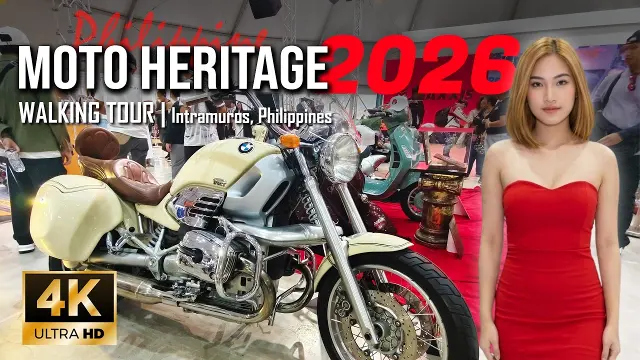
 Inside the Philippine Moto Heritage Weekend in Intramuros
#Motorcycle Culture
1 ideas
Inside the Philippine Moto Heritage Weekend in Intramuros
Get new #Motorcycle Culture ideas by email
Every Thursday: the week's best ideas, with the newest from #Motorcycle Culture.
Related tags
Motorcycle Culture: Riders, Machines and Community
Motorcycle culture is the web of habits, machines, stories and relationships that grows up around riding on two wheels. It is not one thing: it is a weekend rider polishing chrome in a driveway, a commuter who knows every shortcut in the city, a mechanic who can diagnose an engine by ear, and the club that meets at the same café on the same morning every month. What holds it together is the simple fact that riding is a skill you practise with your body, and a pleasure you tend to want to share.
Where it comes from
The motorcycle itself arrives at the end of the nineteenth century, and almost as soon as people could ride them, they began riding them together. Early riders organised long-distance reliability runs, hill climbs and club outings, and the pattern has barely changed since: a machine, a route, and other people to ride it with. Different countries developed their own flavour of the culture, shaped by climate, roads and industry, which is why a rider's style in one place may look nothing like a rider's style somewhere else.
The main kinds of riding
Read more
Most motorcycle culture forms around a handful of practices. Touring is the long ride, often with luggage and a route planned around scenery rather than speed. Commuting is the everyday use, where the machine is simply the quickest way through a city. Off-road riding, including trail and adventure riding, takes bikes onto gravel, dirt and mountain tracks. Track and sport riding focuses on precision and control at speed in a closed environment. Then there is customising: rebuilding, repainting and reshaping a bike until it expresses the owner, a craft tradition with its own skills and vocabulary. Vintage and classic restoration sits alongside it, keeping older machines alive and ridden rather than only displayed.
What beginners should know
Riding is a physical, exposed activity, so training comes first. Proper instruction, a licence where required, and protective gear — a well-fitting helmet above all, plus gloves, boots and abrasion-resistant clothing — are the sensible starting points. Buy a machine that suits the riding you actually do, not the riding you imagine; smaller, lighter bikes are often the wiser first choice. Learn basic maintenance: tyre pressure, chain or belt condition, brakes, oil and lights. A rider who understands their machine rides with more confidence and fewer surprises.
The social side
Clubs, rallies, meets and charity rides are how the culture reproduces itself. Clubs range from loose groups of friends to formal organisations with rules and long histories. If you are new, simply showing up, being curious and listening is usually enough; riders tend to be generous with advice. Respect the etiquette of a group ride, ride within your own limits, and never let a group's pace push you past what you can handle.
Above all, motorcycle culture rewards patience. Skill builds over seasons, and the friendships tend to last longer than any particular bike.
#Motorcycle Culture: frequently asked questions
How do I get started with motorcycle riding?
Start with proper instruction and whatever licence your area requires, since riding is a physical, exposed skill learned with the body rather than from a video. Get protective gear before you get ambitious, with a well-fitting helmet as the first and most important piece. Then ride often in low-pressure situations so the basics become automatic.
What gear and equipment do I actually need?
The essentials are a helmet that fits properly, gloves, sturdy boots and abrasion-resistant clothing rather than ordinary street clothes. Beyond what you wear, you need a little knowledge: how to check tyre pressure, chain or belt condition, brakes, oil and lights. That small routine is what keeps a machine predictable between rides.
Which kind of riding or bike should I choose?
Think about the riding you genuinely do most often, not the riding you picture yourself doing. Touring, commuting, off-road and track riding each ask different things of a machine, and buying for the wrong one makes everything harder. Smaller, lighter bikes are usually the wiser first choice while your skills are still forming.
How do I care for a motorcycle?
Learn basic maintenance yourself instead of treating the bike as a sealed box: tyre pressure, chain or belt condition, brakes, oil and lights cover most of what matters day to day. Keep it clean, and pay attention to new noises or changes in feel rather than waiting for something to fail. A rider who understands their machine rides with more confidence and fewer surprises.
How do I get involved in the riding community?
Clubs, meets, rallies and charity rides are how the culture passes itself on, and most of them welcome newcomers who simply show up. Be curious, listen more than you talk, and ask questions — riders tend to be generous with advice. On group rides, follow the etiquette of the group and never let its pace push you past what you can handle.
What mistakes do new riders make most often?
The usual ones are buying too much bike, skipping protective gear, and letting a group's speed set their own limits. Another is neglecting the machine until something goes wrong instead of learning the small maintenance checks. Motorcycle culture rewards patience — skill builds over seasons, so give it the time.
Videos come from YouTube and posts from Instagram; titles and summaries are our own. All rights belong to their creators.