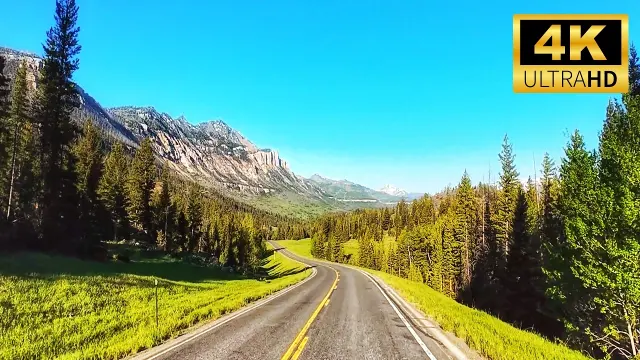
 Chief Joseph Scenic Byway Road Trip Through Wyoming
#Mountain Road
1 ideas
Chief Joseph Scenic Byway Road Trip Through Wyoming
Get new #Mountain Road ideas by email
Every Thursday: the week's best ideas, with the newest from #Mountain Road.
Related tags
Mountain Roads: A Guide to Driving the High Passes
What a mountain road is
A mountain road is any route built to carry people across steep, broken ground — terrain that refuses straight lines. Where a valley road simply follows the river, a mountain road has to gain height, cross a ridge and lose it again, and almost everything about how it looks and how it drives follows from that single problem.
Many of the world's high crossings began as footpaths, packhorse trails, salt and timber routes or pilgrim ways, and a good number of today's paved roads still trace those older lines, widened and surfaced but rarely straightened. Others were built for logging, mining, grazing or military movement, which is why some mountain roads are broad and engineered while others are narrow, unlined and barely a car and a half wide.
The engineering you will notice
Read more
The vocabulary of these roads is worth knowing, because it tells you what is coming.
- Switchbacks and hairpins: tight turns that let a road climb a steep face in zigzag stages instead of a single impossible slope.
- Gradients: the steepness of the climb, usually signed as a percentage; a long descent is the harder direction to drive well.
- Retaining walls, culverts and drainage channels: what keeps the hillside from taking the road back.
- Tunnels, galleries and snow sheds: structures that carry the road through rock or shelter it from avalanches and rockfall.
- Snow poles, barriers and gates: markers that show where the edge is under snow, and closures that end the season for a pass.
Mountain roads come in kinds: the high pass that closes for winter, the lower scenic route that stays open, the gravel forest road, the tunnel crossing that bypasses the summit entirely. Each asks something different of a driver.
Driving them well
Go slower than feels necessary and look further ahead than you normally would. On long descents, choose a lower gear and let the engine hold the car back rather than riding the brakes; brakes that overheat stop working. Use the signed pull-outs to let faster traffic past — on a narrow climb, that courtesy keeps everyone safe.
Expect the mountain to change its mind. Fog, hail, snow and wind can arrive within a single bend, and the weather at the top is rarely the weather you left at the bottom. Watch for livestock, cyclists, walkers and wildlife, and where local custom encourages it, a light tap of the horn before a blind hairpin warns oncoming traffic.
Before you set out
Check whether the pass is open, and in which season; many are closed for months. Fill the tank, carry water and warm layers, and do not count on a phone signal. Start earlier than you think you need to. If conditions turn, turning around is a decision, not a defeat.
Finally, remember that people live and work on these roads. Keep to marked routes, leave gates as you find them, and take your photographs from a proper stopping place rather than the middle of a bend.
#Mountain Road: frequently asked questions
What is a mountain road, and how is it different from an ordinary valley road?
A mountain road is a route built to carry people over steep, broken ground, so instead of following a river along the valley floor it has to gain height, cross a ridge and come back down. That single problem shapes everything about it: the turns, the gradients, the retaining walls and the way it drives. Many high crossings began as footpaths, packhorse trails or pilgrim routes that were later widened and surfaced rather than straightened.
How do I choose which kind of mountain road to drive?
Start by deciding what you want from the drive: a high pass that closes for winter gives the biggest views and the shortest season, while a lower scenic route, a gravel forest road or a tunnel crossing asks something different of you and your car. Match the choice to your vehicle, your experience and the time you have, and check whether the road is open before committing. A tunnel that bypasses the summit is the easiest option, but it also skips the landscape you came for.
What should I know before setting out on a mountain road?
Confirm that the pass is open and in which season, since many close for months at a time. Fill the tank, carry water and warm layers, and don't count on a phone signal. Leave earlier than feels necessary, and treat turning around as a sensible decision rather than a defeat if conditions change.
How should I drive a long descent or a series of hairpins?
Go slower than feels necessary and look further ahead than you normally would, because switchbacks hide oncoming traffic and the next bend arrives quickly. On a long descent, select a lower gear and let the engine hold the car back instead of riding the brakes, which can overheat and stop working. Use the signed pull-outs to let faster traffic pass, and where local custom encourages it, a light tap of the horn before a blind hairpin warns others you are coming.
What mistakes do people most often make on mountain roads?
The common ones are driving too fast for the sightline, trusting the weather they left at the bottom, and stopping in the middle of a bend for a photograph instead of using a proper pull-out. Overusing the brakes on a descent, ignoring closures and barriers, and forgetting that people live and work along these routes are close behind. Keep to marked routes, leave gates as you find them, and watch for livestock, cyclists, walkers and wildlife.
How do I care for a mountain road or keep it in good condition?
Mountain roads are maintained largely through drainage: retaining walls, culverts and channels are what stop the hillside from taking the road back, so keeping them clear of debris and reporting blockages matters more than anything cosmetic. Respect closures and gates, stay on the marked surface rather than cutting across verges, and drive gently on soft or gravel sections so the road doesn't break up. If you notice damage, let whoever manages the route know instead of trying to fix it yourself.
Videos come from YouTube and posts from Instagram; titles and summaries are our own. All rights belong to their creators.